

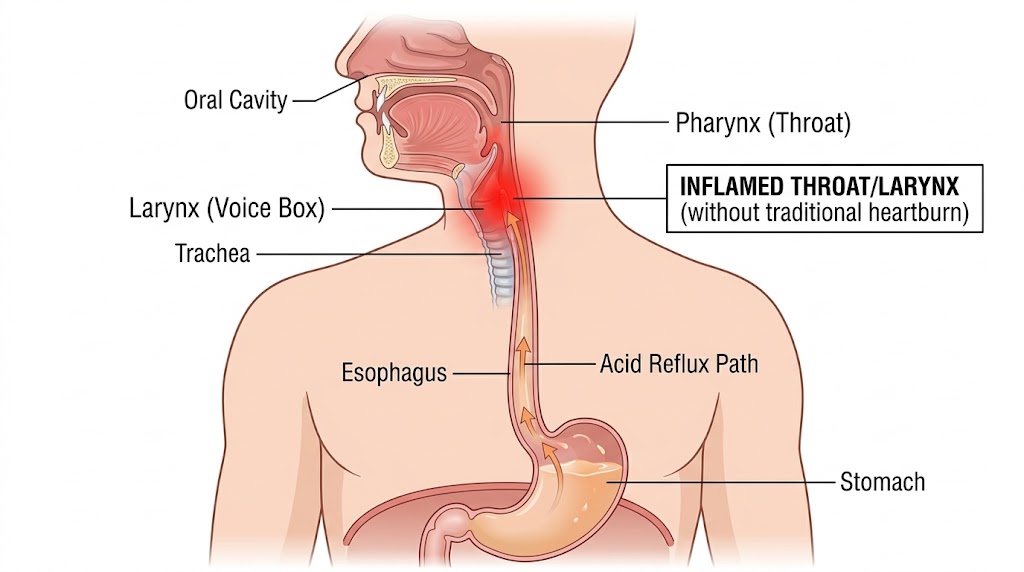
If you frequently find yourself swallowing hard, clearing your throat, or feeling like there is a pill permanently stuck in the back of your neck, you are not alone. This frustrating “lump in the throat” feeling is one of the most common reasons patients visit our clinic.
Medically, this is known as Globus Sensation (or Globus Pharyngeus). The good news? While it can be highly irritating and even cause anxiety, it is usually not a sign of a serious medical condition.
Here is what you need to know about why you have that constant lump in your throat and, more importantly, how to get rid of it.
What Causes the “Lump in the Throat” Feeling?
While many patients worry about growths or tumors, the reality is that the globus sensation is usually caused by inflammation or muscle tension in the throat. Here are the top culprits:
1. Silent Reflux (Laryngopharyngeal Reflux – LPR)
This is by far the most common cause. Unlike traditional acid reflux (GERD) that causes heartburn, “silent reflux” happens when stomach acid travels all the way up your esophagus and spills into your delicate throat area.
Because the vocal cords and throat lining are highly sensitive to acid, they swell. This swelling creates the physical sensation of a lump.
- Other LPR symptoms: Chronic throat clearing, hoarseness in the morning, or a persistent dry cough.
2. Muscle Tension and Stress
Your throat is packed with muscles that help you swallow and speak. When you are stressed or anxious, you unconsciously tense these muscles. Over time, this chronic tension causes the throat muscles to fatigue and tighten, mimicking the feeling of an object stuck in your airway.
3. Post-Nasal Drip and Allergies
If you suffer from seasonal allergies or chronic sinus issues, excess mucus drips down the back of your throat. This constant dripping irritates the tissues and forces you to swallow frequently, leading to inflammation and the globus sensation.
4. Thyroid Issues
An enlarged thyroid gland (goiter) or thyroid nodules can physically press against your esophagus and windpipe, creating a feeling of pressure or a lump when you swallow.
Globus Sensation vs. Dysphagia: When to Worry

It is important to distinguish between feeling like there is a lump (globus sensation) and actually having difficulty swallowing food or liquid (dysphagia).
Globus sensation usually feels worse when you are swallowing saliva, but temporarily improves when you eat or drink.
Red Flag Symptoms: You should schedule an appointment with an ENT immediately if your lump is accompanied by:
- Pain while swallowing
- Food actually getting stuck
- Unexplained weight loss
- Coughing up blood
- A lump you can physically feel on the outside of your neck
(For more information on swallowing disorders, visit the American Academy of Otolaryngology’s Patient Guide here: https://www.enthealth.org/conditions/swallowing-trouble-dysphagia/ )
How to Treat a Lump in Your Throat at Home
If your symptoms are mild, there are a few lifestyle changes you can try to reduce throat irritation:
- Adjust Your Diet: Avoid acidic, spicy, and tomato-based foods. Stop drinking caffeine and alcohol, especially right before bed, to minimize silent reflux.
- Stay Hydrated: Drink plenty of water throughout the day. Dry throat tissues are more easily irritated.
- Stop Clearing Your Throat: It sounds counterintuitive, but clearing your throat violently slams your vocal cords together, causing more inflammation. Instead, take a sip of water.
- Manage Stress: Practice deep breathing, yoga, or meditation to relax the muscles in your neck and throat.
When to See an ENT Specialist
If you have tried home remedies for a few weeks and the lump in your throat is still bothering you, it’s time to see a specialist.
At The ENT Dr., we can perform a quick, painless, in-office procedure called a laryngoscopy. Using a tiny, flexible camera, we can look directly at your throat and vocal cords to pinpoint exactly what is causing your symptoms and create a customized treatment plan.
Don’t let throat discomfort disrupt your daily life. Contact us today to schedule your consultation
(Disclaimer: This blog post is for informational purposes only and should not replace professional medical advice. Always consult with a qualified healthcare provider for proper diagnosis and treatment.)
Comments are closed