
Vaccines & ENT Health: What Every Malaysian Should Know
When we talk about vaccination, most people think of childhood jabs or the annual flu shot. But here is something that might surprise you: several common vaccines are directly relevant to your ears, nose, and throat — and in some cases, they could even help prevent certain head and neck cancers.
As an ENT specialist, I regularly see patients who have never connected the dots between the vaccines they (or their children) have received and the ear infections, sinus problems, or throat conditions I treat every day. This article is here to change that. Let’s break it all down in plain language.
🩺 Key TakeawayNot everyone needs every vaccine — but knowing which ones protect your ENT health could save you from recurrent infections, unnecessary antibiotic courses, or far more serious conditions down the line.
What Does “ENT Vaccination” Actually Mean?
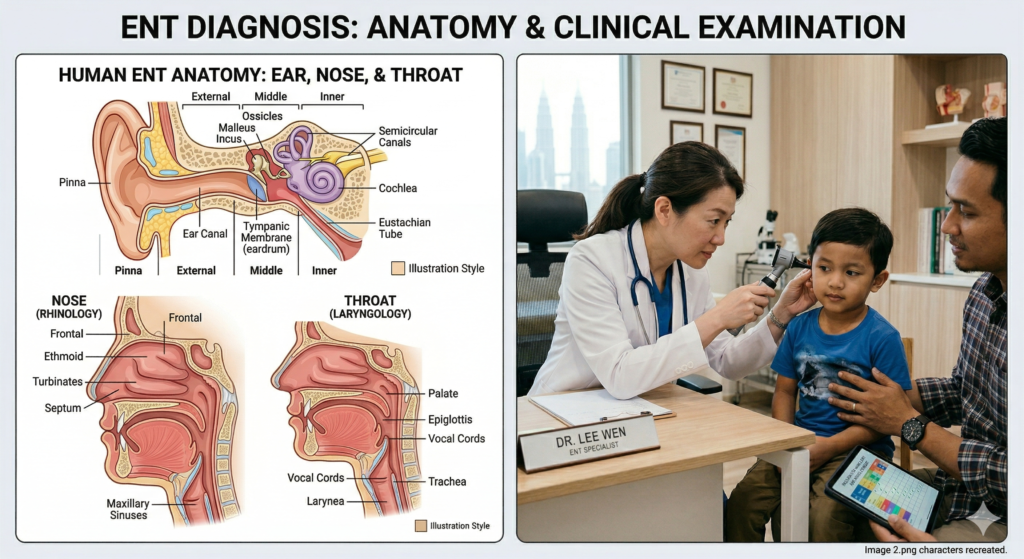
There is no single “ENT vaccine.” Rather, several existing vaccines — which you may already be familiar with — provide meaningful protection against infections and diseases that affect the ears, nose, throat, sinuses, and even the structures of the head and neck.
The connection works like this: many ENT problems are caused by bacteria or viruses. When those pathogens are weakened or blocked by a vaccine, the cascade of complications they trigger — ear infections, sinusitis, epiglottitis, and more — is dramatically reduced.
Think of it as prevention upstream. Rather than treating a painful ear infection or a stubborn sinus episode after it has already taken hold, vaccination aims to stop the infection from gaining a foothold in the first place.
The Key Vaccines That Protect Your ENT Health
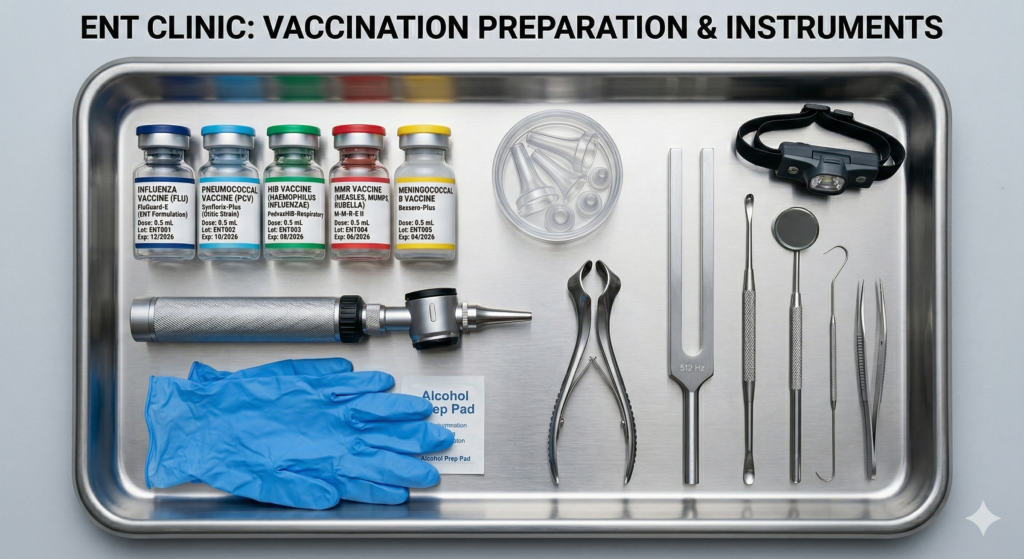
Let’s go through each vaccine one by one — what it covers, which ENT conditions it helps prevent, and who it is most relevant for.
Recommended Annually
1. The Influenza (Flu) Vaccine
This is arguably the most important vaccine for ENT health. The influenza virus does not just give you a bad cold — it weakens the lining of your upper respiratory tract, making it easy for bacteria to swoop in and cause secondary infections.
ENT conditions it helps prevent: Acute otitis media (middle ear infection), acute sinusitis, pharyngitis, and laryngitis. A Cochrane systematic review confirmed that influenza vaccines reduce the incidence of acute otitis media in children.
In Malaysia: The Malaysian Society of Infectious Diseases & Chemotherapy (MSIDC)recommends annual influenza vaccination for all Malaysians — particularly children, adults over 60, pregnant women, and those with chronic illnesses. A Malaysian consensus statement specifically highlights the importance of yearly flu vaccination for older adults given our country’s recurring seasonal influenza waves.
Frequency: Once a year. The flu virus mutates, so last year’s vaccine may not cover this year’s strain.
National Immunisation Programme
2. The Pneumococcal Vaccine
Streptococcus pneumoniae (pneumococcus) is one of the most common bacterial culprits behind ENT infections. This small organism is responsible for a large proportion of ear infections in children, bacterial sinusitis, and even meningitis.
ENT conditions it helps prevent: Bacterial acute otitis media (middle ear infection), acute bacterial sinusitis, and mastoiditis. Research from Frontiers in Microbiology (2024)highlights continuing advances in pneumococcal vaccines and their role in reducing ear infections.
In Malaysia: Malaysia recently added the 10-valent pneumococcal conjugate vaccine (PCV10) to its National Immunisation Programme. Adults over 65 and those with chronic conditions are advised to receive the polysaccharide vaccine (PPSV23).
Frequency: Series of doses in childhood; booster doses for high-risk adults.
National Immunisation Programme
3. The Hib (Haemophilus influenzae Type b) Vaccine
Despite the name, Hib has nothing to do with the influenza flu virus. It is a bacterium that — before vaccines existed — was the leading cause of one of the most alarming ENT emergencies: epiglottitis.
Epiglottitis is a life-threatening swelling of the epiglottis (the flap of tissue that covers your windpipe). A child with epiglottitis can go from mild throat discomfort to complete airway obstruction in hours. It is the kind of case that makes ENT doctors break into a cold sweat.
The impact of the Hib vaccine has been extraordinary. Studies show that widespread Hib vaccination caused epiglottitis to virtually disappear in vaccinated populations — a 99% reduction in Hib infections by the early 1990s.
ENT conditions it helps prevent: Epiglottitis, bacterial otitis media, bacterial sinusitis, and Hib meningitis.
In Malaysia: The Hib vaccine is included in Malaysia’s National Immunisation Programme as part of the combination DTaP-IPV-HepB-Hib vaccine.
Strongly Recommended
4. The HPV (Human Papillomavirus) Vaccine
This one surprises many patients. Most people know HPV as a cause of cervical cancer. But HPV — particularly strains 16 and 18 — is now responsible for approximately 60–70% of oropharyngeal (throat and tonsil) cancers, and rates of HPV-related throat cancer have been rising globally.
As an ENT specialist, I see oropharyngeal cancer patients. Many are relatively young. Many have no smoking history. HPV is increasingly the reason why.
The good news: in 2024, the US FDA formally approved Gardasil 9 for the prevention of oropharyngeal and head and neck cancers caused by HPV. And at the 2024 ASCO Annual Meeting, data confirmed that HPV vaccination significantly lowers the risk of HPV-related cancers in both males and females.
Is this vaccine only for women? Absolutely not. Men are equally — and in some studies, more commonly — affected by HPV-related throat cancer. Vaccination before first sexual exposure is ideal, but it remains beneficial up to age 45.
In Malaysia: The HPV vaccine (Gardasil) is included in the national programme for girls aged 13. Boys and adults may receive it at private clinics.
Recommended for High-Risk Groups
5. The Meningococcal Vaccine
Neisseria meningitidis is the bacterium behind meningococcal disease — a serious infection that can progress with frightening speed. From an ENT standpoint, meningococcal bacteria can occasionally cause serious complications including otitis media, mastoiditis (infection of the bone behind the ear), and meningitis — which can itself cause permanent hearing loss.
Who needs it: This vaccine is particularly recommended for teenagers, young adults in dormitories or hostels, travellers to endemic regions, and those with compromised immune systems or without a spleen.
ENT-relevant complication it helps prevent: Sensorineural hearing loss as a complication of meningococcal meningitis.
Is Vaccination Truly Necessary for Everyone?
This is the question I am asked most often — and the honest answer is: it depends.
Vaccination is not a one-size-fits-all prescription. The need for any given vaccine depends on your age, health status, occupation, lifestyle, and medical history. Here is a practical framework:
✅ You should strongly consider vaccination if you…
- Have a child under 5 years old (highest risk for otitis media and epiglottitis)
- Are over 60 or have a chronic health condition
- Have experienced recurrent ear infections or sinusitis
- Have had a tonsillectomy or adenoidectomy (and are thus more exposed to pathogens)
- Work in healthcare, education, or childcare
- Are pregnant
- Travel frequently or internationally
- Are a sexually active adult under 45 (HPV vaccine)
⚠️ You may need a tailored discussion if you…
- Have a known allergy to any vaccine component
- Are currently severely ill or immunocompromised
- Have had a previous severe vaccine reaction
- Are in a low-risk group for a specific vaccine-preventable disease
- Are an adult who received full childhood immunisations and has no chronic conditions (some vaccines may already be covered)
⚠️ Important NotePlease do not use this article to self-prescribe or decide on your own whether to skip a vaccine. Always discuss with your doctor or ENT specialist, who can review your personal history and provide a tailored recommendation.
What ENT Conditions Can These Vaccines Cover?
To summarise the protective scope of these vaccines across common ENT conditions:
| ENT Condition | Relevant Vaccine(s) |
|---|---|
| Acute Otitis Media (Ear Infection) | Influenza, Pneumococcal, Hib |
| Bacterial Sinusitis | Influenza, Pneumococcal |
| Epiglottitis | Hib (primary), Meningococcal |
| Oropharyngeal / Throat Cancer | HPV (Gardasil 9) |
| Hearing Loss from Meningitis | Meningococcal, Hib, Pneumococcal |
| Acute Pharyngitis / Tonsillitis (viral) | Influenza (partial protection) |
| Mastoiditis | Pneumococcal, Hib, Meningococcal |
| Laryngitis (secondary bacterial) | Influenza |
Potential Side Effects: What to Expect
No medication — including vaccines — is entirely without the possibility of side effects. The good news is that the vast majority of reactions are mild and short-lived. Here is what the evidence tells us:
| Vaccine | Common Side Effects | Rare / Serious Side Effects |
|---|---|---|
| Influenza | Sore arm, mild fever, fatigue (1–2 days) | Allergic reaction (very rare); Guillain-Barré (extremely rare, ~1–2 per million) |
| Pneumococcal | Redness/swelling at injection site, low-grade fever, mild headache | Febrile seizure (infants, when given with flu vaccine simultaneously — no long-term effects); severe allergic reaction (very rare) |
| Hib | Mild redness or swelling at injection site, low-grade fever | Severe allergic reaction (very rare) |
| HPV (Gardasil 9) | Pain/redness at injection site, headache, mild nausea, dizziness post-injection | Fainting (typically within 15 min — stay seated post-jab); allergic reaction (very rare) |
| Meningococcal | Arm soreness, mild fever, tiredness | Severe allergic reaction (very rare) |
The CDC’s vaccine safety monitoring data consistently shows that in studies involving tens of thousands of vaccine doses, no moderate-to-severe reactions were observed in the majority of cases. The benefits of vaccination overwhelmingly outweigh the risks for the recommended groups.
💡 After Your Vaccine Stay in the clinic for 15–30 minutes after any vaccination so your doctor can monitor for any immediate allergic reactions. This is standard practice and nothing to be anxious about — it is simply good medical care.

Frequently Asked Questions
Does everyone need ENT vaccinations?
No. Vaccination needs are personalised. Some vaccines (like the annual flu jab) are recommended for almost everyone, while others are specifically advised for high-risk groups — young children, the elderly, immunocompromised patients, or those with chronic ENT conditions. Speak to your doctor for tailored advice.
Can vaccines really prevent ear infections?
Yes, to a meaningful extent. The pneumococcal vaccine and the Hib vaccine have been shown to significantly reduce bacterial ear infections (otitis media). The annual influenza vaccine also helps by preventing the viral illnesses that often trigger secondary bacterial ear infections.
Is the HPV vaccine only for women?
No — and this is an important misconception to correct. HPV is now the leading cause of throat (oropharyngeal) cancer, which is more common in men than women. The HPV vaccine is recommended for both sexes and is most effective when given before first sexual exposure, but remains beneficial up to age 45.
Are these vaccines safe for children?
Yes. The flu, pneumococcal, and Hib vaccines are all part of Malaysia’s National Immunisation Programme and have an excellent long-term safety profile. Common side effects are mild and temporary. Serious reactions are extremely rare and are closely monitored by health authorities.
I had all my childhood jabs. Do I still need any vaccines as an adult?
Possibly. The flu vaccine needs to be taken every year as the virus mutates. Adults over 50, those with chronic conditions, and those in high-risk occupations may benefit from pneumococcal or meningococcal boosters. Adults up to age 45 who were not vaccinated as teenagers may also benefit from the HPV vaccine. Discuss your history with your doctor.
Where can I get these vaccines in Malaysia?
Childhood vaccines on the National Immunisation Programme are available free at government health clinics (Klinik Kesihatan). The influenza, HPV (for adults), meningococcal, and other recommended vaccines are available at private clinics, hospital outpatient departments, and travel health clinics. Speak to your GP, paediatrician, or ENT specialist for a personalised vaccination plan.
Not Sure Which Vaccines You Need?
Book a consultation with our ENT specialist for a personalised vaccination review — especially if you or your child suffer from recurrent ear infections, chronic sinusitis, or frequent throat problems.Book a Consultation
The Bottom Line
Vaccination is one of the most powerful and underappreciated tools we have in ENT medicine. It does not just prevent individual illness — it reduces the need for repeated antibiotic courses, lowers the risk of surgical intervention (such as grommets for recurrent ear infections), and, in the case of HPV, can genuinely prevent cancer.
The question is not really “do I need to be vaccinated?” For most people, the answer is yes — to at least some of these vaccines. The better question is: which vaccines are right for me, at this stage of my life?
That is a conversation best had with your doctor. If your concerns are specifically about your ears, nose, or throat, come and see us. We are here to help you breathe, hear, and swallow with ease — and to make sure you are protected from the pathogens that make those things harder.
References & Further Reading
- Malaysian Society of Infectious Diseases & Chemotherapy. Guidelines for Adult Immunisation. MSIDC Adult Immunisation Portal.
- Heikkinen T & Chonmaitree T. “Influenza vaccines for preventing acute otitis media in infants and children.” Cochrane Database of Systematic Reviews, 2017 (updated).
- Kool M et al. “Otitis media: recent advances in otitis media vaccine development and model systems.” Frontiers in Microbiology, 2024.
- Peltola H et al. “Disappearance of epiglottitis during large-scale vaccination with Haemophilus influenzae type B conjugate vaccine among children in Finland.” Lancet, 1994.
- Centers for Disease Control and Prevention. Pneumococcal Vaccine Safety. CDC, 2024.
- American Cancer Society. “Study Shows HPV Immunization Lowers Risk of Developing Cancer.” ACS News, 2024.
- Moffitt Cancer Center. “FDA Approves HPV Vaccine for Head and Neck Cancer Prevention.” Moffitt Cancer Center, 2020.
- Malaysian consensus recommendation for prevention of influenza in older persons. Human Vaccines & Immunotherapeutics, 2022.
- WHO Immunisation Data. Vaccination Schedule for Pneumococcal Disease — Malaysia. WHO, 2024.
Disclaimer: This article is for educational purposes only and does not constitute medical advice. Please consult a qualified healthcare professional for personalised recommendations.
Comments are closed