
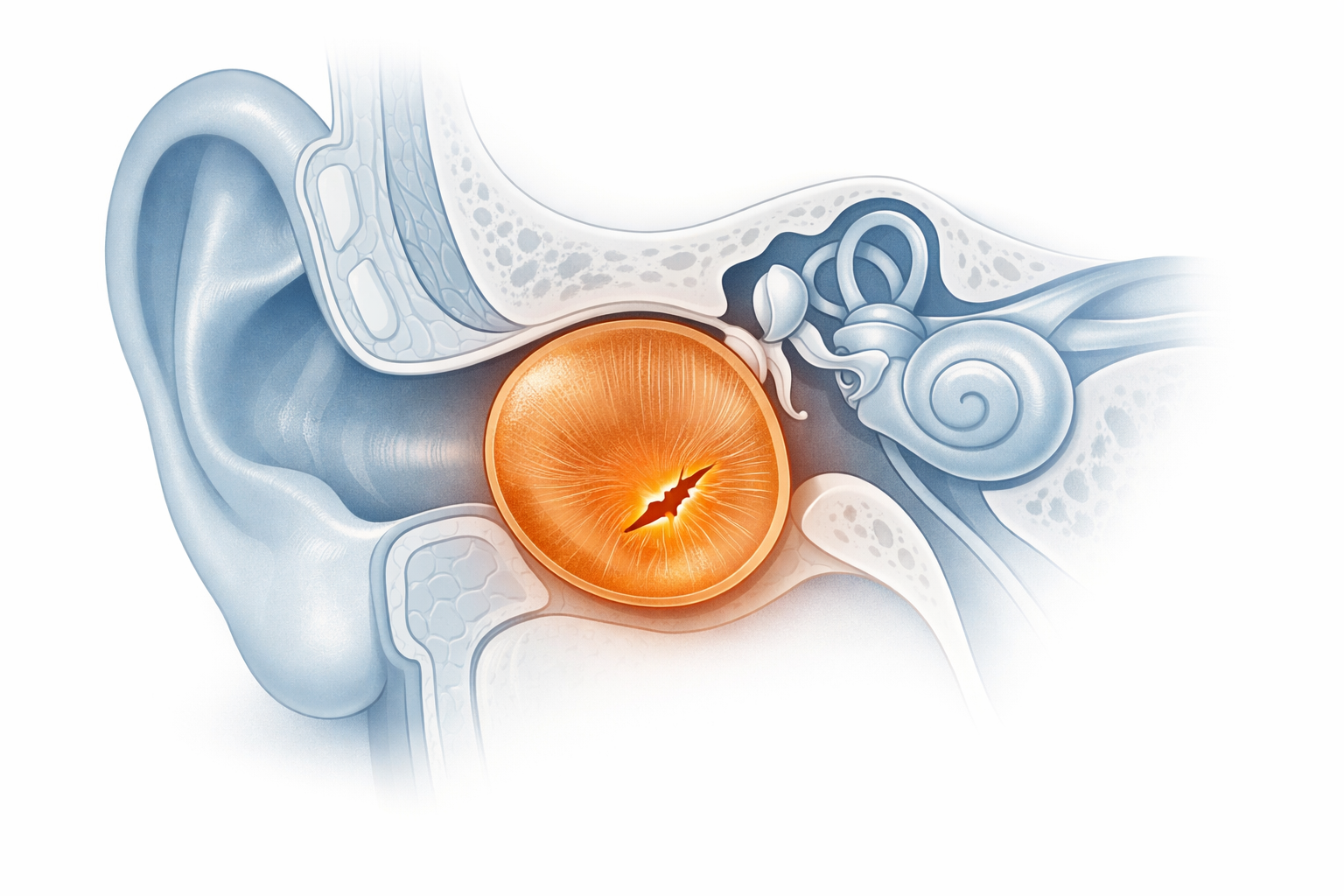
If you’ve recently been told you have a perforated eardrum — also called a ruptured or burst eardrum — you might be wondering what happens next. Do you need surgery? Will it heal on its own? And what if you do nothing?
The truth is, not every perforated eardrum needs to be surgically repaired. The right answer depends on your symptoms, the size and location of the hole, how long you’ve had it, and how it’s affecting your day-to-day life. Here’s what you need to know.
What Is a Perforated Eardrum?
The eardrum (tympanic membrane) is a thin layer of tissue that separates your outer ear from your middle ear. It serves two critical jobs: transmitting sound vibrations so you can hear, and acting as a barrier that protects your middle ear from bacteria, water, and foreign objects.

A perforated eardrum is simply a hole or tear in that membrane. It can happen as a result of:
- Ear infections – the most common cause, where fluid buildup puts pressure on the membrane
- Sudden pressure changes – such as flying, scuba diving, or a forceful blow to the ear
- Foreign objects – cotton buds pushed too deep, or small objects inserted into the ear canal
- Trauma or blast injury – loud explosions or direct impact to the ear
- Previous ear surgery or procedures
Symptoms typically include sudden ear pain, hearing loss, a feeling of fullness in the ear, ringing (tinnitus), and sometimes a discharge from the ear canal.
Will a Perforated Eardrum Heal on Its Own?

Yes – in many cases it will. Small perforations caused by infection or minor injury frequently close on their own within 2 to 12 weeks, without any intervention. The eardrum has a natural ability to regenerate and seal itself, especially in younger patients and when the hole is small and centrally located.
During this healing period, your ENT specialist will typically recommend:
- Keeping the ear dry (no swimming, and care when showering)
- Avoiding blowing your nose forcefully
- Antibiotic ear drops if there is active infection or discharge
- Regular follow-up appointments to monitor healing
If the eardrum heals fully and your hearing returns to normal, no further treatment is needed. For a general overview of how the eardrum heals, see this resource from the NHS on perforated eardrums.
When Should a Perforated Eardrum Be Repaired?
Surgery to repair the eardrum is called a tympanoplasty. It involves patching the hole using a small graft — usually taken from tissue behind the ear. In some cases, a simpler in-office procedure using a paper patch may be tried first.
Surgical repair is generally recommended when:
1. The perforation has not healed after 3-6 months
Once the eardrum has had adequate time to close naturally and hasn’t done so, spontaneous healing is unlikely. Surgery significantly improves the chances of restoring a fully intact eardrum.
2. Significant hearing loss is present
A large perforation can cause meaningful hearing impairment. If the hole is reducing your quality of life — affecting work, communication, or daily activities — repair is worth considering.
3. Recurrent ear infections are occurring
An open eardrum provides a direct route for bacteria to enter the middle ear, leading to repeated infections. Repair can break this cycle and reduce dependence on antibiotics.
4. The perforation is large or in a high-risk location
Holes at the margin of the eardrum (called marginal perforations) carry a higher risk of a serious complication called cholesteatoma — an abnormal skin growth that can damage middle ear structures. These are more likely to require prompt surgical attention.
5. You want to return to swimming or water activities
An unrepaired perforation puts the middle ear at risk every time water enters. For patients who swim regularly or whose occupation involves water, repair makes practical sense.
When Should Surgery Be Avoided or Delayed?
Eardrum surgery is not always the right choice, even when a perforation exists. Your ENT may recommend against surgery — or suggest waiting — in the following circumstances:
- The only hearing ear — if the perforated ear is your only functioning ear, the surgical risk to your remaining hearing may outweigh the potential benefit
- Active infection — operating on an infected ear increases the risk of failure and complications; infection must be cleared first
- Chronic Eustachian tube dysfunction — if the tube connecting your middle ear to the back of your throat isn’t working properly, a repair graft may not hold, making surgery more likely to fail
- Very small, symptom-free perforations — some patients have tiny holes that cause minimal or no symptoms and have remained stable for years; watchful waiting is a perfectly reasonable approach
- Advanced age with multiple health conditions — in elderly patients with significant health issues, the anaesthetic and surgical risk may not be justified for a small quality-of-life gain
- Patient preference — some patients, fully informed of their options, choose to manage conservatively rather than undergo an operation
Risks and Complications of Eardrum Surgery
Tympanoplasty is generally a safe and well-tolerated procedure, but like all surgery, it carries risks. According to the Mayo Clinic’s overview of tympanoplasty, these can include:
- Graft failure – the repair does not take hold; may require a repeat procedure
- Worsening hearing loss – though uncommon, surgery can occasionally result in further hearing deterioration
- Tinnitus – some patients experience new or worsened ringing after surgery
- Dizziness or vertigo – temporary in most cases, but may persist in some
- Taste disturbance – caused by temporary disruption of the chorda tympani nerve, which runs near the eardrum; usually resolves within weeks to months
- Recurrence – the repaired eardrum can re-perforate, particularly if the underlying cause has not been addressed
Your surgeon will discuss your personal risk profile with you in detail before any decision is made. Message us on WhatsApp to book a consultation.
Alternatives to Eardrum Repair Surgery
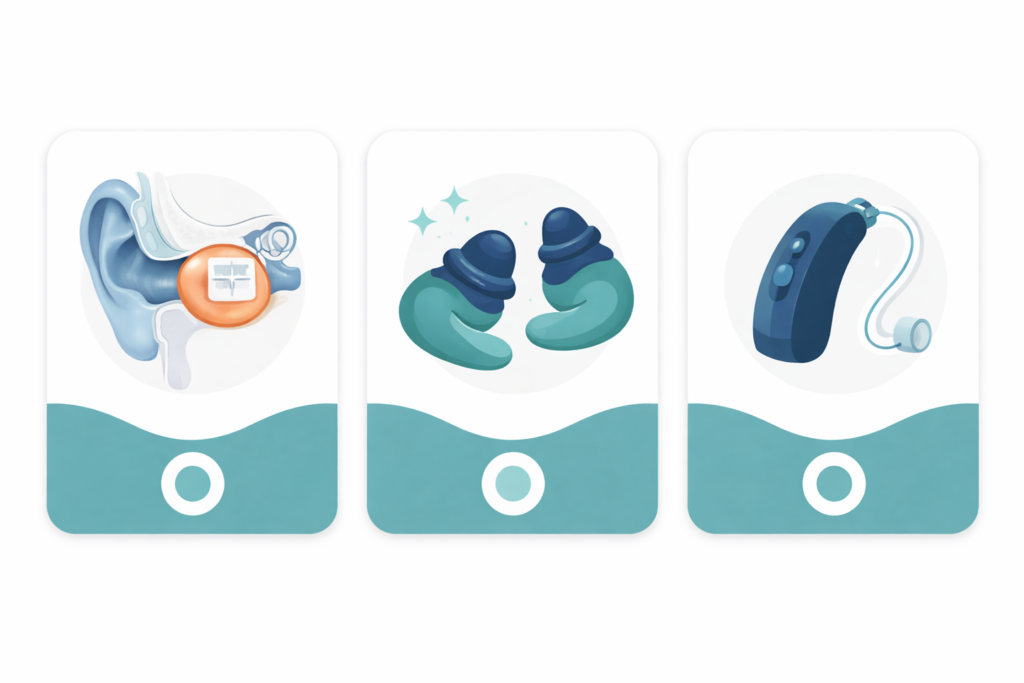
For patients who are not surgical candidates, or who prefer a non-surgical approach, there are several management options:
Paper patch procedure (myringoplasty)
A simple in-office technique where a thin paper or gel patch is placed over the perforation. It works best for small, clean-edged perforations and may need to be repeated. It is not as reliable as formal surgery but can promote healing and temporarily restore some hearing.
Ear protection and dry ear precautions
Living with a perforation is manageable for many people with the right precautions — custom ear moulds for swimming, silicone putty plugs when showering, and avoiding activities with significant pressure changes.
Hearing aids
For patients with hearing loss from a perforation that cannot or should not be repaired, a hearing aid can effectively compensate for the reduced hearing without any surgical risk.
Watchful waiting with regular ENT review
Some perforations remain stable for many years. Regular monitoring ensures that any changes such as the development of a cholesteatoma are caught early.
For a detailed clinical perspective, the ENT UK patient resource on perforated eardrums is a reliable reference.
The Bottom Line
A perforated eardrum is not a medical emergency in most cases, but it does deserve proper evaluation. Some perforations heal without any intervention. Others need surgery to prevent ongoing problems. And in some patients, conservative management is the safest, most sensible path.
The key is getting an expert assessment from an ENT specialist who can examine your eardrum, assess your hearing, and recommend the approach that is right for you — not just the hole.
If you have ear pain, hearing loss, or discharge from your ear, don’t wait. Book a consultation with our ENT team on WhatsApp today.
Comments are closed