Surviving ENT Surgery: 14 Days of Malaysian-Friendly Healing Foods
The Ultimate Malaysian Guide: What to Eat (and Avoid) After ENT Surgery
If you or a loved one has recently undergone an Ear, Nose, and Throat (ENT) surgery—whether it’s a tonsillectomy, adenoidectomy, sinus surgery (FESS), or vocal cord procedure—congratulations on taking the first step toward better health!
As an ENT specialist, one of the most common questions I get in the consultation room immediately after discharging a patient is: “Doctor, lepas ni boleh makan apa? Boleh makan nasi lemak tak? Boleh minum ais?” (Doctor, what can I eat after this? Can I eat nasi lemak? Can I drink ice?).
Malaysians are incredibly passionate about our food. From spicy sambal belacan to piping hot sup ekor and crunchy keropok lekor, our culinary landscape is rich, vibrant, and bursting with flavor. However, when you are recovering from an ENT surgery, your throat, nasal passages, and digestive tract need time, gentleness, and the right nutrients to heal properly.
In this comprehensive guide, we will break down exactly what you should eat, what you absolutely must avoid, and how to navigate post-surgery nutrition with a uniquely Malaysian twist.
Why Your Diet Matters Crucially After ENT Surgery
Before we dive into the menu, it is essential to understand why we place restrictions on your diet. ENT surgeries often involve delicate tissues in the throat, nose, or mouth. These areas are highly vascular (meaning they have a lot of blood vessels) and are constantly exposed to everything you breathe, drink, and eat.
1. Preventing Post-Operative Hemorrhage (Bleeding)
This is the number one reason for dietary restrictions, especially after a tonsillectomy or adenoidectomy. The surgical site will form a scab. If you eat something hard, scratchy, or sharp (like a potato chip or a piece of fried chicken bone), it can dislodge the scab prematurely, leading to severe bleeding.
2. Reducing Inflammation and Swelling
Hot temperatures increase blood flow. If you consume piping hot soups or drinks, you can increase swelling and throbbing pain in the surgical area, or even trigger a nosebleed after sinus surgery. Cool or lukewarm foods help constrict blood vessels, reducing swelling and providing a numbing, soothing effect.
3. Avoiding Irritation and Infection
Spicy foods, highly acidic fruits, and heavily processed items can act like acid on an open wound. They burn, irritate, and can prolong the inflammatory phase of wound healing. Proper nutrition, on the other hand, provides the protein and vitamins (like Vitamin C and Zinc) necessary for tissue repair.
(Read more about the stages of wound healing from the National Institutes of Health (NIH)
The “Danger Zone” – Malaysian Foods to Strictly Avoid
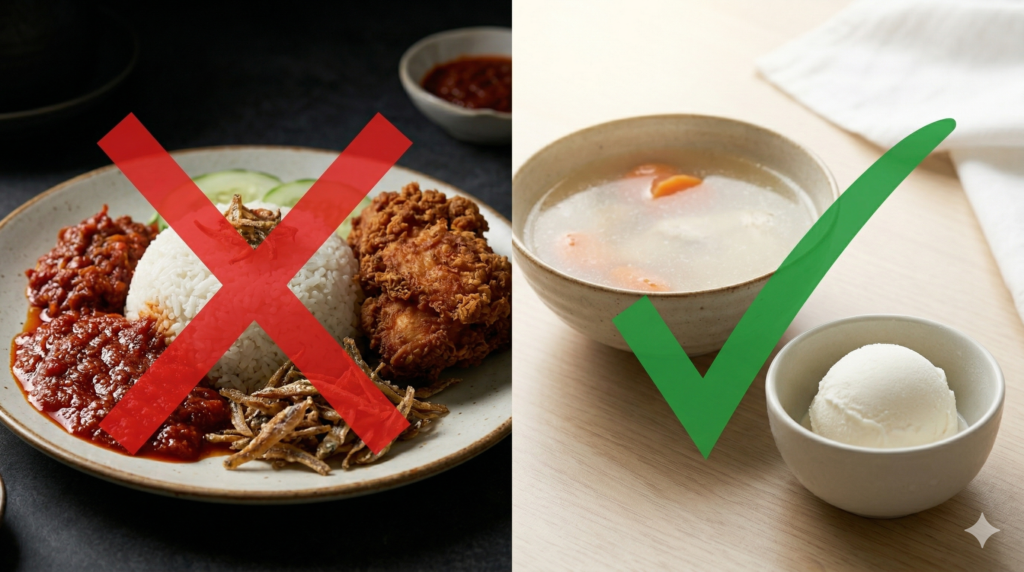
Let’s get the bad news out of the way first. For the first 10 to 14 days post-surgery, you need to say a temporary goodbye to some of our local favorites.
1. The Spicy and Pungent (No Sambal!)
- What to avoid: Nasi Lemak sambal, Tom Yam, Curry Laksa, Asam Pedas, and anything with cili padi.
- Why: Spices contain capsaicin, which triggers pain receptors. Eating spicy food after throat or sinus surgery will cause intense, unbearable burning and can induce coughing or sneezing fits, which might tear your stitches or cause bleeding.
2. The Hard, Crunchy, and Scratchy
- What to avoid: Keropok lekor (fried), peanut sauces (kuah kacang), fried chicken (Ayam Goreng Berempah), toast, biscuits (unless heavily soaked), and crusty bread.
- Why: These are the biggest culprits for dislodging surgical scabs in the throat. Think of swallowing a sharp piece of keropok over a fresh wound—it’s exactly as painful as it sounds.
3. The Piping Hot
- What to avoid: Boiling hot Teh Tarik, freshly served Sup Kambing, or steamboat/hotpot.
- Why: Heat expands blood vessels. For sinus surgeries, hot steam rising into the nasal passages can trigger a nosebleed. For throat surgeries, heat increases swelling and pain.
4. The Highly Acidic
- What to avoid: Limau Ais, fresh orange juice, pineapple cuts, Asam Boi drinks, and vinegar-heavy dishes.
- Why: Acid irritates raw tissue. Stick to non-acidic, gentle hydration.
5. Dairy (With a Caveat)
- What to avoid: Thick milkshakes or heavy condensed milk drinks (like very rich Milo Ais) if you feel it makes your saliva overly thick.
- Why: While plain ice cream is great for tonsillectomies, some patients find that heavy dairy creates thick phlegm, making them want to clear their throat. Clearing your throat aggressively is dangerous post-surgery. If dairy bothers you, switch to clear liquids or soy-based alternatives.
Part 3: The Healing Menu – What Malaysians CAN Eat
Now for the good news. Malaysia has an abundance of soft, comforting, and delicious foods that are perfect for your recovery journey. We divide the diet into three phases: Clear Liquids, Full Liquids/Soft, and Mechanical Soft.
Phase 1: Days 1 to 3 (The Cool and Clear Phase)
During the first 24 to 72 hours, your throat will be the most tender, and swallowing might feel like swallowing glass. The goal here is strict hydration and calorie intake without chewing.
Recommended Local Foods:
- Air Kurma (Date Water) or Honey Water: Excellent for quick energy and soothing the throat. Ensure it is cool or room temperature.
- Barley Water (Air Barli): A traditional cooling drink. Make sure the barley grains are strained out or boiled until they are completely mushy.
- Cincau (Grass Jelly) Drinks: Very soothing, but ensure the jelly is cut into tiny, easily swallowable pieces, or mash it up.
- Clear Chicken Soup (Sup Kosong): No spices, no pepper. Just the rich, nutritious broth of boiled chicken and carrots, served lukewarm (suam).
- Popsicles (Aiskrim Malaysia): Avoid the acidic flavors like lime or asam boi. Stick to sweet corn (jagung), lychee, or plain syrup, provided there are no chunks.
- Isotonic Drinks: Drinks like 100 Plus are great for restoring electrolytes, but de-gas them first. Leave the bottle open so it goes flat; the carbonation will sting a raw throat.
Phase 2: Days 4 to 7 (The Mushy and Soft Phase)
As the initial swelling subsides, you will feel hungrier. It is time to introduce soft foods that require minimal to no chewing.
Recommended Local Foods:
- Bubur Nasi (Porridge): The ultimate Malaysian comfort food. Make it plain (Bubur Kosong) or blend it with some boiled chicken. Avoid adding fried shallots (bawang goreng), peanuts, or spicy chili oil. A little bit of sesame oil and soy sauce is perfect.
- Tau Foo Fah: An absolute lifesaver. It is soft, cold, and goes down easily. However, request clear sugar syrup instead of ginger syrup (air halia), as ginger can be a bit too spicy/irritating for a fresh wound.
- Steamed Egg (Telur Kukus): Chinese-style water steamed egg (Chawanmushi style) is packed with protein and slides right down the throat.
- Mashed Potatoes: You can easily get this from local fast-food chains or make it at home. Ensure the gravy isn’t too peppery.
- Plain Vanilla Ice Cream: The cold temperature numbs the surgical area, providing wonderful pain relief.
- Soft Fruits: Mashed bananas, pureed papaya, or blended watermelon (without seeds).
Phase 3: Days 8 to 14 (The Transition Phase)
The scabs in your throat will likely begin to fall off around Day 7 to 10. You might experience a slight increase in pain or a tiny streak of blood in your saliva . You can now handle more substantial, yet still soft, meals.
Recommended Local Foods:
- Kway Teow Sup: Flat rice noodles in a clear broth. The noodles are slippery and easy to swallow. Ask for no bean sprouts (taugeh) if they are too crunchy, and definitely no chili!
- Steamed Fish (Ikan Kukus): Very soft protein. Be extremely careful with fish bones; thoroughly check the fish before eating.
- Soft Tofu with Minced Chicken: Easy to chew and rich in protein to aid tissue recovery.
- Boiled Vegetables: Spinach (bayam) or soft gourds boiled until they are very tender.
[Internal Link: Check out our related article on What to Expect During Tonsillectomy Recovery here]
Part 4: Addressing Malaysian “Pantang” (Traditional Myths)
In Malaysia, we have a strong culture of post-surgical pantang (confinement or dietary restrictions). While many traditional practices are rooted in wisdom, some can actually hinder your recovery from an ENT perspective. Let’s address a few common ones:
1. “Can I take Ikan Haruan (Snakehead Fish) or Gamat (Sea Cucumber) essence to heal faster?”
- The Medical View: Ikan Haruan and Gamat are famous locally for promoting wound healing. Generally, soft steamed Ikan Haruan is fine during Phase 3. However, regarding concentrated liquid extracts or pills, we advise caution. Some highly concentrated traditional supplements can interact with post-operative medications (like antibiotics or painkillers). Always consult with your ENT surgeon before taking any traditional supplements during the first two weeks of recovery.
2. “Old folks say I cannot drink ice after surgery, it will make me cough.”
- The Medical View: This is the most common myth we have to bust! For traditional surgeries like C-sections or orthopedic surgeries, warm foods are preferred in pantang. But for throat surgeries (like tonsillectomy), ICE IS YOUR BEST FRIEND. Cold temperatures reduce swelling and numb the pain. We actively encourage ice cream and icy water!
3. “Can I drink Kopi O or Nescafe to get my energy back?”
- The Medical View: It’s better to wait. Coffee is a diuretic, which can dehydrate you. Furthermore, coffee is highly acidic and can irritate a healing throat. Stick to water, barley, and non-acidic juices.
Hydration – Your Secret Weapon

If you only remember one thing from this 3,000-word guide, let it be this: Drink your fluids.
Dehydration is the most common reason patients end up back in the emergency room after an ENT surgery. When your throat hurts, you don’t want to drink. When you don’t drink, you become dehydrated. Dehydration causes the scabs in your throat to dry out, become stiff, and crack—which drastically increases your pain and the risk of bleeding.
Tips for staying hydrated:
- Keep a water bottle next to your bed at all times.
- Take small, frequent sips every 15 minutes rather than trying to gulp down a whole glass at once.
- Chew on ice chips.
- Monitor your urine. It should be light yellow or clear. If it is dark and concentrated, you are not drinking enough.
Part 6: Sample 3-Day Malaysian Post-Op Meal Plan
To make things easier for you and your caretakers, here is a practical meal plan for your first week of recovery.
Day 1 & 2: Maximum Soothing
- Breakfast: Chilled oat milk or blended smooth soya bean milk.
- Lunch: Lukewarm plain chicken broth.
- Snack: 1 bowl of plain vanilla ice cream or Tau Foo Fah (clear syrup).
- Dinner: Clear chicken broth and de-gassed 100 Plus.
- Constant: Sips of iced water and ice chips.
Day 3 to 5: Introducing Substance
- Breakfast: Very soft, watery plain rice porridge (Bubur Kosong) with a dash of soy sauce.
- Lunch: Chawanmushi (steamed egg) or mashed potatoes with mild gravy.
- Snack: Cold Cincau drink (mashed jelly) or a smooth sweet corn popsicle.
- Dinner: Bubur Ayam (chicken blended very fine, no spring onions or fried shallots).
Day 6 to 10: The Transition
- Breakfast: Soft boiled eggs (Telur separuh masak) without pepper.
- Lunch: Kway Teow in clear soup with soft steamed chicken slices.
- Snack: Mashed ripe banana or papaya.
- Dinner: Soft white rice with steamed tofu and steamed fish (careful with bones!).
Part 7: When to Seek Immediate Medical Attention

While following this diet will ensure a smooth recovery, you must remain vigilant. Contact your doctor or head to the nearest Emergency Department immediately if you experience:
- Bright red bleeding from the mouth or nose (a few specks of dark, dried blood in saliva is normal, but flowing bright red blood is an emergency).
- Inability to drink fluids for more than 12 hours.
- A high fever (above 38.5°C) that does not come down with prescribed medication.
- Severe, unmanageable pain despite taking your painkillers on schedule.
(For general emergency guidelines, refer to the Malaysian Ministry of Health Portal
Frequently Asked Questions (FAQs)
Q: Can I use a straw after surgery? A: NO. Whether you had sinus surgery or throat surgery, do not use a straw for at least two weeks. The suction created in your mouth can pull off scabs in the throat or trigger bleeding in the sinuses. Always drink directly from a cup.
Q: How long until I can eat a normal Nasi Kandar or spicy food? A: You should avoid spicy and heavily textured foods for at least 14 to 21 days. Your doctor will examine your throat during your follow-up appointment and give you the green light when the surgical site is fully healed.
Q: Is it normal to have ear pain when I eat? A: Yes, referred ear pain is very common after throat surgeries (like tonsillectomies) because the throat and ears share the same nerve pathways. Continue eating soft foods and take your pain medication 30 minutes before meals.
Q: Can I smoke or vape during recovery? A: Absolutely not. Smoking and vaping severely restrict blood flow to the healing tissues, delay recovery, and greatly increase the risk of infection and bleeding.
Final Thoughts on Your Recovery
Recovering from an ENT surgery requires a bit of patience, a lot of hydration, and a temporary adjustment to your beloved Malaysian diet. By sticking to soft, cool, and non-irritating foods like bubur, tau foo fah, and clear soups, you are giving your body the best possible environment to heal safely and quickly.
Remember, this strict diet is only temporary. Soon enough, you’ll be back to enjoying your favorite Roti Canai and Teh Tarik without a second thought!
Need ENT Care in Kuala Lumpur?
Every patient’s recovery journey is unique, and sometimes you need personalized advice. If you are experiencing persistent throat or sinus issues, or if you need post-operative care and evaluation, we are here to help.
Take the first step towards better ear, nose, and throat health today. 👉 [Click Here to Schedule an Appointment at Our Clinic] or call us directly here to book a consultation with our ENT specialists. Let us guide you back to full health!