
Can AirPods Really Replace Hearing Aids? An ENT’s Opinion
Apple has turned AirPods Pro 2 and 3 into more than just wireless earphones. With recent software and regulatory changes, they now have a Hearing Test and Hearing Aid feature that can act like an over-the-counter (OTC) hearing aid for adults with mild to moderate hearing loss.
As an ENT surgeon, I get more and more questions like:
“Doctor, if my AirPods can work as hearing aids, do I still need to see you?”
This article gives a simple, honest answer. I will explain what AirPods can do, where they fall short, and how to decide what is right for you.

1. What exactly did Apple launch?
Apple’s newer AirPods Pro models now have three key hearing features when paired with an iPhone or iPad:
- Hearing Test
- You wear your AirPods and run a short test in the Health or AirPods settings.
- You listen for soft beeps at different pitches and tap when you hear them.
- The phone then creates an audiogram (a graph of your hearing levels).
- Hearing Aid feature (OTC hearing aid software)
- The U.S. FDA has officially authorised this “Hearing Aid Feature” software to turn compatible AirPods Pro into an over-the-counter hearing aid for adults with perceived mild to moderate hearing loss.
- It uses your hearing test results to boost the sounds you struggle with, especially speech.
- Hearing Protection and Media Assist
- The same system can reduce loud sounds and adjust media volume to protect your ears.
Apple calls this a “clinical-grade” hearing aid experience in many markets, but availability depends on local regulatorsand may not be identical in every country.
2. What is an “over-the-counter” hearing aid?
In 2022, the U.S. FDA created a new category called over-the-counter (OTC) hearing aids.
Key points:
- Designed for adults (18+) with perceived mild to moderate hearing loss.
- Can be bought directly from shops or online without a prescription, medical exam, or fitting by an audiologist.
- Includes traditional devices and self-fitting devices using apps and software.
In September 2024, the FDA authorised Apple’s Hearing Aid Feature software as the first OTC hearing aid softwarefor use with compatible AirPods Pro.
Other countries have their own rules. For example:
- Australia’s TGA has approved AirPods Pro 2 as a medical-device hearing aid for mild to moderate hearing loss, although full use still depends on software rollout.
In Malaysia and many parts of Asia, regulatory status and features may differ, so you should always check the latest local information and not assume every feature is active.
3. Who might benefit from using AirPods as a hearing aid?
For the right person, AirPods with the Hearing Aid feature can be a useful first step, not a full solution.
They may help if:
- You are an adult (18+) with:
- Mild to moderate difficulty hearing people in noisy places like restaurants or meetings.
- Trouble hearing the TV clearly without turning it very loud.
- Family members complain you “can’t hear” but you are not ready for formal hearing aids.
- You are tech-savvy and comfortable:
- Doing a hearing test on your phone.
- Adjusting settings and profiles in an app.
- You want a discreet and cheaper option:
- AirPods cost much less than premium clinic-level hearing aids, especially in high-income countries.
In these cases, AirPods can:
- Boost speech in real time based on your audiogram.
- Reduce stigma because they look like normal earbuds, not “grandparent hearing aids”.
- Encourage people to seek help earlier, instead of ignoring their hearing loss.
4. Where AirPods fall short compared with proper hearing aids
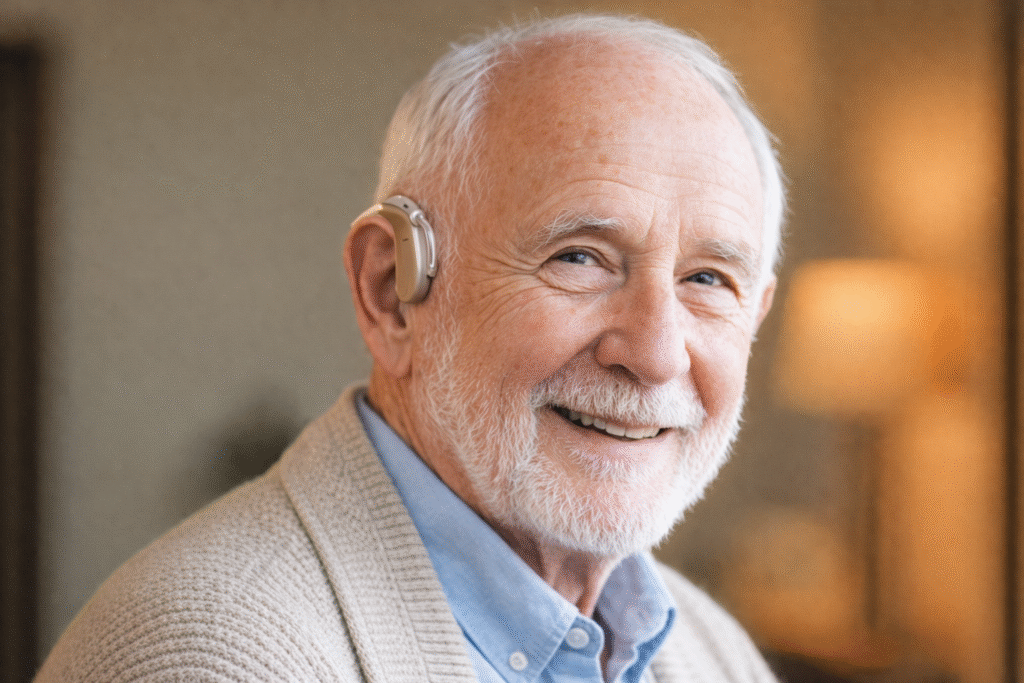
Even with the new software, AirPods are not the same as clinic-fitted hearing aids.
4.1 They are not designed for all-day medical use
- AirPods have limited battery life and need frequent charging.
- They may feel uncomfortable if worn all day, every day.
- Sweat, humidity, and long-term ear canal irritation are concerns.
4.2 No proper ear and hearing examination
AirPods and the Hearing Aid feature cannot:
- Look into your ear canal.
- Check for wax blockage, infection, eardrum perforation, or middle ear fluid.
- Diagnose sudden or asymmetric hearing loss, which can be an emergency.
These are things only an ENT doctor and audiologist can do.
4.3 Less precise fitting and fine-tuning
Traditional hearing aids, especially those fitted in a clinic, usually offer:
- Real-ear measurements to verify amplification.
- Fine adjustments for different environments (office, restaurant, car, worship place).
- Specific models for severe or profound hearing loss, children, and people with complex ear anatomy.
Reviews of AirPods’ hearing aid mode show that while many users notice improvement, some find the sound too loud or not comfortable without professional adjustment.
4.4 Not suitable for severe or complex hearing loss
You should not rely on AirPods as your only “hearing aid” if you have:
- Severe or profound hearing loss.
- Very different hearing between the two ears.
- Hearing loss with tinnitus, vertigo, or neurological symptoms.
These cases need full medical and audiological assessment.
5. Red-flag symptoms: when NOT to DIY with AirPods
If you notice any of these, do not self-treat with AirPods or OTC hearing aids first. See an ENT doctor or audiologist urgently:
- Sudden hearing loss in one or both ears (within hours to a few days).
- One ear much worse than the other (asymmetrical hearing loss).
- Persistent ringing, buzzing, or roaring in one ear (tinnitus).
- Vertigo, imbalance, or feeling like the room is spinning.
- Ear pain, discharge, blood, or a feeling of blockage that does not clear.
- History of head injury, severe ear infection, or previous ear surgery.
In these situations, using AirPods as “hearing aids” without a proper exam may delay diagnosis of serious conditions.
6. A simple decision guide: AirPods vs proper hearing aids
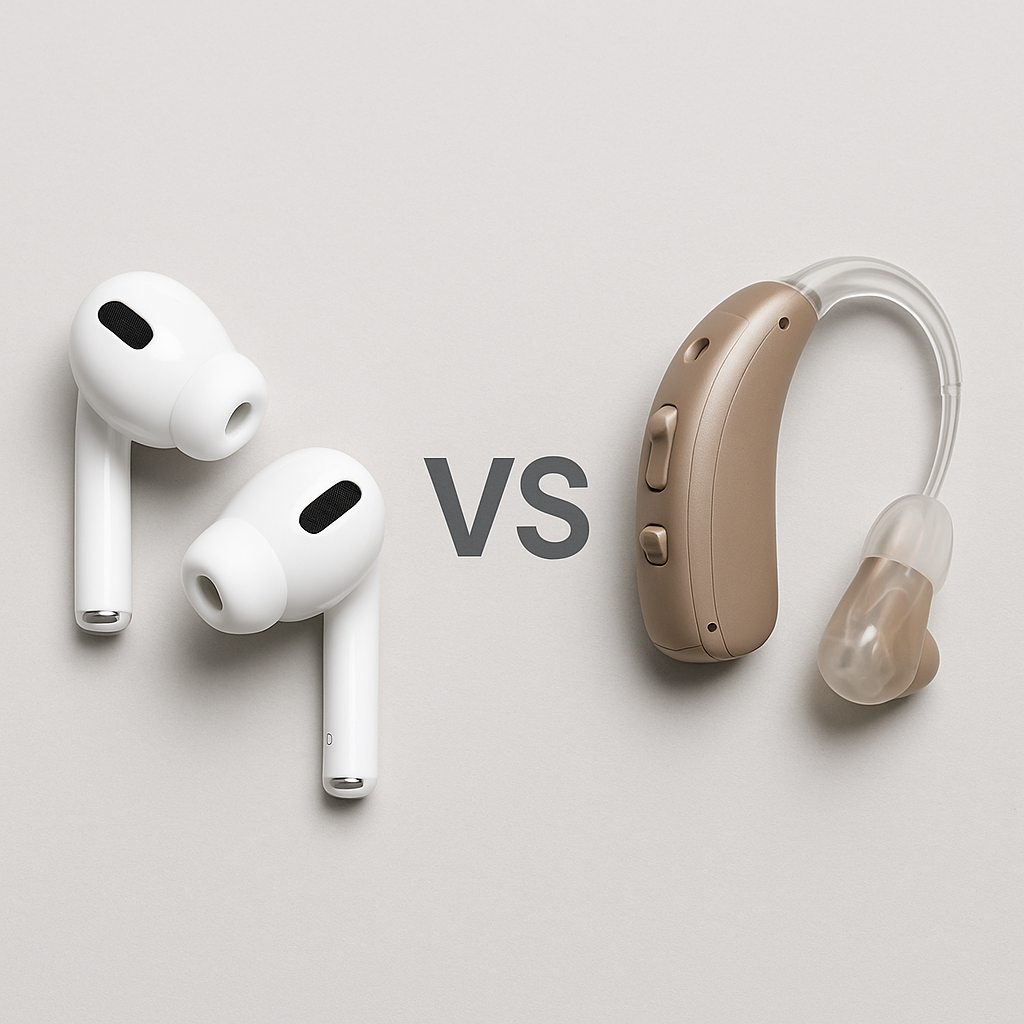
You can use this as a basic guide before you buy anything:
Step 1 – Ask yourself: “How big is my problem?”
- Occasional difficulty in noisy places, but coping well at home and work→ You might trial AirPods Hearing Aid feature after at least one basic hearing check.
- Daily difficulty at work, with family, or watching TV, and people complain→ You should have a formal hearing assessment and discuss proper hearing aids.
Step 2 – Get at least one professional hearing test
Even if you are excited about the AirPods hearing aid mode, it is still wise to:
- See an ENT doctor or audiologist for a clinical audiogram and ear examination.
- Use that audiogram in your Health app (Apple allows importing a professional result).
This combines the convenience of AirPods with proper medical assessment.
Step 3 – Decide based on your results
- Mild, symmetric hearing loss, healthy ears, good speech understanding→ AirPods with Hearing Aid feature may be a reasonable starter solution.
- Moderate to severe loss, asymmetry, or other ear problems→ Clinic-fitted hearing aids, and sometimes additional tests or imaging, are usually better.
7. What about Malaysia and Southeast Asia?
As of 2025:
- The OTC hearing aid rules are well defined in the U.S., and Apple’s Hearing Aid Feature is FDA-authorised there.
- Countries like Australia have started to classify AirPods Pro 2 as medical-device hearing aids, but software rollout is still ongoing.
- In Malaysia and much of Asia, regulations for OTC hearing aids and “hearables” are still evolving.
Because feature availability varies by region, your AirPods may not have every hearing feature described in U.S. news articles.
If you are in Malaysia and curious about using AirPods as a hearing aid:
- Check your iPhone and AirPods settings for the Hearing Test and Hearing Aid options.
- Read the latest local information from Apple Malaysia and your ENT specialist.
- Do not skip a clinic hearing test, especially if you notice red-flag symptoms.
8. My advice as an ENT surgeon
To summarise:
- Yes, AirPods Pro with the Hearing Aid feature can work like an OTC hearing aid for some adults with mild to moderate hearing loss.
- They are not a replacement for a proper ear and hearing exam.
- They are not ideal for severe loss, complex ear disease, children, or red-flag symptoms.
- Used wisely, AirPods can be:
- A bridge for people who are not ready for traditional hearing aids.
- A tool to screen hearing and raise awareness earlier.
If you are unsure, the safest path is simple:
Test your hearing properly, then decide together with an ENT doctor or audiologist.
9. Short FAQ about AirPods as hearing aids
Q1: Can AirPods damage my hearing if I use them as hearing aids?
If you follow the recommended settings and avoid very high volumes, the risk is low. AirPods also have hearing-protection features. However, any device can damage hearing if used too loudly for too long, so follow the safety alerts on your phone.
Q2: Are AirPods hearing aids cheaper than normal hearing aids?
In many countries, yes. AirPods are much cheaper than premium clinic-fitted hearing aids, but remember you are paying for convenience and basic amplification, not full medical care, longer warranties, or specialised support.
Q3: Can I use AirPods instead of seeing an ENT doctor?
No. AirPods cannot diagnose the cause of hearing loss. You still need a proper examination at least once, especially if you have sudden, one-sided, or worsening hearing problems.
Q4: Do AirPods help tinnitus (ringing in the ear)?
They may mask tinnitus in some people by amplifying background sounds, but they are not a treatment for tinnitus. Persistent tinnitus should always be checked properly.
Q5: Are AirPods hearing aids covered by insurance?
This depends on your insurance policy and country. Many insurers do not yet treat AirPods as “hearing aids” for reimbursement. Check with your provider.
Discover more from The ENT Doctor
Subscribe to get the latest posts sent to your email.
Comments are closed