

Christmas Travel: ENT Tips
It is the Christmas season. Many people travel to countries with cold weather. The air is often cold, dry, and windy. Indoor heating makes it even drier.
Your nose, throat, and sinuses feel this change fast. Your ears can also suffer during flights and altitude changes.
Here is a practical ENT guide to help you travel comfortably. It is written for adults and children. It is also useful if you already have sinusitis, allergic rhinitis, or frequent ear blockage.
Why cold weather affects ENT symptoms
Cold destinations often mean:
- Lower humidity outdoors
- Heated rooms indoors (very dry air)
- More time in closed spaces with crowds
- Higher risk of viral infections
Dry air irritates the lining of the nose and throat. It thickens mucus. It reduces the “self-cleaning” system in the nose (mucociliary clearance). This makes you feel blocked. It can also trigger nosebleeds.
Common ENT problems during cold weather travel
1) Dry nose and blocked nose
You may notice:
- Stuffy nose, especially at night
- Crusting inside the nostrils
- Reduced smell
- Postnasal drip
What helps
- Saline nasal spray (isotonic) 3–6 times/day.
- Saline rinse once daily if you are prone to sinus issues.
- Humidify your room if possible (or use a wet towel near the bed as a simple backup).
- Avoid picking crusts. It causes bleeding.
What to avoid
- Overusing decongestant nasal sprays (e.g., oxymetazoline). Do not use more than 3 days unless your doctor advises otherwise. Rebound congestion is common.
2) Nosebleeds (epistaxis)
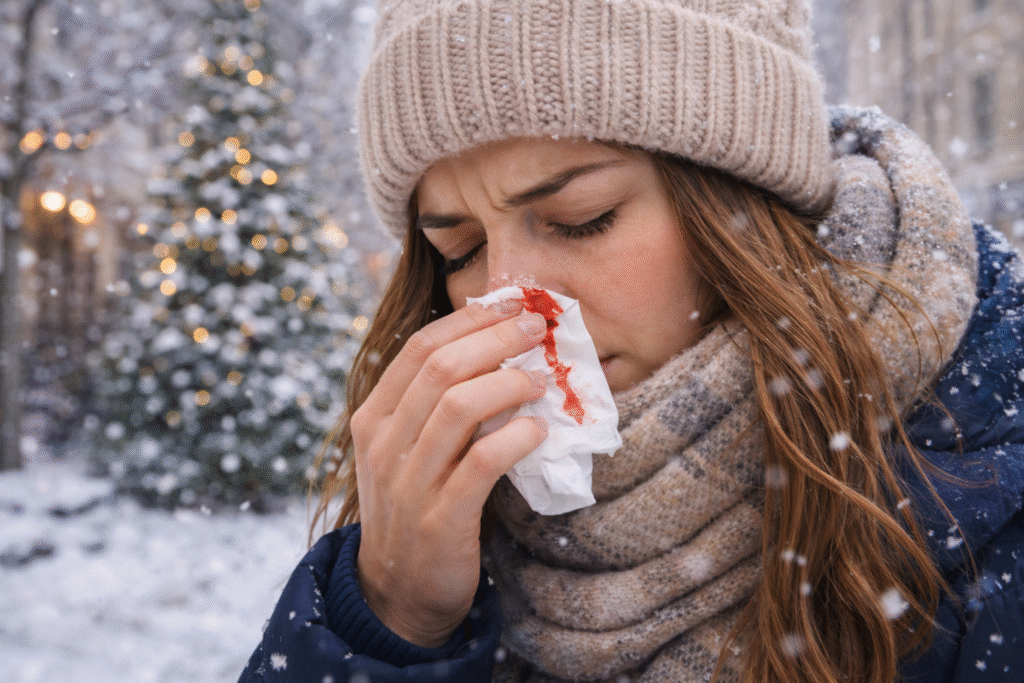
Nosebleeds are common in winter. Dry air causes cracks in the front part of the nose.
If a nosebleed happens
- Sit up and lean forward slightly.
- Pinch the soft part of the nose (not the bridge).
- Hold firm pressure for 10 minutes without checking.
- Spit out blood. Do not swallow it.
- After it stops, avoid hot showers, heavy exercise, and nose blowing for 24 hours.
Prevention
- Apply a thin layer of petroleum jelly or a nasal moisturising gel to the front of the nostrils at night.
- Use saline spray regularly.
Seek help urgently if
- Bleeding lasts >20 minutes despite correct pressure.
- You feel faint, weak, or short of breath.
- You are on blood thinners or have a bleeding disorder.
3) Sinus pressure and headaches
Cold air itself does not “cause sinusitis,” but it can worsen nasal blockage and trigger sinus pressure.
Tips
- Keep the nose open: saline spray/rinse.
- Stay hydrated.
- Warm showers can help loosen mucus.
- If you have known sinus disease, travel with your usual medications.
Red flags
- High fever, severe facial swelling, double vision, severe one-sided headache, or worsening pain after initial improvement. These need medical assessment.
4) Sore throat and dry cough
Cold dry air dries the throat and voice box (larynx). You may get:
- Scratchy throat
- Frequent throat clearing
- Dry cough
- Voice fatigue
What helps
- Drink water often. Small sips are fine.
- Warm fluids (tea, soup).
- Lozenges or honey (adults and children >1 year).
- Wear a scarf or mask outdoors to warm the air before it reaches your throat.
- Avoid smoking and vaping.
5) Ear pressure during flights (and mountain trips)

This is one of the most common travel ENT complaints.
Pressure changes affect the middle ear. The Eustachian tube equalises pressure. If it is blocked (cold, allergy, sinus congestion), you can get:
- Ear pain during descent
- Muffled hearing
- “Blocked” ear after landing
- Rarely, ear barotrauma
Before the flight
- If you are congested, start saline spray early.
- If you have allergic rhinitis, keep your regular allergy treatment consistent.
- Consider timing: avoid flying when you have a bad cold if possible.
During descent
- Swallow frequently, yawn, or chew gum.
- Do the gentle Valsalva: pinch nose, close mouth, blow gently.
- For children: feed, sip, or use a pacifier during descent.
Avoid
- Forceful Valsalva. It can hurt the ear.
See a doctor if
- Severe pain, bleeding from the ear, or hearing loss after flying.
A simple cold-weather ENT packing list

Bring these in your hand-carry:
- Saline nasal spray (isotonic)
- Saline rinse sachets (if you use them)
- Lip balm (dry lips often come with dry nose)
- Throat lozenges
- A simple thermometer
- Your regular allergy meds (if any)
- A warm scarf or mask for outdoor air
- Earplugs for flights (pressure-regulating earplugs can help some people)
If you have chronic sinusitis, ear disease, or prior ear surgery, consider a pre-travel ENT check.
Daily routine in a cold country (simple and effective)
Morning
- Saline spray or rinse.
- Warm drink and hydrate.
Daytime (outdoors)
- Scarf/mask over nose and mouth.
- Avoid breathing cold air through the mouth for long periods.
Evening (indoors)
- Humidify the room if possible.
- Moisturise the nose front (thin layer) if you are prone to bleeding.
Night
- Keep water by the bed.
- Avoid sleeping directly under a heater blowing at your face.
Special tips for kids
Children have narrower nasal passages and Eustachian tubes. They block more easily.
- Use saline spray (age-appropriate) and suction if needed for babies.
- Encourage drinking fluids.
- For flights, plan feeding during descent.
- If your child has ear pain with fever, persistent tugging, or discharge from the ear, get them checked.
When you should see an ENT doctor while traveling
Get medical care if you have:
- Nosebleeds that keep returning or won’t stop
- Severe ear pain during/after flights
- Hearing loss that persists beyond 48 hours after travel
- High fever with facial swelling or severe sinus pain
- Hoarseness lasting more than 3 weeks (especially if you smoke)
- Severe sore throat with difficulty breathing or swallowing
Discover more from The ENT Doctor
Subscribe to get the latest posts sent to your email.
Comments are closed