
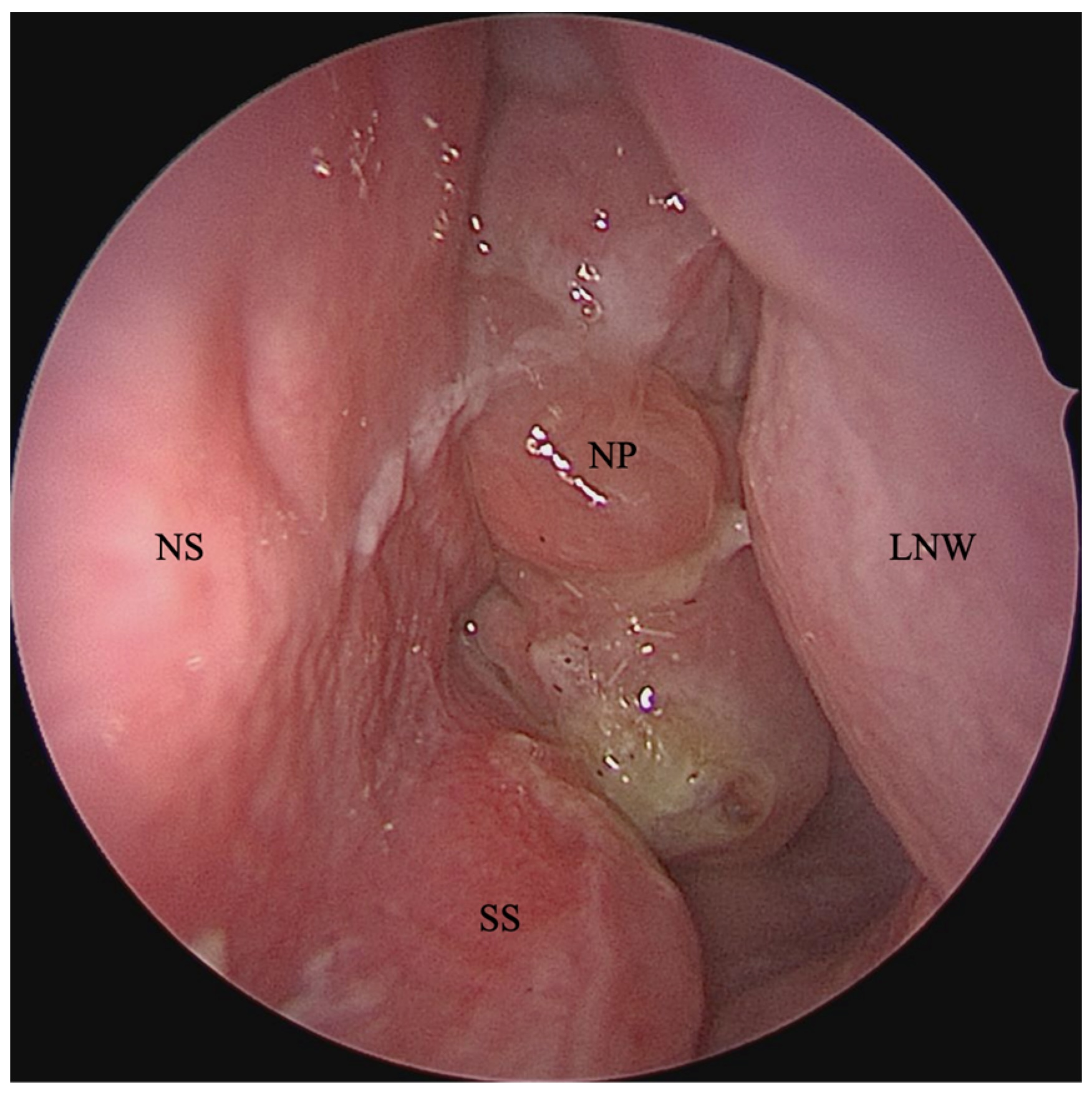
Loss of smell is one of the most distressing symptoms patients describe.
If you have:
- Constant blocked nose
- Reduced or absent smell
- Recurrent sinus infections
- Facial pressure
You may have chronic rhinosinusitis with nasal polyps (CRSwNP).
This condition is increasingly discussed because of newer biologic injection therapies that may reduce polyp size and improve smell — without immediate surgery.
Let’s break it down clearly.
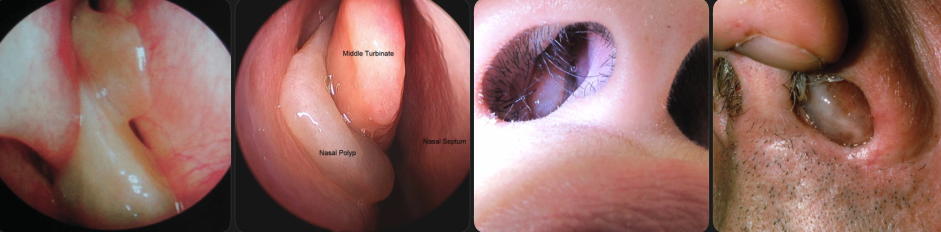
Nasal polyps are non-cancerous inflammatory growths inside the nasal cavity and sinuses.
They are usually:
- Soft
- Pale or translucent
- Painless
- Bilateral (often on both sides)
They develop due to chronic inflammation — commonly associated with:
- Allergy
- Asthma
- Aspirin sensitivity
- Eosinophilic inflammation
Why Do Nasal Polyps Cause Loss of Smell?
Smell depends on airflow reaching the olfactory cleft (the top part of the nasal cavity).
Polyps block that airflow.
In addition:
- Chronic inflammation directly damages smell receptors.
- Swelling alters neural signaling.
Patients often say:
“Food tastes bland.”
“I can’t smell my perfume.”
“Even strong odors are gone.”
Loss of smell (hyposmia or anosmia) is often the most specific symptom of CRSwNP.
| Symptom | Nasal Polyps | Allergy | Acute Sinus Infection |
|---|---|---|---|
| Persistent blockage | Yes (constant) | Yes (variable) | Short-term |
| Loss of smell | Very common | Mild | Sometimes |
| Sneezing/itching | Less common | Common | Rare |
| Facial pain | Mild | No | Common |
| Thick discharge | May occur | Clear | Thick/yellow |
If symptoms last more than 12 weeks, think chronic sinus disease.
How Is It Diagnosed?
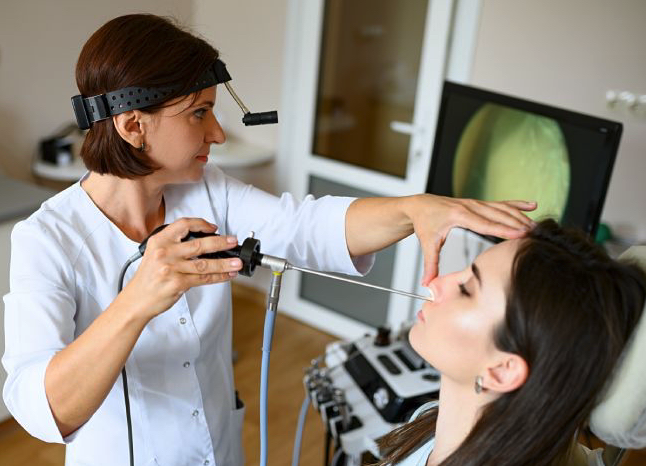
1. Nasoendoscopy (clinic-based)
A small flexible scope confirms:
- Presence of polyps
- Extent of obstruction
- Mucosal inflammation
2. CT Scan of the Sinuses (if needed)
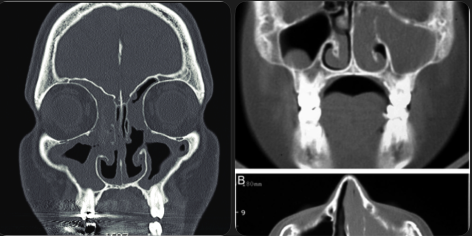
CT helps assess:
- Severity
- Sinus involvement
- Surgical planning if required
Diagnosis is mainly clinical + endoscopic.
Standard Treatment First
Before biologics, we always start with:
- Intranasal steroid sprays
- High-volume saline irrigation
- Short course oral steroids (selected cases)
Some patients improve.
Many do not.
Recurrent disease after surgery is also common in certain inflammatory subtypes.
What Are Biologics for Nasal Polyps?
Biologics are targeted immune-modulating injections.
They:
- Reduce specific inflammatory pathways
- Shrink polyp size
- Improve nasal airflow
- Restore sense of smell in selected patients
They are usually given:
- Every 2–4 weeks
- As a subcutaneous injection
- Long term (depending on response)
Who May Benefit Most?
Typical profiles:
- Severe bilateral nasal polyps
- Recurrent polyps after surgery
- Asthma + nasal polyps
- Steroid-dependent disease
- Significant smell loss
Biologics are not first-line for mild disease.
They are considered when:
- Medical therapy fails
- Surgery is unsuitable
- Recurrence is rapid and aggressive
Do Biologics Replace Surgery?
No.
Surgery may still be the better option when:
- Mechanical obstruction is severe
- There is fungal disease
- There are anatomical issues
- There is diagnostic uncertainty
Often, the decision is individualised.
When Should You Be Concerned?
Red flags:
- One-sided polyp only
- Bleeding
- Facial numbness
- Persistent severe pain
- Neck lump
Unilateral masses need proper evaluation to exclude neoplasm.
Guidelines from professional bodies such as the American Academy of Otolaryngology–Head and Neck Surgeryemphasize careful assessment before initiating advanced therapies.
Frequently Asked Questions
Can loss of smell become permanent?
If inflammation is long-standing, recovery may be incomplete. Early treatment improves chances.
How long before smell improves with biologics?
Some patients notice improvement within weeks. Others take months.
Are biologics safe long term?
They are generally well tolerated, but require monitoring and proper patient selection.
Will polyps come back after stopping injections?
Recurrence can occur. Long-term plans should be discussed individually.
Key Takeaway
Loss of smell is not just “allergy.”
Persistent blockage + smell loss for more than 3 months deserves ENT assessment.
Biologic injections are a major development in severe CRSwNP — but they are not for everyone.
American Academy of Otolaryngology–Head and Neck Surgery (AAO-HNS)
Patient education page:
The right treatment depends on:
- Disease severity
- Inflammatory pattern
- Previous surgery
- Asthma status
- Patient preference
References & Further Reading
Related Articles
- CT Scan for Sinus: When It’s Useful and When It Isn’t
- Will Sinusitis Come Back After Sinus Surgery? How to Reduce Recurrence
- Sinusitis vs Sinus: What Is the Difference?
- When to Consider Nasal Surgery
- How to Prepare for Nasal Surgery
- Cryotherapy for the Nose: Is It Effective?
- Nose Specialist in PJ – When to See an ENT Doctor
References & Further Reading
PubMed: Biologic Therapy for Chronic Rhinosinusitis with Nasal Polyps
American Academy of Otolaryngology – Smell Loss Information
European Position Paper on Rhinosinusitis and Nasal Polyps (EPOS 2020)
Discover more from The ENT Doctor
Subscribe to get the latest posts sent to your email.
No responses yet