

In Summary
A neck abscess is a pocket of pus in the tissues/spaces of the neck. It often starts from a bad tooth or throat infection. It can block your airway or lead to sepsis—so don’t wait. See an ENT urgently if you have painful neck swelling, fever, trismus (jaw can’t open), drooling or breathing difficulty. Treatment usually involves scans, antibiotics and drainage of the pus. Recovery is good when treated early.
What is a neck abscess?

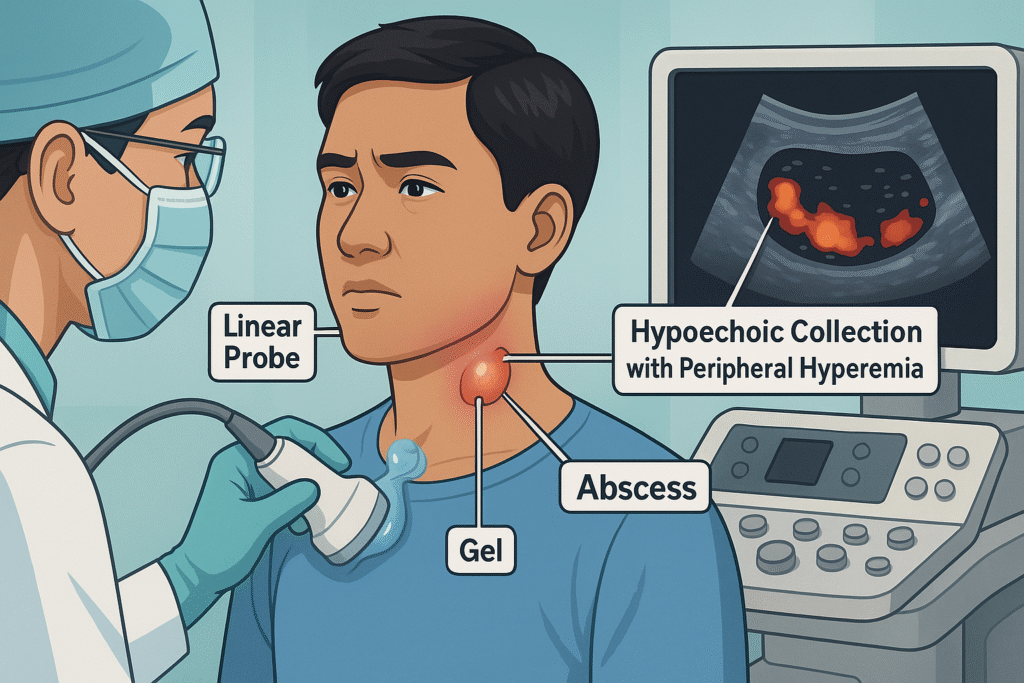
A neck abscess (sometimes called a deep neck infection) is a collection of pus within the tissue compartments of the neck—such as the peritonsillar, parapharyngeal, retropharyngeal or submandibular spaces. Because these spaces sit next to your airway and major blood vessels, the condition can become serious quickly if not treated.
What causes it?
Common triggers include:
- Dental (tooth/gum) infections – the leading cause in adults.
- Throat infections like tonsillitis that progress to peritonsillar abscess (quinsy).
- Salivary gland infections, skin/lymph node infections, or spread after trauma/procedures.
- Less commonly, ear infections can spread deep into the neck (e.g., Bezold’s abscess).
Good oral hygiene and prompt dental/ENT care reduce the risk.
What should you do if you suspect a neck abscess?
- Do not press, poke or try to drain it at home.
- Seek urgent medical care—especially if pain and swelling are worsening, you have fever, or swallowing is difficult.
- If there’s breathing trouble, go straight to the Emergency Department.
Early treatment prevents complications like sepsis (a life-threatening reaction to infection).
Red flags & dangers (don’t ignore these)
Get emergency help if you notice:
- Breathing difficulty, noisy breathing, drooling, muffled “hot-potato” voice, or trismus (jaw cannot open). These may signal airway compromise (e.g., Ludwig’s angina).
- High fever, confusion, very fast heart rate, drowsiness – possible sepsis.
- Chest pain or new pain below the collarbone – infection can rarely track into the chest (mediastinitis).
Untreated, deep neck infections can lead to airway obstruction, spread to the chest, and bloodstream infection.
What to expect at your ENT visit
I’ll start with a focused history and examination of your mouth, throat, teeth and neck. You can expect:
- Blood tests to look at infection markers.
- Imaging – most commonly CT neck with contrast to confirm the collection, map its extent, and plan safe drainage.
- Airway-first approach – if there are even mild airway symptoms, we prioritise securing the airway before anything else.
- IV antibiotics that cover common mouth/throat bacteria, guided by Malaysia’s National Antimicrobial Guideline, plus pain relief and fluids.
- Drainage of the abscess (see next section).
What surgeries do we perform for neck abscesses?
Depending on location and severity, we may recommend:
- Needle aspiration (often for peritonsillar abscess/quinsy) – numbing spray/anaesthetic in clinic or day ward.
- Incision & drainage (I&D) through the mouth (transoral) or a small neck incision (transcervical) to release pus thoroughly.
- Image-guided drainage (ultrasound/CT-assisted) for deep or tricky areas.
- Source control – e.g., dental extraction if a tooth is the culprit; occasionally mastoidectomy for rare ear-related spread (Bezold’s abscess).
- Emergency airway support (e.g., intubation; rarely tracheostomy) when breathing is threatened.
After surgery: recovery & home care
Most patients feel better within 24–48 hours once the pus is drained. Typically you’ll have:
- Antibiotics (IV first, then tablets), painkillers, and fluids.
- Possible small drain in the neck for a day or two if there’s a bigger cavity.
- Soft diet, plenty of water, gentle mouth care; avoid smoking/vaping to aid healing.
- Follow-up to review healing, remove any drain/sutures, and address dental or sinus sources to prevent recurrence.
Seek help urgently if you develop worsening pain/swelling, fever >38.5 °C, difficulty breathing or chest pain.
When to see an ENT ?
- Painful neck swelling with fever that’s getting worse over 24–48 hours
- Severe sore throat with one-sided pain, trismus or drooling
- Breathing or swallowing difficulty (urgent)
- A known dental infection with new neck pain/swelling
- You’re immunocompromised (e.g., diabetes, chemo) and have signs of infection
How we treat neck abscesses at The ENT Doctor
We follow evidence-based protocols: early imaging (usually CT with contrast), airway protection when needed, prompt drainage, and targeted antibiotics per MOH National Antimicrobial Guideline. This approach is safe, effective and aims to get you comfortable quickly while preventing complications.
If you’re experiencing throat issues, don’t wait. Consult a throat doctor today. Visit our ENT clinic for expert care and personalised treatment to get you back to feeling your best.
References
- StatPearls – Deep Neck Infections: overview, airway priorities, and management (updated 2024).
- StatPearls – Neck Abscess: definition and involved spaces.
- WHO – Sepsis Fact Sheet (2024): what sepsis is and why early care matters.
- MOH Malaysia – National Antimicrobial Guideline (ENT infections): drainage + antibiotic principles used locally.
- Odontogenic-related head & neck infections (2023, PMC): dental sources as a major cause of deep neck infections.
- Mediastinitis – StatPearls: rare but serious chest spread from deep neck infections.
- NIDirect – Quinsy: common drainage methods (needle aspiration, incision & drainage, ± tonsillectomy later).
- UH Dorset NHS – Quinsy patient leaflet (2024): practical expectations for IV antibiotics, fluids and drainage.
Discover more from The ENT Doctor
Subscribe to get the latest posts sent to your email.
Comments are closed