

Nosebleed: What to do now, when to worry, and what happens at the ENT clinic
A nosebleed has a special way of making people panic. One minute you’re fine, the next you’re looking at blood on your fingers, your shirt, or the sink. Some people get dizzy just from seeing it. Parents get especially worried when it happens to a child.
The good news? Most nosebleeds are not dangerous. And many stop with simple first aid at home.
Let’s go through what you can do, what you should avoid, and what to expect when you come to see an ENT doctor.
Why nosebleeds happen?
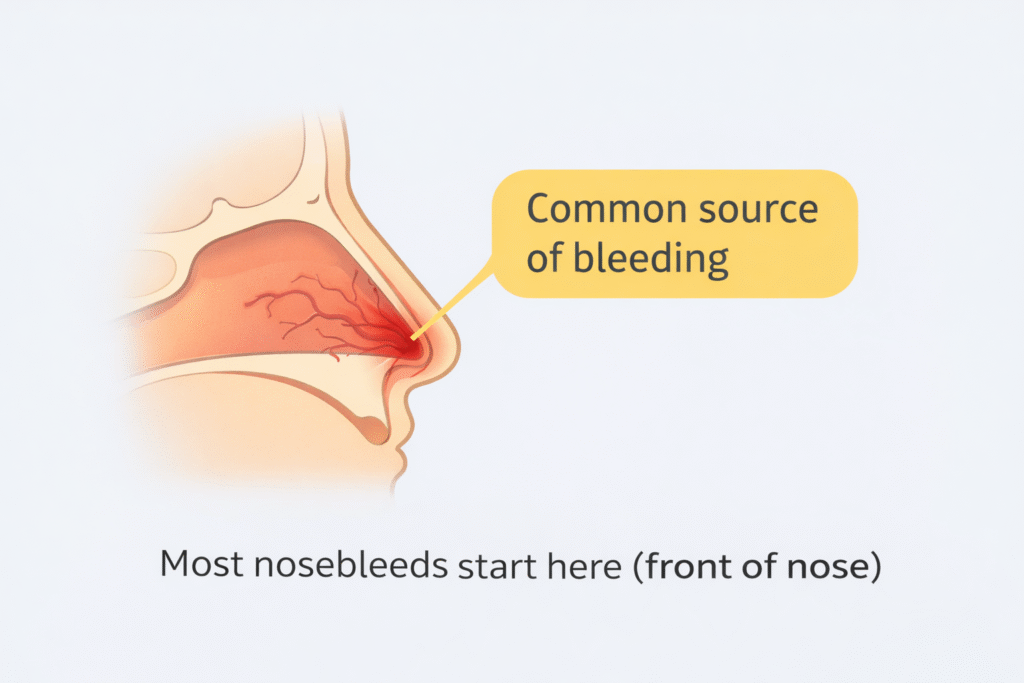
The inside of your nose is lined with delicate tissue and tiny blood vessels. They sit very close to the surface, especially near the front part of the nose. When that area gets dry or irritated, the vessels can crack and bleed.
Common reasons include:
- Dry air (air-conditioning, hot weather, low humidity)
- Colds, flu, and sinus infections
- Allergies (itchy nose, sneezing, rubbing the nose a lot)
- Frequent nose blowing
- Nose picking (very common in kids)
- Minor knocks to the nose
- Using nasal sprays the wrong way (spraying toward the middle wall)
Sometimes there are other factors that make bleeding more likely:
- Blood-thinning medicine (aspirin, clopidogrel, warfarin, rivaroxaban, apixaban, and others)
- Poorly controlled blood pressure
- Low platelet count or clotting problems
- A sharp septal spur (a pointy area inside the nose that keeps getting injured)
- Less commonly: growths or tumours (rare, but we take repeated one-sided bleeding seriously)
Most nosebleeds come from the front of the nose. These are usually easier to control. Bleeding from deeper inside can be trickier.
What to do during a nosebleed (the simple steps that actually work)
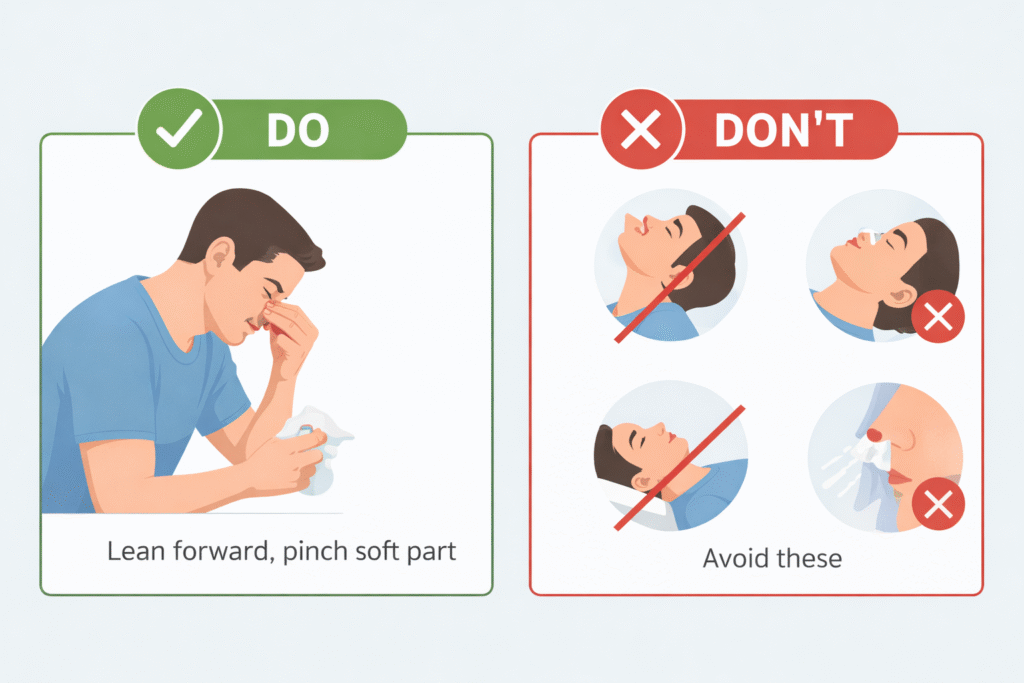
When a nosebleed starts, your first instinct might be to tilt your head back or lie down. Try not to. The key is pressure, in the right place, for long enough.
1) Sit up, lean forward
Leaning forward feels counterintuitive, but it prevents blood from running into your throat (which can make you cough or vomit).
2) Pinch the soft part of your nose
This part matters.
Pinch the soft part of your nose (just below the bony bridge) using your thumb and index finger. Hold it firmly.
Now the important bit: hold it for 10 minutes without checking.
Most people fail because they keep peeking every 20 seconds. Each time you let go, you break the clot that’s trying to form.
If it’s still bleeding after 10 minutes, do another 10 minutes.
3) Breathe through your mouth and stay calm
Easier said than done, but slow breathing helps.
4) If you have it: a decongestant spray can help
If you have a nasal spray like oxymetazoline/xylometazoline at home, 1–2 sprays into the bleeding nostril can shrink the blood vessels. Then pinch again for 10 minutes.
Don’t use these sprays too often. They’re for short-term use.
What NOT to do (common mistakes I see all the time)
- Don’t tilt your head back. It just sends blood to the throat and stomach.
- Don’t lie down.
- Don’t stuff tissue deep into the nose. It irritates the lining and can restart bleeding when you pull it out.
- Don’t keep checking every few seconds. Give the clot time to form.
- Don’t blow your nose right after it stops. That fresh clot is fragile.
When you should go to the emergency department
Most nosebleeds are manageable at home. But some need urgent care.
Go to the emergency department if:
- It’s still bleeding after 20 minutes of proper pinching
- The bleeding is heavy (pouring out, or filling your mouth)
- You feel faint, weak, or short of breath
- You have significant trauma to the face or nose
- You’re on blood thinners and it won’t stop
- The person bleeding is very young, very elderly, or medically unwell
If you’re not sure, it’s safer to get checked.
After it stops: how to prevent it from starting again tonight
This is the part many people forget. A nosebleed often restarts because the clot gets disturbed.
For the next 48 hours:
- Don’t blow your nose
- Try not to sniff or pick
- Sneeze with your mouth open
- Avoid heavy lifting and straining
- Avoid very hot drinks and alcohol for a day or two
Keep the nose comfortable and moist:

- Use saline spray a few times a day
- Put a thin layer of petroleum jelly or a nasal moisturiser at the front of the nostril (especially before sleep)
- If your room is dry, a humidifier can help
“Do I need to see an ENT doctor?”
If it’s a one-off that stops easily, you may not need to.
But you should consider seeing an ENT doctor if:
- The nosebleeds keep coming back
- It’s mostly from one side
- You also have blocked nose, facial pain, smelly discharge, or headaches
- You bruise easily or have gum bleeding
- You’re on aspirin, anticoagulants, or other blood-thinning medication
- It’s affecting your sleep, work, or peace of mind
Repeated nosebleeds deserve a proper look. Not because it’s always serious—but because there’s often a fix.
What happens when you visit an ENT doctor for nosebleed?
A lot of people imagine something painful. Usually, it’s not. The goal is simple: find the source, stop it safely, and reduce the chance it happens again.
1) We talk first
I’ll ask questions like:
- How often does it happen?
- Which side?
- Does blood drip out, or go into the throat?
- Any allergies, colds, nose picking, or trauma?
- Any medicines (especially blood thinners)?
- Any other bleeding problems?
This helps narrow down what’s going on.
2) We examine the nose
Many nosebleeds come from a small spot near the front of the nose. If we can see it, we can usually treat it.
If your nose is sensitive, we often use a spray that:
- numbs the area
- opens the nose a little so we can see better
3) Sometimes we do a nasal endoscopy

If the bleeding point isn’t obvious, or if it keeps happening, we may use a thin camera (nasal endoscope) to look deeper.
Most patients tolerate it well with numbing spray. It’s quick. It helps us check for:
- a hidden bleeding vessel
- infection
- polyps
- a sharp septal spur
- less common causes like a growth (rare, but important to rule out)
4) Treatment: what we might do on the spot
A. If it’s a small visible vessel: cauterisation
If we find a clear bleeding point, we may seal it (often using silver nitrate). People usually describe it as a brief stinging or burning feeling. It’s quick.
B. If it’s actively bleeding: nasal packing
If the bleeding is heavier or deeper, we may place a nasal pack to apply pressure. Some packs stay in for 1–3 days, then we remove them.
C. If needed: tests
Not everyone needs blood tests. But if bleeding is frequent, severe, or you have other symptoms, we may check blood counts and clotting.
After that, you’ll leave with a clear plan—what to do at home, how to keep the nose moist, what triggers to avoid, and when to come back.
Simple habits that reduce nosebleeds long-term
If you get nosebleeds often, these small changes help a lot:
- Keep the nose moist (saline, moisturiser)
- Treat allergies properly
- Use nasal sprays correctly (aim slightly outward, not toward the middle wall)
- Avoid picking (kids often need reminders + trimmed nails)
- Address constipation/straining if that’s a problem
- If you’re on blood thinners, don’t stop them yourself—discuss with your doctor if bleeding is frequent
A quick takeaway
Most nosebleeds look worse than they are. The best first aid is still the simplest: lean forward, pinch the soft part of the nose, and hold for 10 minutes.
If it keeps happening, an ENT visit is usually straightforward—and often we can identify a cause and reduce the chance of it coming back.
Discover more from The ENT Doctor
Subscribe to get the latest posts sent to your email.
Comments are closed