
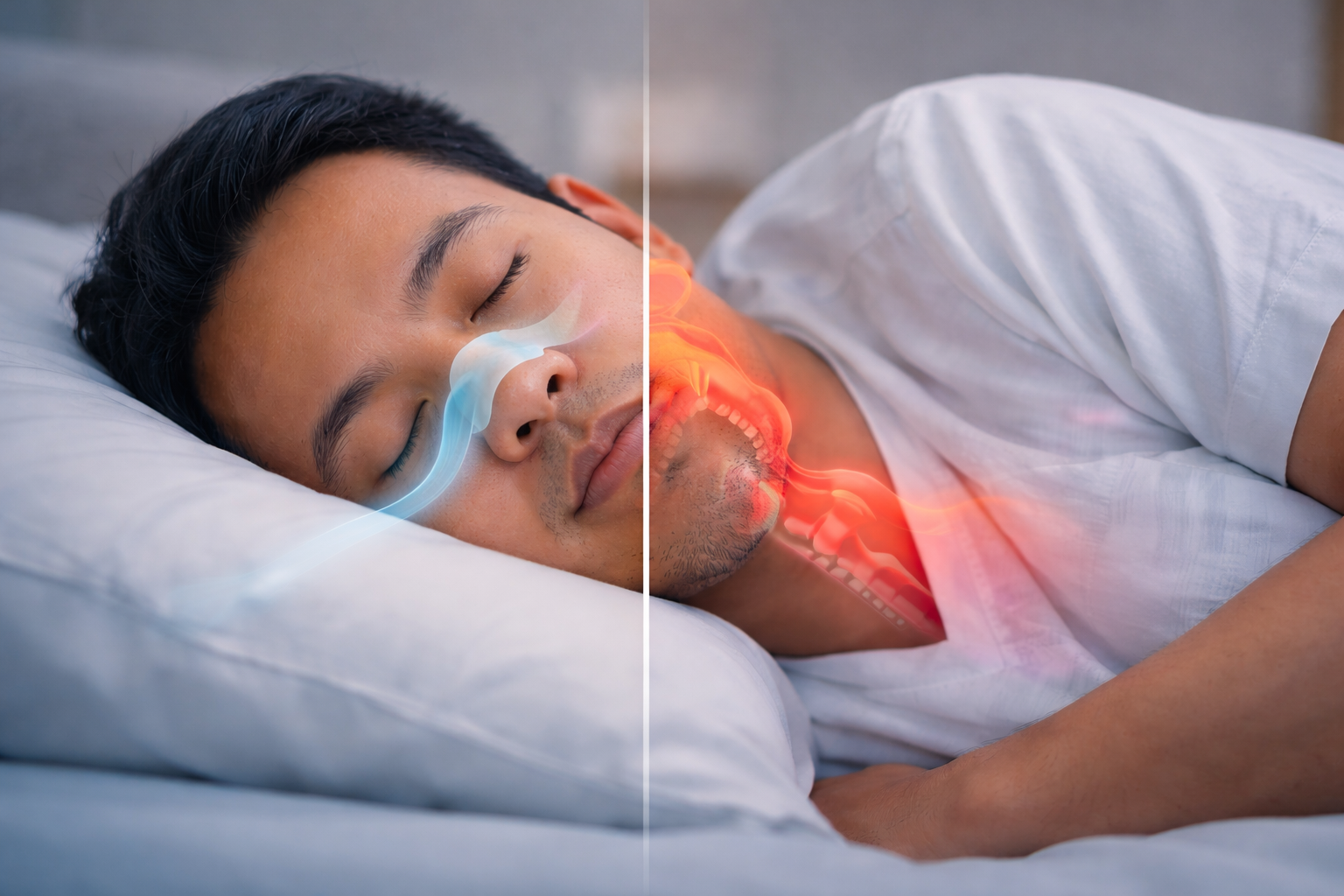
Nose strips are one of the most common “quick fixes” people try for snoring.
They are easy to buy. They are easy to use. And for some people, they do help a little.
But here is the key issue: snoring and obstructive sleep apnea (OSA) are not the same thing. Mayo Clinic notes that snoring can be linked to OSA, but not all snorers have OSA—and certain symptoms should trigger further evaluation.
So the real question is not just “Do nose strips help?”
It is:
“Are nose strips suitable for all patients with snoring and sleep apnea?”
The short answer is no.
What Nose Strips Actually Do
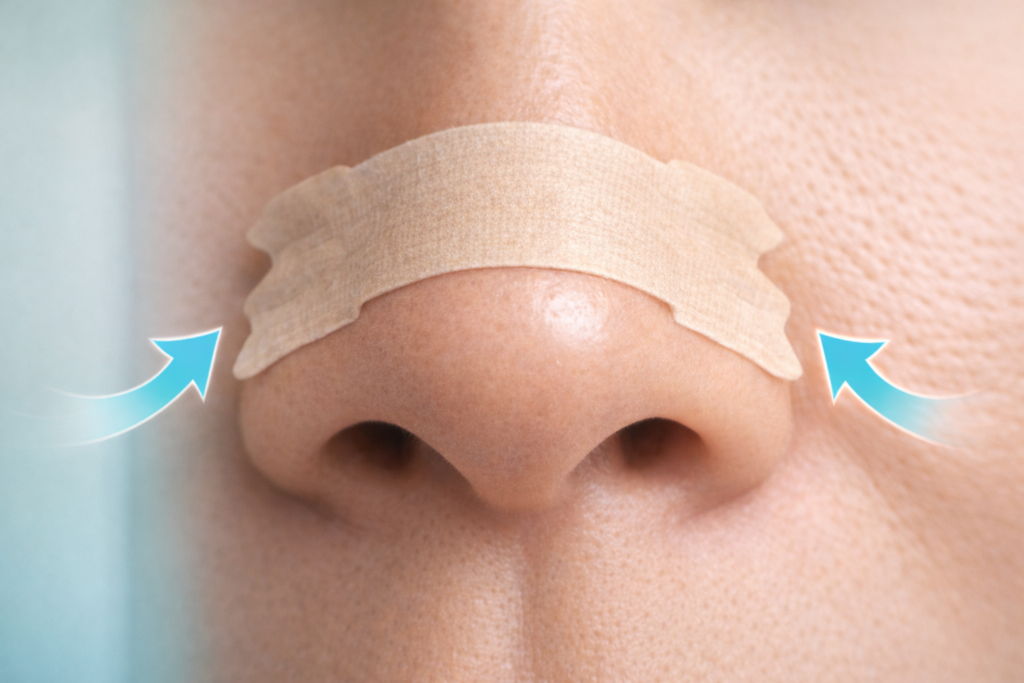
Nose strips (external nasal dilator strips) work by gently lifting the sides of the nose to widen the nasal opening. This can reduce nasal airflow resistance and make nasal breathing feel easier. Mayo Clinic describes this mechanism and notes they can help some people breathe more easily through the nose.
This means nose strips may help if your snoring is mainly related to:
- nasal congestion
- allergies
- a narrow nasal valve area
- temporary nasal blockage (for example, during a cold)
That is the important detail: they work at the level of the nose.
When Nose Strips May Help Snoring
Nose strips may be useful for simple snoring or snoring that is clearly linked to nasal obstruction.
Recent patient-education guidance from SleepApnea.org (updated December 2025) explains that nasal strips can improve airflow through the nose and may reduce snoring when congestion or nasal blockage is the main cause. It also clearly notes they do not address throat collapse.
There is also published evidence showing that nasal dilators can improve perceived nasal breathing, but this benefit does not automatically translate into meaningful improvement in sleep apnea severity. A 2016 systematic review found improved nasal breathing, but not meaningful improvement in OSA outcomes overall.
Why Nose Strips Do Not Treat Obstructive Sleep Apnea
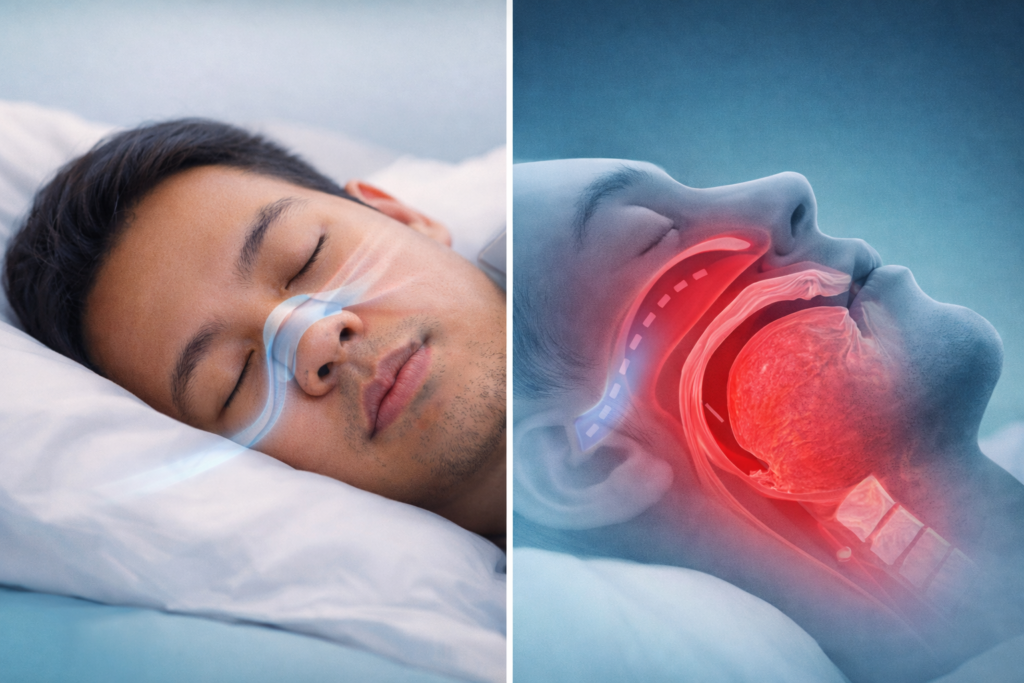
This is the most important point in the entire article.
Obstructive sleep apnea is usually caused by repeated collapse of the airway deeper in the throat during sleep—not just blockage at the nose.
The American Academy of Sleep Medicine (AASM) states that although external nasal dilator strips may reduce snoring, there is no evidence that they help treat OSA, and they may even mask the warning sign of loud snoring.
Mayo Clinic also states that nasal strips and external nasal dilators aren’t effective for people with OSA.
A newer 2026 systematic review and meta-analysis (17 studies, 496 participants) found no significant improvement in key objective outcomes such as:
- apnea-hypopnea index (AHI)
- oxygen saturation
- sleep architecture
- nasal airway resistance (overall pooled analysis)
The authors concluded that nasal dilators cannot be recommended as monotherapy for sleep-disordered breathing and may only have a limited role as adjunctive therapy in selected patients (for example, mild symptoms or nasal congestion).
Who Should Not Rely on Nose Strips Alone
If a patient has possible sleep apnea symptoms, a nose strip should not be the main plan.
Mayo Clinic lists red flags that should prompt evaluation for OSA, including:
- witnessed breathing pauses
- excessive daytime sleepiness
- difficulty concentrating
- morning headaches
- gasping or choking at night
- high blood pressure
- very loud snoring that disturbs a partner
These are the patients most at risk of being falsely reassured by a “snoring product.”
A nose strip may reduce the noise a little, but the breathing problem may still be there.
The Common Mistake Patients Make
A very common misunderstanding is:
“My snoring improved, so my sleep apnea must be gone.”
That is not always true.
Snoring is a sound.
Sleep apnea is a breathing disorder with repeated airflow limitation or pauses.
AASM specifically warns that over-the-counter snoring remedies can mask the problem by muting snoring, which may delay diagnosis of sleep apnea.
This is exactly why some patients say:
- “I snore less now, but I still wake up tired.”
- “My partner says the sound is better, but I still choke sometimes.”
- “I still feel sleepy during the day.”
Those are warning signs to investigate properly.
So Who Can Use Nose Strips?
Nose strips can still be reasonable as a symptom-relief tool in selected patients, especially if:
- snoring is mild
- symptoms are clearly worse with nasal blockage
- the patient has no red flags for sleep apnea
- the strips are used as a temporary aid (for example, during allergy flare-ups)
They may also be used as an adjunct (not a main treatment) in a broader plan that addresses the real cause of sleep-disordered breathing. Recent evidence supports this “adjunctive only” role, not stand-alone treatment for OSA.
What Works Better for True Obstructive Sleep Apnea
For patients with confirmed or suspected OSA, treatment should be based on proper diagnosis and severity.
Depending on the patient, options may include:
- CPAP / PAP therapy
- oral appliance therapy
- weight reduction
- positional therapy
- treatment of nasal obstruction (allergy control, septum, turbinate issues)
- ENT airway assessment
- sleep study (home sleep apnea test or lab polysomnography)
The key message: Nose strips are not a substitute for diagnosis.
When to See an ENT or Sleep Specialist

You should advise patients to seek assessment if they have:
- loud snoring most nights
- witnessed breathing pauses
- gasping/choking at night
- persistent daytime sleepiness
- morning headaches
- poor concentration
- uncontrolled blood pressure
- ongoing symptoms despite trying nose strips
Mayo Clinic’s symptom guidance aligns well with this approach.
Final Takeaway
Nose strips can help some people snore less, especially when nasal blockage is part of the problem.
But they are not suitable for all snoring patients, and they do not treat obstructive sleep apnea.
If snoring comes with tiredness, choking, or witnessed pauses in breathing, do not rely on guesswork or over-the-counter fixes alone. A proper ENT and sleep assessment is the safer and smarter next step.
Internal links
- An Overview on Sleep Apnea
- Why Sleep Apnea Comes Back After CPAP, Oral Appliance, or Surgery
- Do Pillows Help Obstructive Sleep Apnea or Snoring?
- Understanding Sleep Studies
- Doctor PJ (ENT + sleep-related care)
External links
- AASM Obstructive Sleep Apnea Fact Sheet (PDF)
- Mayo Clinic – Snoring: Diagnosis and treatment
- SleepApnea.org – Do Nasal Strips Help With Snoring?
- SleepApnea.org – Snoring (overview)
FAQ Section
FAQ 1
Do nose strips help snoring?
Nose strips can help some people snore less, especially if the snoring is related to nasal blockage or congestion. They work by widening the nasal opening and improving airflow through the nose. They are less helpful if the snoring is caused by throat collapse.
FAQ 2
Can nose strips treat obstructive sleep apnea (OSA)?
No. Nose strips do not treat obstructive sleep apnea. AASM states there is no evidence that external nasal dilator strips treat OSA, and Mayo Clinic also notes they are not effective for people with OSA.
FAQ 3
Are nose strips suitable for all patients with snoring?
No. Nose strips may help some patients with nasal-related snoring, but they are not suitable as a stand-alone solution for patients with possible sleep apnea symptoms such as choking, gasping, daytime sleepiness, or witnessed breathing pauses.
FAQ 4
What are the warning signs that snoring may be sleep apnea?
Warning signs include loud habitual snoring, witnessed pauses in breathing, gasping or choking during sleep, excessive daytime sleepiness, morning headaches, and poor concentration. These symptoms should prompt a proper medical assessment.
FAQ 5
What should I do if nose strips don’t work?
If nose strips do not help, or if you still feel tired despite reduced snoring, you should consider an ENT review and a sleep assessment. The problem may be obstructive sleep apnea or airway collapse deeper in the throat rather than nasal blockage.
Discover more from The ENT Doctor
Subscribe to get the latest posts sent to your email.
Comments are closed