

Hydrogen Inhalers Are Everywhere . What Do They Actually Do to Your Nose and Lungs?
Picture a scene that many Malaysian families will recognise. A retired civil servant in his late sixties sits down, his daughter beside him holding a glossy brochure. Last month he attended a “wellness roadshow” at a community hall in Subang Jaya, paid a small fee to try a hydrogen inhaler, and walked out having signed up for a machine costing more than RM7,000 on an instalment plan. The salesperson told him it would “detox” his lungs after the haze, clear his sinuses and help his blood pressure. Since then he has been breathing through the plastic nasal tubing for two hours every evening. His question for me is simple: “Doctor, my nose has been bleeding on and off. Is it the machine?”
His daughter’s question is different: “Did we just waste RM7,000?”
Both questions deserve honest answers, and this article is my attempt to give them. Hydrogen inhalers are having a moment in Malaysia, so much so that the Ministry of Health issued a public warning about them in August 2026. As an ENT surgeon, I see the nose and throat where these devices deliver their gas, and I want Malaysian families to understand what the science actually shows, what the risks are, and how to protect older parents from high-pressure sales tactics.
What Are Hydrogen Inhalers, and Why Are They Suddenly Everywhere?

A hydrogen inhaler (sometimes marketed as a “hydrogen machine” or “hydrogen-oxygen generator”) is a countertop device that splits water into hydrogen and oxygen gas through electrolysis. The gas is then delivered through a thin plastic nasal cannula, the same two-pronged tubing you may have seen on hospital oxygen patients. Many units also claim to produce “hydrogen-rich” drinking water, and some come with goggles marketed as an “eye spa”.
According to a Star investigation published on 23 August 2026, these machines are being sold in Malaysia for between RM7,000 and RM8,000, often with instalment plans, and through roadshows where participants pay RM29 to RM59 per trial session. One seller told the newspaper that most of his customers were seniors, and claimed clients with cancer and kidney disease “felt instantly fresh” after a session. When reporters checked the Medical Device Authority (MDA) register for the product he said was registered, they found nothing.
Sellers have claimed these devices help with heart disease, diabetes, high blood pressure, cataracts, thyroid disorders, asthma and even cancer. That is an extraordinary list for a single machine, and extraordinary claims need extraordinary evidence.
What the Malaysian Health Ministry Actually Said
On 20 August 2026, the Ministry of Health issued a statement, reported by Bernama, advising the public, particularly older people, to be cautious about unproven claims regarding hydrogen inhalers. The key points were:
- Hydrogen inhaler devices have not been approved by the Medical Device Authority.
- All medical devices sold or used in Malaysia must be registered under the Medical Device Act 2012 (Act 737).
- Selling, distributing or advertising an unregistered device is an offence and may result in enforcement action.
- The public should be wary of sales activities using high-pressure tactics or emotional appeals, and should check a device’s registration status before buying.
The Star’s own fact-check, QuickCheck: Will inhaling hydrogen improve your health?, rated the health claims being made by sellers as false.
Is There Any Real Science Behind Hydrogen Inhalation?
To be fair to the idea, hydrogen as a medical gas is not pure fantasy. In 2007, a Japanese team published an influential laboratory study in Nature Medicine showing that hydrogen gas could selectively neutralise one of the most damaging types of free radical in cells, and that inhaled hydrogen reduced brain injury in rats after a stroke-like event. That paper launched nearly two decades of research.
But there is a very large gap between “interesting in rats” and “proven to treat your diabetes at home”. Here is where the human evidence stands:
- A 2023 review of clinical studies in the journal Molecules found that human trials of hydrogen therapy remain limited, mostly small and short, and not strong enough to support firm conclusions.
- The most rigorous inhalation trial I am aware of, HYBRID II, was run in 15 Japanese hospitals on comatose patients after cardiac arrest. Patients in intensive care received a carefully controlled 2% hydrogen mixture with medical oxygen for 18 hours. The trial did not meet its primary goal for good neurological recovery (56% vs 39%, a difference that was not statistically significant) and was stopped early because of COVID-19 enrolment problems. Some secondary results were encouraging, which is why researchers are still studying it.
Notice what that trial was: a precisely dosed gas mixture, in an ICU, with continuous monitoring, for a specific life-threatening emergency. It tells us nothing about whether a home machine bought at a roadshow can lower blood pressure, “detox” lungs after the haze or cure sinusitis. No regulator in Malaysia has approved hydrogen inhalation as a treatment for any condition, and I am not aware of any major international medical body that recommends it for the chronic illnesses these machines are being sold for.
What Hydrogen Inhalers Can Do to Your Nose and Throat

This is where my ENT perspective matters, because the nose is the first organ these machines touch, for hours at a time.
1. Dry nose, crusting and nosebleeds
Your nose is a humidifier. Its lining warms and moistens every breath before it reaches your lungs. When you push a stream of gas through a nasal cannula for long periods, that lining dries out. Studies of hospital oxygen therapy show that dry gas through nasal prongs can cause mucosal dryness, crusting and nosebleeds, and laboratory work has shown that dry airflow increases inflammation and injury in airway lining cells. In hospitals we manage this by limiting flow and adding humidification. A home unit used for two hours every night has none of that oversight.
The group being targeted makes this worse. Many older Malaysians take aspirin, clopidogrel or other blood thinners for heart disease or stroke prevention, and a dry, cracked nasal lining in someone on these medicines bleeds more easily and for longer. If you are having recurrent nosebleeds, read my guide on what to do during a nosebleed and when to worry.
2. Throat and airway irritation from poorly made machines
Electrolysis is only as clean as the machine and the water inside it. Public health expert Prof Dr Sharifa Ezat Wan Puteh told The Star that a poor-quality generator could potentially produce hazardous by-products such as chlorine gas, which can irritate the airways and cause coughing, chest pain and throat irritation. With an unregistered device, nobody has independently checked what is actually coming out of that tubing.
A persistent cough or scratchy throat that started after you began using one of these devices should be taken seriously, and it should not be blamed on “detox” symptoms. Chronic cough has many causes worth excluding, from silent refluxto, in some cases, tuberculosis.
3. Hygiene: shared tubing and stagnant water
At roadshows, I would want to know whether every participant gets fresh, sealed nasal tubing, and how often the machine’s water tank is cleaned. Warm, stagnant water in a humid Malaysian home is a friendly environment for bacteria and mould. The same principle applies here as with nasal rinsing: I have written before about why tap water is not recommended for anything going into your nose without proper treatment.
4. Fire risk in the home
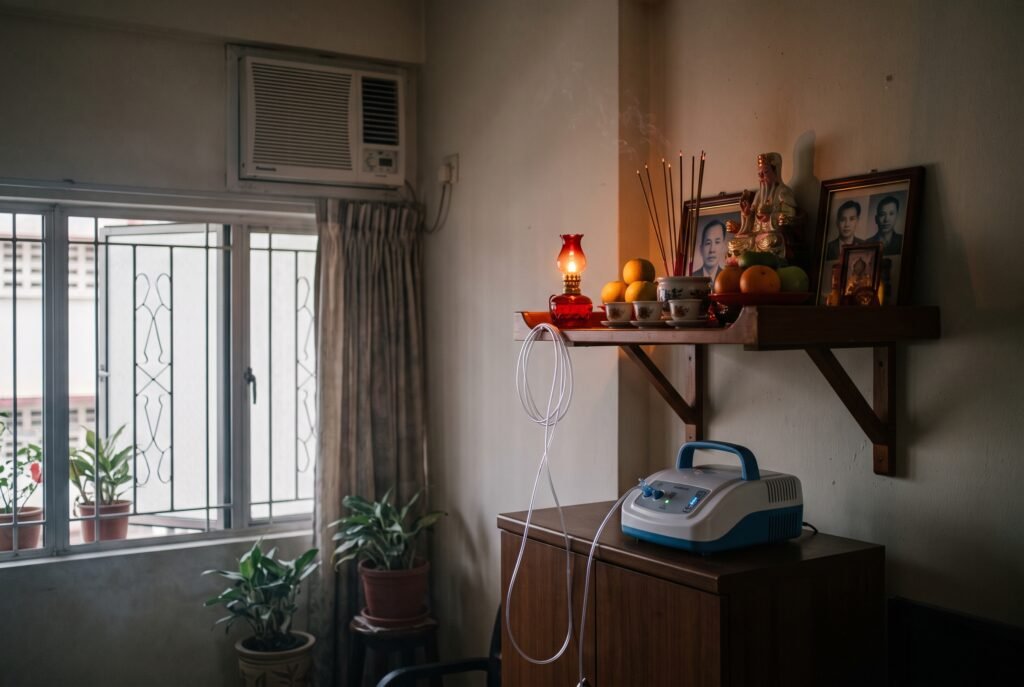
Hydrogen is highly flammable. It can ignite in air at concentrations anywhere between about 4% and 75%, needs very little energy to ignite, and burns with a flame that is almost invisible in daylight. Think about where these machines end up in Malaysian homes: in bedrooms beside mosquito coils, in living rooms near prayer altars with lit joss sticks and oil lamps, or in kitchens beside a gas stove. Any leak in a closed, air-conditioned room is a real hazard, and smoking anywhere near the device is a firm no.
The Biggest Risk: Delaying Real Treatment
In my experience, the most serious harm from wellness devices is rarely the device itself. It is the months people spend relying on it instead of getting a proper diagnosis.
After Malaysia’s worst haze in a decade, many people are understandably worried about their lungs and sinuses, and “lung detox” marketing speaks directly to that fear. But a blocked nose that has lasted weeks, a one-sided nasal blockage, blood-stained mucus or a new lump in the neck are not things to breathe hydrogen at. In Malaysia in particular, these can be early signs of nasopharyngeal carcinoma (NPC), a cancer that is far more treatable when found early.
If your nose and sinuses are still suffering after the haze, the treatments that actually have evidence behind them are much cheaper than RM7,000: saline rinses made with sterile or boiled water, correctly used prescription nasal sprays, and an examination to rule out infection or other causes. My posts on what haze does to your nose, sinuses and lungsand on sensitive nose (rhinitis) go through these options in detail.
How to Protect Your Parents: A Practical Checklist
Most hydrogen inhaler buyers I hear about are older adults, and many purchases are made by adult children who want to “do something” for a parent’s health. Before anyone signs an instalment plan, go through these steps:
- Check the registration yourself. Search the brand or product name on the Malaysia Medical Device Register. If it does not appear, the MDA says it is unregistered, expired, suspended or cancelled. A seller saying “it is registered” is not proof.
- Be wary of “cure-all” claims. Any single device claimed to help heart disease, diabetes, cancer, eyesight and asthma at the same time should set off alarm bells.
- Watch for pressure tactics. “Promotion ends today”, free trial sessions followed by a hard sell, testimonials from other seniors, and instalment plans offered on the spot are exactly what the Ministry of Health warned about.
- Never stop or reduce prescribed medicine for blood pressure, diabetes, asthma or heart disease because of a wellness device.
- Ask a doctor before you buy, not after. Bring the brochure to your GP or specialist.
- Report misleading sales to the Medical Device Authority or the Ministry of Health.
Already Using One? When to See an ENT Specialist
If you or a family member already owns a hydrogen inhaler, stop using it and see a doctor if you notice any of the following:
- Nosebleeds that recur, last more than 20 minutes, or happen while on blood thinners
- Painful crusting, sores or a burning feeling inside the nose
- A new cough, hoarseness or throat irritation since starting the device
- A blocked nose on one side, blood-stained mucus, reduced hearing in one ear or a neck lump, whether or not you use the device
- Any breathing difficulty or chest pain, which needs urgent medical attention
Not sure whether to start with a GP or go straight to an ENT? My guide on GP or ENT: which one should you visit can help you decide. You can also read more about the nose conditions I treat.
The Bottom Line

Hydrogen is a genuinely interesting research gas, and I will keep following the trials. But as of today, the hydrogen inhalers being sold at Malaysian roadshows are unregistered devices making unproven claims, and the Ministry of Health has said so plainly. At best, they are a very expensive way to breathe through a tube. At worst, they dry and damage the nose, irritate the airway, create a fire risk at home, and delay the diagnosis of conditions that actually need treatment.
To the daughter holding the brochure, my answer would be gentle but honest: the money may be gone, but your father’s health does not have to follow it. Let us examine that nose properly.
Worried About Your Nose, Sinuses or Throat? Talk to us Directly
If you or a loved one has been using a hydrogen inhaler and is now dealing with nosebleeds, crusting, a persistent cough or sinus problems that have not settled since the haze, I am happy to help. You can reach me directly for a consultation at UM Specialist Centre, Kuala Lumpur, through [WhatsApp]. Bring the device brochure along, and we can go through it together.
Message Dr. Julius on WhatsApp to book a consultation | Contact the clinic
Frequently Asked Questions
Are hydrogen inhalers approved in Malaysia?
No. The Ministry of Health said in August 2026 that hydrogen inhaler devices have not been approved by the Medical Device Authority, and that selling or advertising unregistered medical devices is an offence under the Medical Device Act 2012.
Can a hydrogen inhaler detox my lungs after the haze?
There is no good evidence that it can. Your lungs clear themselves through natural mechanisms, and the treatments with evidence for haze-related nose and sinus symptoms are saline rinses, appropriate nasal sprays and a medical check if symptoms persist.
Can a hydrogen inhaler cause nosebleeds?
It can contribute. Long sessions of gas through a nasal cannula dry the nasal lining, which can lead to crusting and bleeding, especially in older adults taking aspirin or other blood thinners.
How do I check if a medical device is registered in Malaysia?
Search the product or brand name on the Malaysia Medical Device Register at mmdr.mda.gov.my. If it does not appear in the results, the MDA treats it as unregistered, expired, suspended or cancelled.
Is hydrogen water the same as a hydrogen inhaler?
No. Hydrogen water is water with dissolved hydrogen that you drink, while an inhaler delivers gas into your nose. Neither has been proven to treat chronic diseases, and neither should replace prescribed medicine.
References
- Bernama: MOH cautions public over hydrogen inhaler claims (20 Aug 2026)
- The Star: Risky rise of hydrogen inhalers (23 Aug 2026)
- The Star: QuickCheck: Will inhaling hydrogen improve your health? (20 Aug 2026)
- Medical Device Authority: Malaysia Medical Device Register (public search)
- Ohsawa I, et al. Hydrogen acts as a therapeutic antioxidant by selectively reducing cytotoxic oxygen radicals. Nat Med. 2007
- Tamura T, et al. HYBRID II trial. eClinicalMedicine. 2023
- Molecular Hydrogen Therapy: A Review on Clinical Studies and Outcomes. Molecules. 2023
- Epistaxis as a complication of high-flow nasal cannula therapy in adults (PMC)
- Effects of gas humidification on cultured human airway epithelial cells (PMC)
- H2Tools (Pacific Northwest National Laboratory): Hydrogen flames and hazards
Discover more from The ENT Doctor
Subscribe to get the latest posts sent to your email.
No responses yet