
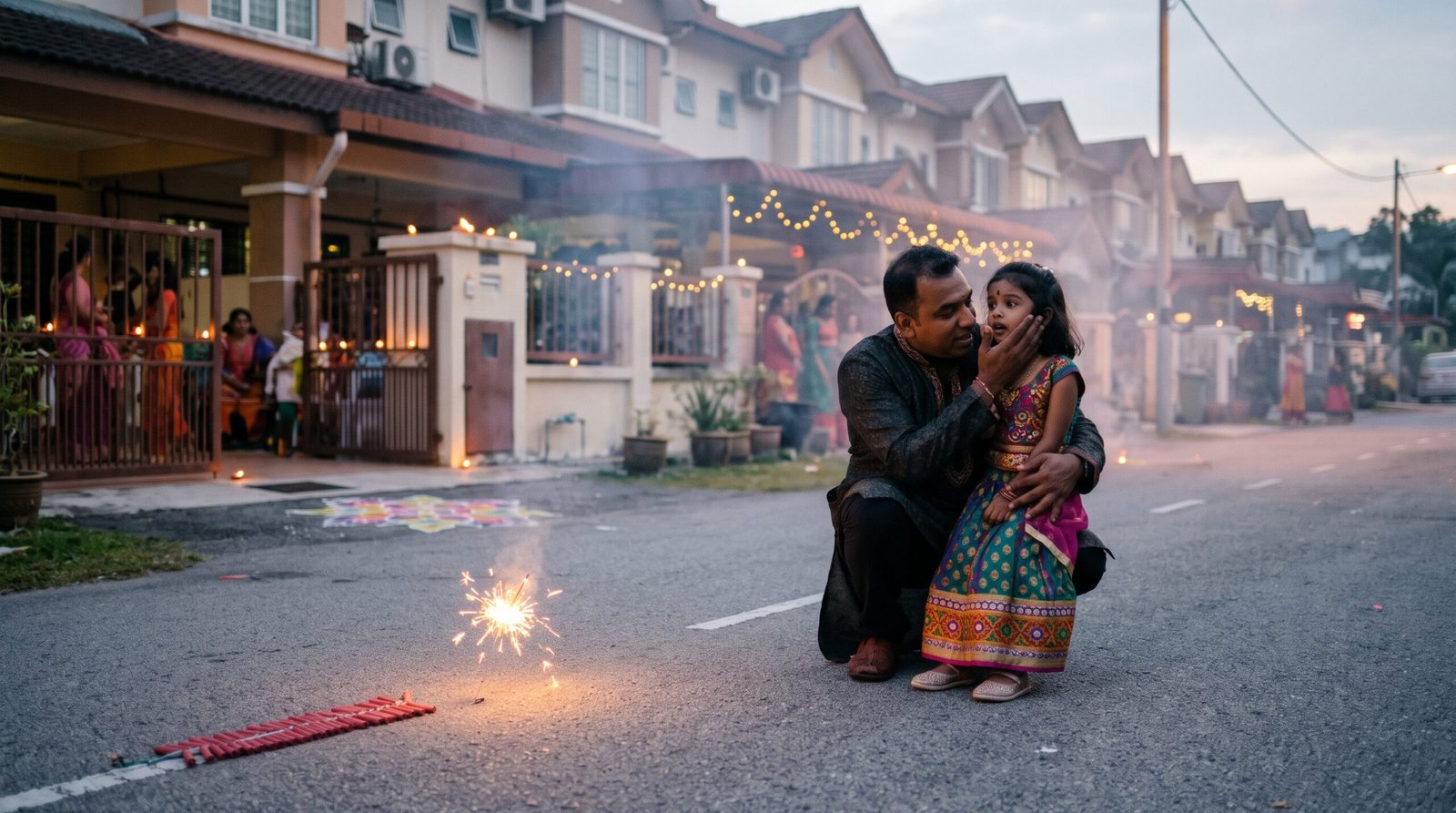
Deepavali falls on Sunday, 8 November 2026, and for many Malaysian families the festival means oil lamps, open houses, new clothes and, in many neighbourhoods, the sound of firecrackers and fireworks after dark. For most people that sound is a pleasant background to the celebration. For an unlucky few, one blast at close range can change how they hear for the rest of their lives.
As an ENT surgeon in Kuala Lumpur, I see the aftermath of loud, sudden noise more often than people expect: a teenager who held a firecracker a little too long, a father who stood too close to a display, a child who was simply in the wrong spot when something went off. This guide explains what a blast does to the ear, which symptoms mean you should see a doctor quickly, and how to keep your family’s hearing safe this Deepavali.
Before going further, one honest note. I could not find published Malaysian statistics on ear injuries from festival fireworks, and I will not invent any. The medical facts below come from international research on blast injuries, and where I describe Malaysian events, they are reported news.
Why a firecracker is more dangerous to the ear than a loud concert
Most people think of hearing damage as something that builds up slowly, like years of loud music through earphones. A firecracker is different. It produces an impulse noise: a sudden, extremely loud burst that lasts only a fraction of a second. Fireworks and firecrackers are commonly cited as reaching peak sound levels of roughly 150 decibels close to the source, and occupational health guidance has long treated about 140 decibels of peak impulse noise as a level that should never be exceeded without protection. The National Institute on Deafness and Other Communication Disorders in the United States explains that a single exposure to a very intense sound can cause immediate, permanent damage to hearing.
My earlier article on Merdeka fireworks and concerts was about the cumulative cost of loud environments over minutes and hours. This article is about the opposite end of the spectrum: the one-off blast.
Distance matters enormously. Sound intensity falls quickly as you move away from the source, so a firecracker at arm’s length is far more dangerous than a large display several hundred metres away. This is why injuries tend to happen to the person who lights the firecracker, the child standing beside them, and the onlookers packed close to the action.
What a blast actually does inside the ear
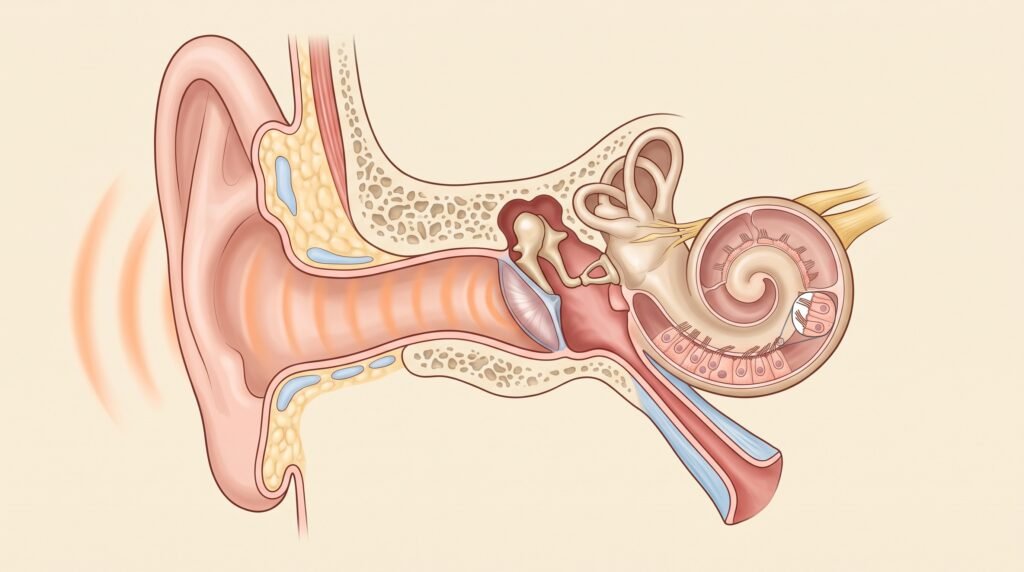
The ear is built to detect tiny pressure changes, which makes it fragile against a sudden enormous one. A close blast can injure three different parts of the ear, and often more than one at the same time.
The eardrum. The shock wave can push the eardrum inward faster than it can stretch, tearing it. This is a perforated, or burst, eardrum. It often causes sudden pain, a feeling of blockage, some bleeding from the ear canal and muffled hearing. Many small perforations heal by themselves over weeks, which I discuss in my article on whether every hole in your eardrum needs to be fixed.
The middle-ear bones. Behind the eardrum sit the three smallest bones in the body. A strong blast can dislocate the chain they form, which causes a hearing loss that does not recover without surgery.
The inner ear. The cochlea, the snail-shaped organ that turns vibration into nerve signals, contains thousands of delicate hair cells. Intense sound can flatten or destroy them. Hair cells in humans do not regrow, so this damage is permanent. It causes sensorineural hearing loss, ringing in the ears (tinnitus), a sensation that everyday sounds are painfully loud (hyperacusis), and sometimes dizziness.
One of the most useful pieces of research on this question followed 49 patients who had surgery for blast-related eardrum perforations. The study, by Littlefield and Brungart, was based on military patients rather than festival injuries, so it is an international source and not a Malaysian one. It found that about 70 per cent of the injured ears had little lasting inner-ear loss, 10 decibels or less. But roughly 8 per cent had a loss of more than 30 decibels, averaging about 50. The strongest predictor of severe loss was disruption of the middle-ear bone chain, and the risk was higher with injury to both ears and with larger perforations. In plain terms: most people get lucky, but a minority do not, and nobody can tell on the night which group they will fall into.
The Kulim blast: why standing close to a crowd is the problem
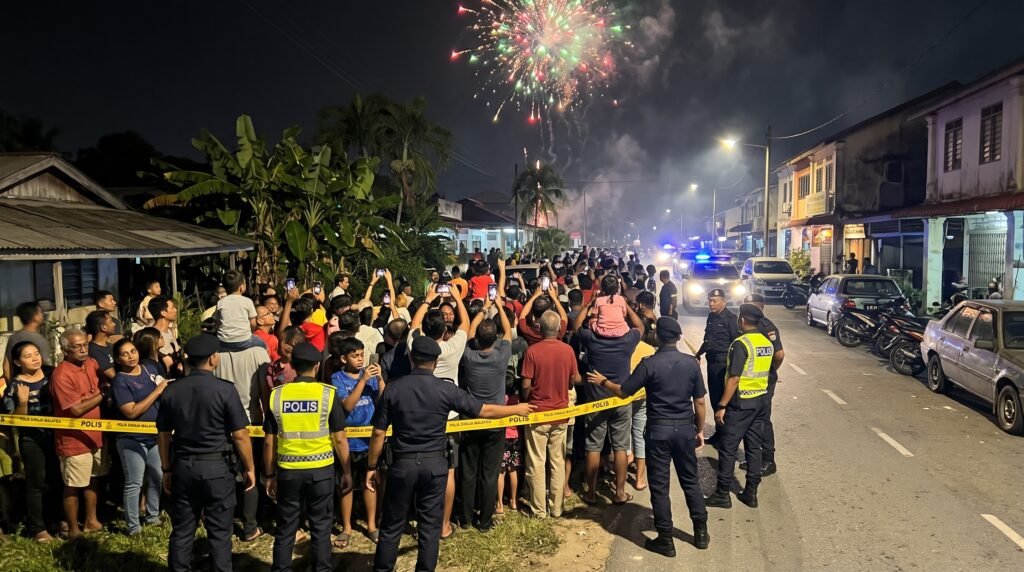
Malaysia has recent reminders of how quickly festival pyrotechnics can go wrong. According to Malay Mail, shortly after midnight on 20 October 2025 an explosion at Jalan Paya Besar near Kulim, Kedah, injured 22 people during Deepavali celebrations. One man had a deep forehead wound; the others had minor injuries. Police said a large crowd had gathered on the road to watch fireworks, and preliminary investigations pointed to unauthorised pyrotechnics. The Home Ministry reiterated that selling, possessing or using unapproved fireworks or firecrackers is prohibited under the Explosives Act 1957, and two people suspected of igniting the explosives without a permit were arrested.
The public reporting I found focused on burns and wounds, which is understandable. But anyone standing in a dense crowd close to an unexpected explosion is also exposed to the blast wave itself. If you or your child were near an incident like that, ear symptoms deserve attention even when the visible injuries are minor. The Star has also reported public calls for tighter control of fireworks in Malaysia.
I am not a lawyer, and the rules on which fireworks are allowed can change. Before buying anything, check the current position with your district police headquarters. From a medical point of view, the safest choice is simple: unlicensed or home-made devices are unpredictable, and unpredictability is exactly what turns a festive evening into an emergency.
Warning signs after a loud blast
After any loud close-range blast, pay attention to these symptoms over the next minutes, hours and days:
- Ringing, buzzing or hissing in one or both ears that does not fade within a day. Brief ringing right after a loud noise is common, but ringing that persists is a sign of inner-ear injury. See my article on tinnitus causes you should not ignore.
- Muffled hearing, or a feeling that one ear is blocked as if you were underwater.
- Ear pain, fluid or blood from the ear canal.
- Dizziness, spinning, or loss of balance.
- Everyday sounds feeling unusually loud or painful.
- Difficulty following conversation, especially in a noisy room.
Children often cannot describe these symptoms. Watch for a child who suddenly turns the television up, asks you to repeat yourself, pulls at the ear, seems unsteady, or becomes irritable and withdrawn after a loud event.
What to do in the first hours after a loud blast
If someone has been exposed to a close blast and has any of the symptoms above, this is what I advise.
- Move away from further noise and let the ears rest. Avoid headphones and earbuds, loud music and further fireworks.
- Note the time the blast happened and exactly what the symptoms are. This helps your doctor decide how urgent treatment is.
- Keep the ear dry and leave it alone. Do not poke cotton buds, hairpins or fingers into the canal, do not flush it out, and do not use ear drops unless a doctor has examined the ear. Putting anything into an ear with a perforated eardrum risks infection and further damage.
- Do not wait to see if it gets better if there is a sudden drop in hearing, severe ringing, spinning dizziness, bleeding from the ear or weakness of the face. These need a doctor the same day. Sudden sensorineural hearing loss is time-sensitive, and treatment, which usually involves steroids, works best when started early, commonly within days of the injury.
- Book an ENT assessment even if symptoms seem mild. A hearing test (audiogram) a few days after the event shows whether there is a hidden loss, and it gives a baseline to compare against later.
If you are unsure whether to start with a general practitioner or an ENT specialist, my guide on GP or ENT: which one should you visit explains the difference. For anything involving sudden hearing change after a blast, going straight to an ENT is reasonable.
What treatment can and cannot do
Treatment depends on which part of the ear was injured. A small eardrum perforation is usually watched and kept dry, and many close on their own within a few weeks. A large perforation or one that does not heal may need a minor operation to repair the eardrum, called a tympanoplasty. A dislocated middle-ear bone chain also needs surgery. Sudden inner-ear hearing loss is treated as an emergency with steroids and close monitoring. Lasting inner-ear loss and tinnitus cannot currently be reversed, but they can be managed with hearing aids, sound therapy, counselling and protection of the remaining hearing. My article on struggling with hearing loss describes what can be done before it gets worse.
This is why prevention matters more than anything else in this article. Hair cells that are destroyed by a blast do not come back.
How to protect your ears this Deepavali
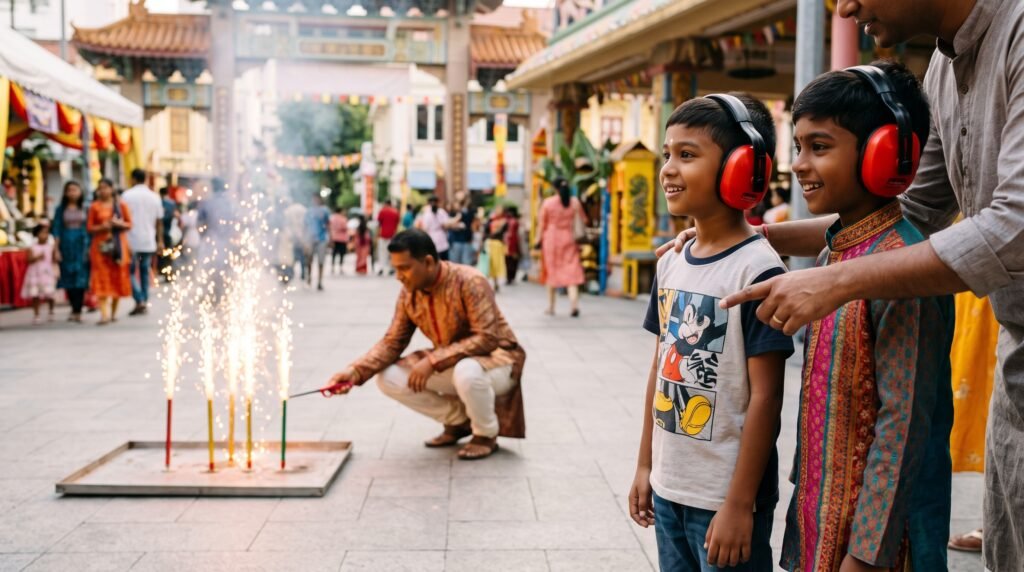
You do not have to skip the celebration. A few habits make a large difference.
- Distance. Watch displays from well back, and keep children even further. If you can feel the thump in your chest, you are too close.
- Never hold or light a firecracker in the hand, and never lean over one that has not gone off. Misfires are a common cause of injury.
- Use hearing protection. Foam earplugs are cheap, light and effective, and over-the-ear muffs suit young children who will not keep plugs in. Keep a few pairs in the car and in your handbag during the festival season.
- Avoid unapproved devices. Illegal and home-made fireworks are the ones most associated with serious injuries, as the Kulim incident showed.
- Supervise children closely, and give very young babies and toddlers a quiet room away from the noise.
- Do not crowd the road. If an event is happening on a public road, stay on the pavement, away from the source, and leave an exit route.
- Protect existing hearing. If you already have hearing loss, tinnitus or a history of ear surgery, you are more vulnerable. Speak to your doctor before attending loud events.
The bigger picture: hearing is already under pressure in Malaysia
Free Malaysia Today reported in April 2026 that the Health Minister said 21.5 per cent of Malaysians have hearing problems. Whatever the causes in each person, that number tells us that hearing is a limited resource for many of us, and that avoidable injuries add to a problem that is already large. A single evening of festival noise should not become the reason a child needs hearing aids at school age.
Deepavali is about light, family and community. With a little planning, it can also be a festival that leaves everyone’s ears as healthy as it found them.
Talk to Us
If you or a family member has ringing, muffled hearing, ear pain or dizziness after a loud blast, do not wait for it to settle on its own. Contact us directly for a consultation on WhatsApp: Message us on WhatsApp. If hearing has dropped suddenly, there is bleeding from the ear or severe dizziness, go to the nearest emergency department or ENT service immediately.
Frequently Asked Questions
Is ringing in my ears after a firecracker normal?
Brief ringing for a few minutes to hours after a loud noise is common and usually settles. Ringing that lasts longer than a day, or that comes with muffled hearing, is a sign of possible inner-ear injury and should be checked by an ENT.
Can a burst eardrum heal on its own?
Many small perforations close by themselves within weeks if the ear stays dry and uninfected. Larger ones, or ones that do not heal, may need a repair operation. Only an examination can tell which applies.
Can my child’s hearing be damaged by a firecracker even if they seem fine?
Yes. Children may not notice or describe a hearing loss. If your child was near a close blast, a hearing test is worth doing, especially if they seem to be turning up the volume or not responding.
Are earplugs enough for fireworks?
Well-fitted foam earplugs reduce loudness substantially and are a good minimum. Earmuffs are easier for young children. Neither makes it safe to stand beside a firecracker, so distance is still the first defence.
Should I put drops in my ear if it hurts after a blast?
No. If the eardrum is perforated, some drops can harm the middle ear. Keep the ear dry and see a doctor who can look at the eardrum first.
How soon should I see an ENT after a loud blast?
Same day for sudden hearing loss, bleeding, severe dizziness or facial weakness. Within a few days for persistent ringing, muffled hearing or ear pain, even if it seems mild.
Can hearing damaged by a blast be reversed?
Eardrum and middle-ear injuries can often be treated or repaired. Destroyed inner-ear hair cells cannot currently be regrown, which is why early treatment and prevention matter.
Links and Sources
Internal links to use in the post (theentdr.com):
- Merdeka Fireworks and Concert Season: How Loud Is Too Loud for Your Ears?
- Perforated Eardrum: Does Every Hole in Your Eardrum Need to Be Fixed?
- Common Causes of Tinnitus You Should Not Ignore
- GP or ENT: Which One Should You Visit for Ear, Nose & Throat Issues?
- Struggling with Hearing Loss? Here’s What You Can Do Before It Gets Worse
External sources (Malaysian first):
- Malay Mail: Kulim Deepavali blast caused by illegal fireworks, Home Ministry vows stern action (22 Oct 2025)
- The Star: Loud calls for fireworks ban (26 Oct 2025)
- Free Malaysia Today: 21.5% of Malaysians have hearing problems, says health minister (10 Apr 2026)
- Littlefield and Brungart: Long-Term Sensorineural Hearing Loss in Patients with Blast-Induced Tympanic Membrane Perforations. Ear and Hearing (international, military patients)
- NIDCD (US): Noise-Induced Hearing Loss (international)
No responses yet