
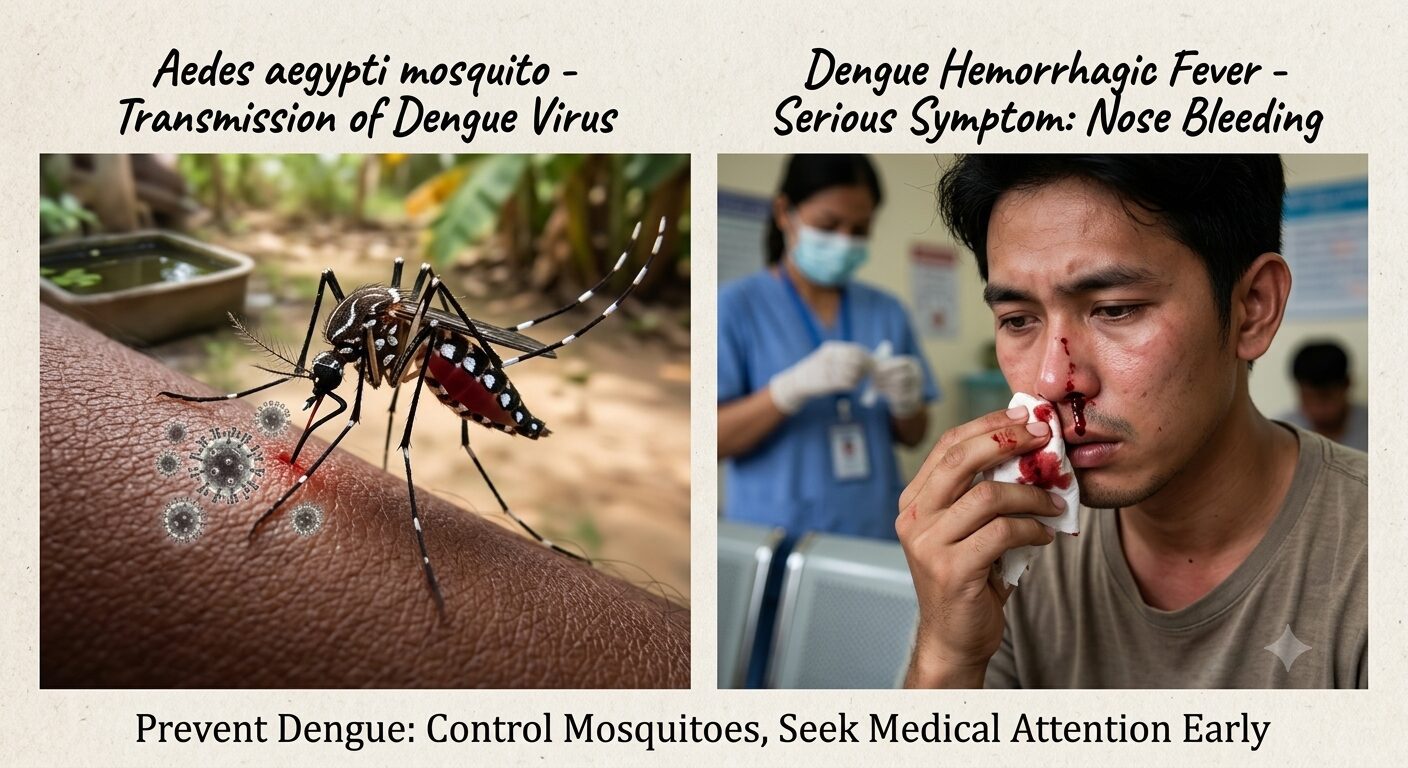
A 34-year-old software engineer from Petaling Jaya came to my clinic last week not for his ears, nose, or throat in the usual sense, but because he was frightened. He had been running a fever for four days, a rapid test at a nearby clinic had come back positive for dengue, and that morning he had woken up to find blood on his pillow. He had searched “dengue nosebleed” at two in the morning, found a mix of alarming forum posts and dense medical journal abstracts, and arrived at my clinic still holding a blood-stained tissue to his nose, convinced he was about to bleed out.
He was not. But his instinct to take it seriously was the right one, just not for the reason he thought.
Malaysia’s Dengue Numbers Right Now
As of 15 August 2026, Malaysia had recorded 58,079 dengue cases for the year, 56.2 percent higher than the same period in 2025, with 55 deaths from dengue-related complications, according to the Health Ministry. The increase has been sharpest in the Klang Valley: cases in Kuala Lumpur and Putrajaya have jumped 106 percent, and Selangor has risen 61 percent compared with the same period last year, with Perlis (up 207 percent) and Johor (up 109 percent) also seeing steep increases. Earlier in the year, the ministry had already flagged a shift in the dominant circulating strain from DENV-2 to DENV-3, a serotype change that matters because it can mean lower population-level immunity and, in some cases, a higher rate of warning-sign complications.
For an ENT clinic, this matters more than it might seem. Ear, nose and throat symptoms sit right at the edge of two very different explanations this time of year: an ordinary viral illness, of the kind I wrote about in my piece on the throat virus that circulated earlier this year, or the early days of a dengue infection with epistaxis, the medical term for nosebleed, as one of its recognised warning signs. This piece is about telling the two apart, and about what to actually do if you or your child gets a nosebleed with fever right now.
Why Dengue Makes Your Nose Bleed
Nosebleeds are extremely common entirely on their own. Roughly six in ten people will have at least one spontaneous nosebleed at some point in life, and the overwhelming majority start in a small network of blood vessels at the front of the nasal septum, an area so exposed to dry air, nose-picking and minor knocks that about nine in ten nosebleeds begin there and stop on their own within minutes.
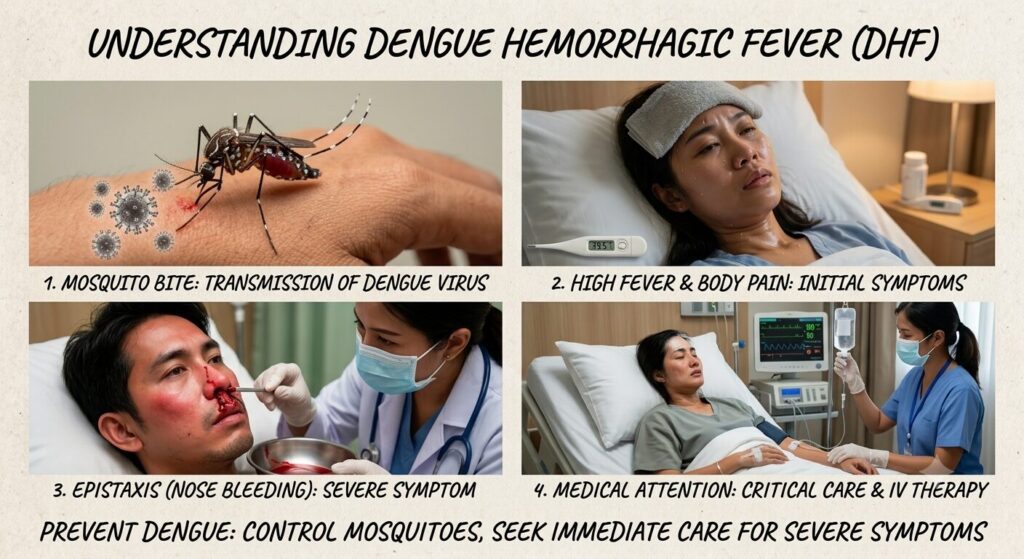
Dengue is different, mechanically. The dengue virus affects your blood in two ways at once. First, it suppresses your bone marrow’s production of platelets, the cell fragments responsible for clotting, while the immune system also destroys platelets faster than usual, so your platelet count can drop, sometimes sharply, during the illness. Second, it makes the walls of your smallest blood vessels more fragile and, in more severe cases, more prone to leaking, allowing fluid to seep out of the bloodstream. Put a falling platelet count together with more fragile capillaries in a part of the body that already bleeds easily, and you have a straightforward mechanical explanation for why nosebleeds and bleeding gums appear on almost every official list of dengue warning signs, alongside bleeding elsewhere such as in the urine or stool.

Timing matters more than most people realise, too. Dengue’s warning signs, nosebleeds included, classically appear not at the peak of the fever, but just as the fever is breaking, typically around day three to seven of illness. A nosebleed on day one of a mild fever is far less concerning than one that shows up on day five, right as the temperature finally starts to drop.
Ordinary Nosebleed or Dengue Warning Sign? What Actually Separates Them
Context is almost everything here.
An everyday nosebleed, the kind most Malaysians have had at some point from dry, haze-irritated nasal linings, an overenthusiastic bout of nose-picking, or a hard knock during sport, usually happens on its own, without fever, and responds to a straightforward five to fifteen minutes of firm pinching.
A dengue-related nosebleed tends to arrive with company. It shows up in someone who already has, or has just had, several days of high fever, and it tends to appear alongside at least one of a cluster of other symptoms: severe abdominal pain or tenderness, persistent vomiting, unusual drowsiness or restlessness, bleeding gums, easy bruising, or a rash. If a nosebleed is the only new development in someone who is otherwise clearly recovering from an ordinary cold, it is far more likely to be routine, mechanical epistaxis than a dengue complication.
The other useful clue is quantity and persistence. A dengue-related nosebleed, because it stems from a falling platelet count rather than one burst vessel, more often oozes steadily from both nostrils, resists the usual pinch-and-wait technique, or recurs several times over a day, rather than presenting as a single, brief, one-sided bleed that resolves and does not return.
The Official Warning Signs to Watch For
Malaysia’s Ministry of Health, through its clinical practice guideline on dengue infection management, lists a specific set of warning signs that should prompt urgent medical review rather than a wait-and-see approach: abdominal pain or tenderness, vomiting more than three times in twenty-four hours, diarrhoea more than three times in twenty-four hours, drowsiness or noticeable lethargy, difficulty breathing, spontaneous bleeding from the nose or gums, and black or tarry stool. The United States Centers for Disease Control and Prevention lists a near-identical setinternationally: abdominal pain or tenderness, persistent vomiting, fluid accumulation, mucosal bleeding, lethargy or restlessness, and liver enlargement.
Nosebleeds sit on both lists for the same reason: they are a visible, easy-to-notice proxy for what is happening less visibly inside the blood vessels. If you or a family member has a confirmed or suspected dengue infection and a nosebleed appears together with any of these other signs, especially as fever is breaking, that is the point to go to an emergency department rather than a general practice clinic, not because a nosebleed alone is dangerous, but because of what it may be signalling about platelet count and vessel fragility underneath.
There is one more point specific to managing dengue at home that is worth knowing well. Avoid non-steroidal anti-inflammatory drugs such as aspirin, ibuprofen or mefenamic acid for fever or pain relief if dengue is suspected or confirmed. These medications thin the blood and inhibit platelet function, and taking them while your platelet count is already falling can turn a minor mucosal bleed into a more serious one. Paracetamol is the standard recommended alternative for fever and pain during suspected or confirmed dengue.
What to Do If a Nosebleed Happens During Dengue Fever
The first-aid steps for the nosebleed itself, as outlined by the Mayo Clinic, are the same whether the underlying cause is dengue or a simply dry nose during haze season: sit upright and lean slightly forward, rather than tilting the head back, since swallowed blood can cause nausea and disguises how much you are actually losing. Pinch the soft lower part of the nose, just below the bony bridge, firmly between thumb and forefinger, and hold for a full ten to fifteen minutes without releasing to check. A cold compress across the bridge of the nose can help alongside this. Once the bleeding stops, avoid blowing the nose, picking at it, or bending over for several hours, since any of these can dislodge the clot and restart the bleed.
Where dengue changes the calculation is when to stop managing it at home. Go to an emergency department, not a general practice clinic, if the nosebleed does not stop after fifteen minutes of proper pinching, if it recurs more than once in the same day, if it is accompanied by any of the official warning signs above, if the person feels faint, unusually drowsy or confused, or if this is happening in a child, an elderly relative, someone pregnant, or someone with an existing blood or liver condition. These are groups the Ministry of Health specifically flags for closer monitoring during dengue illness.
Who Needs to Be Extra Careful
Children tend to show warning signs less predictably than adults and can deteriorate faster once they do, which is part of why paediatric dengue cases are generally managed with a lower threshold for hospital review. If your child has recurring nosebleeds even outside of dengue season, it is also worth a proper look from a paediatric ENT specialist rather than assuming it is routine.
Anyone who has had dengue before is also a special case worth knowing about: a second infection with a different dengue serotype than the first, a relevant point in 2026 given the shift toward DENV-3 as Malaysia’s dominant strain, carries a well-documented higher risk of progressing to severe dengue than a first infection, due to how the immune system responds differently to a new strain. The elderly, pregnant women, and people with chronic conditions such as diabetes or kidney disease round out the groups the Ministry of Health asks clinicians and families to monitor most closely.
Reducing Your Risk Before It Starts
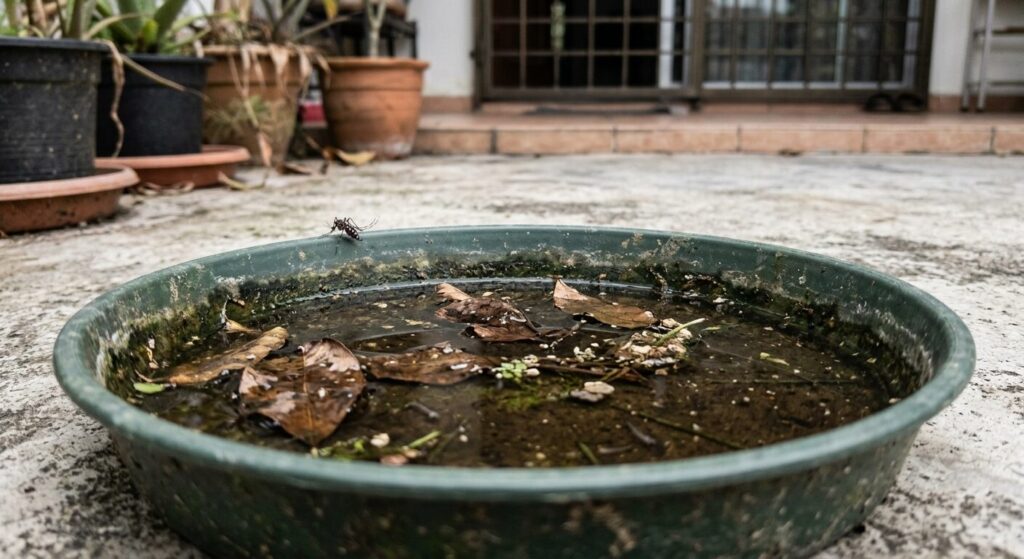
None of this is happening in a vacuum. The current surge is being driven by Aedes mosquitoes breeding in stagnant water, worsened this year by a pattern the Ministry of Health has pointed to directly: bursts of heavy rain followed by hot weather, combined with containers of standing water left unattended around homes and construction sites, particularly across the Klang Valley. The most effective thing most households can do has nothing to do with medicine at all. Checking flowerpot saucers, roof gutters, discarded containers, and any other spot that can hold even a small amount of water for more than a few days matters, since that is all an Aedes mosquito needs in order to breed. If your neighbourhood is a known hotspot, taking part in an organised neighbourhood clean-up does more to reduce your household’s dengue risk than almost anything else available to you.
Talk to an ENT About a Nosebleed That Will Not Behave
If you are dealing with a nosebleed that keeps recurring, will not stop with standard first aid, or you are simply unsure whether what you are seeing fits a dengue warning sign or an ordinary nosebleed, it is worth having it looked at properly rather than guessing. Dr. Julius Goh Liang Chye sees patients across Kuala Lumpur and Petaling Jaya for exactly these concerns, from short-term dengue-related bleeding to recurrent nosebleeds that need a longer-term surgical fix such as sphenopalatine ligation.
Message us on WhatsApp to ask a question or book a consultation.
Frequently Asked Questions
Is a nosebleed always a sign of severe dengue?
No. Most nosebleeds, even in someone with confirmed dengue, are mild and settle with standard first aid. It becomes a genuine concern when it appears alongside other warning signs, such as persistent vomiting, severe abdominal pain, unusual drowsiness, difficulty breathing or bleeding elsewhere, or when it is unusually heavy, recurrent, or does not stop after fifteen minutes of proper pressure.
When during a dengue infection do nosebleeds typically happen?
Most warning signs, nosebleeds included, tend to appear as the fever is breaking, typically around day three to seven of illness, rather than at the very start. A nosebleed on day one of a mild fever is less concerning than one appearing as the temperature finally drops after several days of illness.
Can I take painkillers for dengue fever?
Paracetamol is the recommended option for fever and pain relief. Avoid non-steroidal anti-inflammatory drugs such as aspirin, ibuprofen and mefenamic acid, since they thin the blood and can worsen bleeding risk while the platelet count is falling.
Should children with dengue and a nosebleed be treated differently from adults?
Children can show warning signs less predictably and deteriorate more quickly once they appear, so paediatric dengue cases with any bleeding, including nosebleeds, generally warrant a lower threshold for emergency review than the same symptom in an otherwise healthy adult.
Is it true that a second dengue infection is more dangerous?
Yes, this is well established. A second infection with a different dengue serotype than the first, a relevant point in 2026 given the shift toward DENV-3 as Malaysia’s dominant strain, carries a higher documented risk of progressing to severe dengue than a first-time infection.
When should I go to the emergency department instead of a GP clinic for a nosebleed?
Go to an emergency department if a nosebleed will not stop after fifteen minutes of firm pinching, recurs more than once in a day, appears together with any official dengue warning sign, or involves someone who is a child, elderly, pregnant, or has an existing blood or liver condition.
Comments are closed