
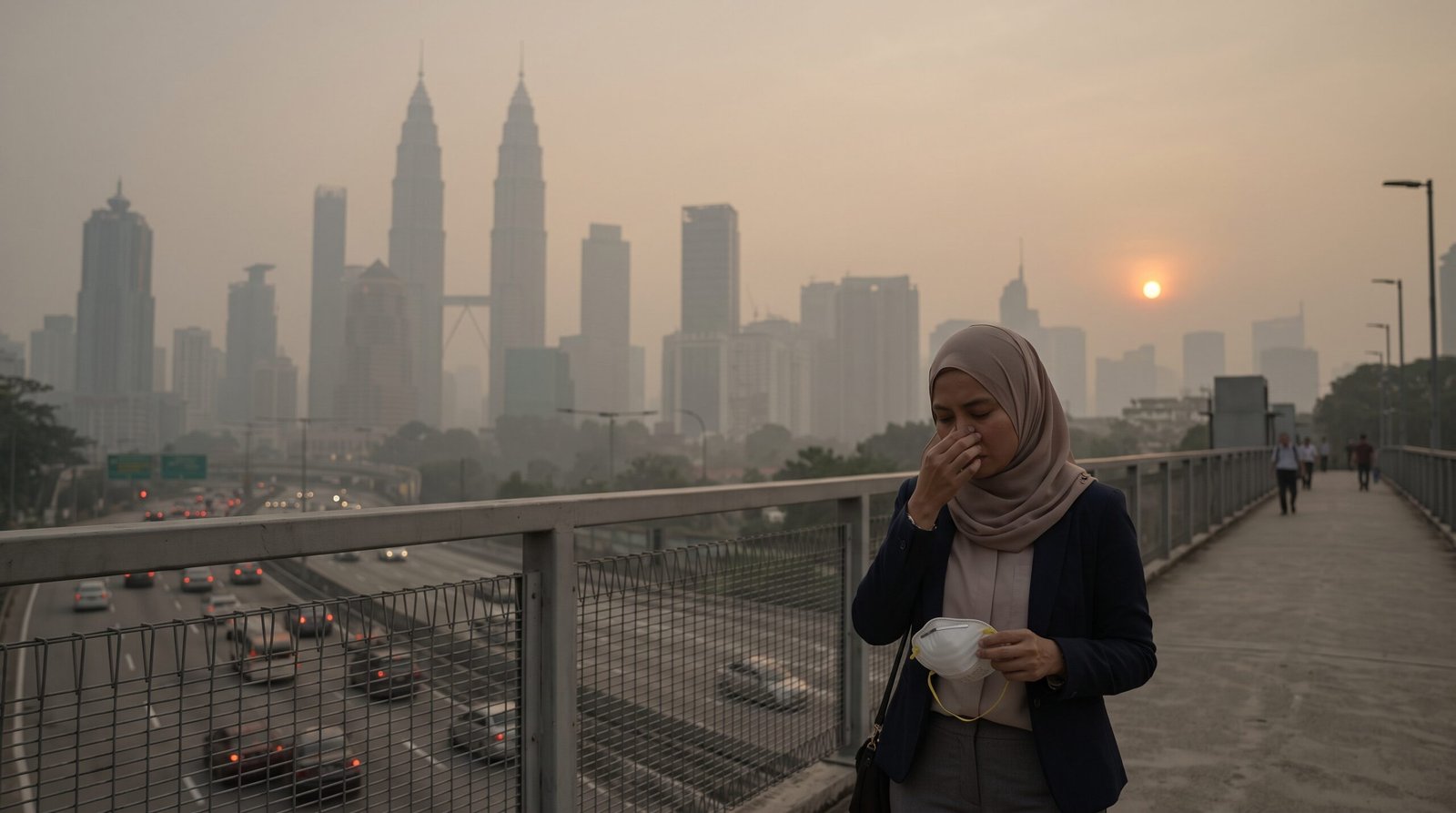
Picture a typical office worker in Petaling Jaya in the middle of October. Nothing dramatic has happened. There has been no fever and no hospital visit. But for three weeks now the nose has felt “off”: blocked in the morning, dry and crusty by afternoon, a faint burning when breathing in, and a throat that tickles by evening. Colleagues in the next cubicle report the same thing. Everyone assumes it will pass once the sky clears. It has not cleared.
This is an illustrative example, not a specific patient.
That scenario will sound familiar to many Malaysians this month. According to the Malay Mail, on 15 October the Ministry of Health (MOH) reported that 35 monitoring stations in nine states and two Federal Territories recorded Unhealthy air(Air Pollutant Index, or API, 101 to 200). A day later, Larkin and Pasir Gudang in Johor reached 202, which is the Very Unhealthy band. This is not a one-day event. It has been several weeks of haze across Johor, Selangor, Negeri Sembilan, Melaka, Kuala Lumpur and beyond.
In earlier posts I explained what unhealthy air does to Malaysian noses, sinuses and throats and what happens when the API goes above 500. This article answers a different question that patients keep asking me: why does my nose still feel terrible weeks into the haze, and what can I actually do to recover while the air is still bad?
1. Where Malaysia’s haze stands right now
Before talking about the nose, it helps to be clear about the situation, because it determines what advice is realistic.
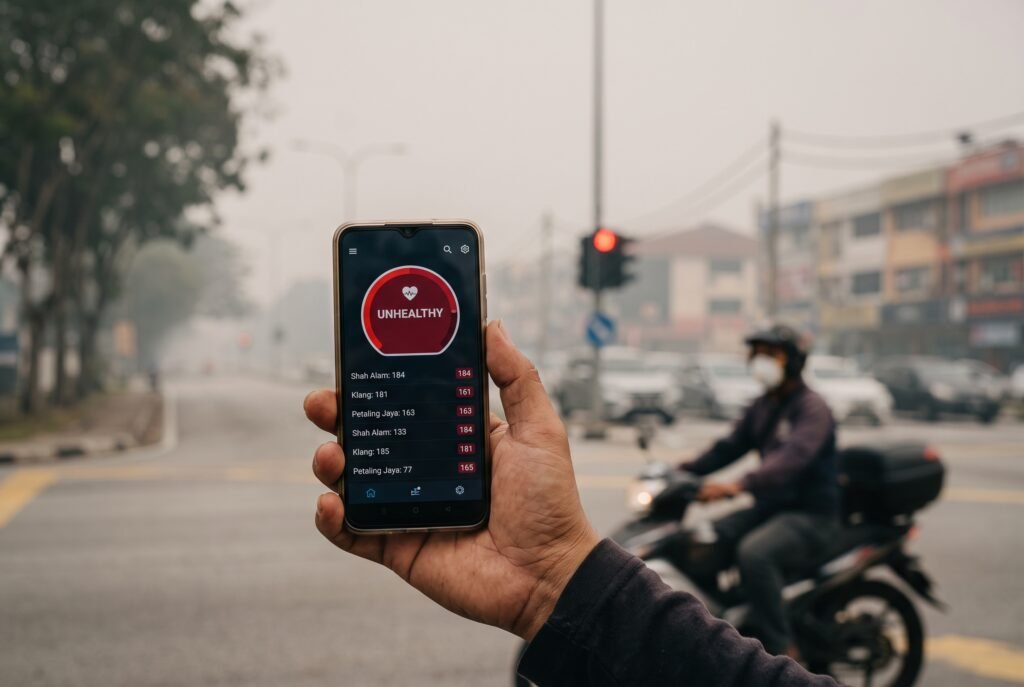
- Air quality (MOH, 15 October): 35 stations recorded Unhealthy readings across nine states and two Federal Territories. Johor had eight stations, Selangor six, Perak and Pahang four each, and Negeri Sembilan and Melaka three each. No station was in the Very Unhealthy or Hazardous band at that time (Malay Mail, 16 Oct).
- Evening of 16 October: Larkin and Pasir Gudang reached 202. Johan Setia in Selangor was at 184, Nilai at 181, and Kuala Lumpur’s Batu Muda and Cheras at 163 (Malay Mail, 16 Oct).
- Illness trends (MOH, via The Star, 11 October): across 78 selected healthcare facilities, upper respiratory tract infections rose 10.43% from 3,509 cases in Epidemiological Week 39 to 3,875 in Week 40. Conjunctivitis rose 26.47%, from 102 to 129 cases. Asthma cases fell 13.64% over the same period (The Star).
- Official advice: MOH recommends avoiding outdoor activity when the API goes above 100 and wearing an N95 mask if you must go out. A three-ply mask is only limited additional protection if an N95 is not available.
Note what the figures do and do not say. The MOH numbers show a rise in upper respiratory infections and eye irritation in the same weeks as the haze. They do not, by themselves, prove that the haze caused each case. Respiratory viruses also circulate at this time of year. That is exactly why a symptom guide (Section 4) is useful.
2. What haze does to the lining of your nose
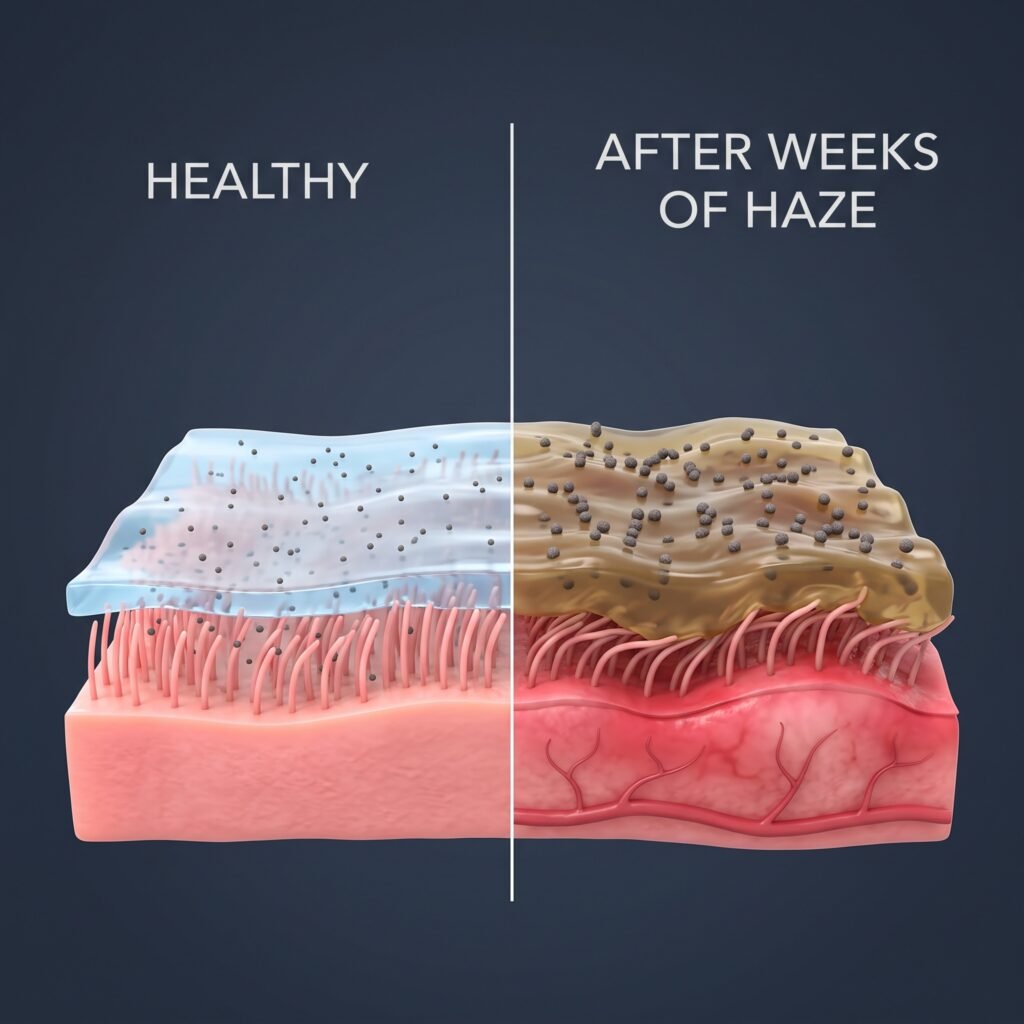
The inside of your nose is not just an empty tunnel. It is lined with a thin, wet layer of mucus sitting on top of tiny hair-like structures called cilia. The cilia beat continuously and sweep mucus, with the dust, germs and particles stuck in it, backwards toward the throat, where it is swallowed. This “mucociliary escalator” is your nose’s main cleaning system.
Haze smoke contains very fine particles known as PM2.5. These are small enough to travel deep into the airways. Based on general clinical knowledge and the way these particles behave, prolonged exposure can do several things to the nasal lining at once:
- Irritate and inflame the lining. The lining swells, which feels like a blocked nose even when there is no infection and no excess mucus.
- Dry it out. Smoke particles and low humidity strip moisture from the mucus layer. A dry layer moves poorly, so mucus thickens and forms crusts.
- Slow the cilia. When the escalator slows, particles and germs stay in contact with the lining for longer, which can make irritation and infection more likely.
- Make the nose more reactive. An inflamed nose often becomes oversensitive to smells, cold air-conditioning, dust and temperature changes that would normally not bother you.
Each of these effects takes time to reverse. Once the exposure stops, a lining that has been inflamed for weeks usually needs days to a few weeks to settle, and longer if you already had allergic rhinitis, chronic sinusitis or a deviated septum. That is the key reason symptoms outlast the worst air days.
3. Why symptoms linger — the six patterns I see most
When haze patients come to clinic, their complaints fall into recognisable patterns. If you recognise yourself in one or more, it is usually the nasal lining recovering from repeated irritation rather than something sinister.
- A blocked nose that is worst in the morning. Swollen lining plus thickened overnight mucus. Often improves after a shower or a rinse.
- Dry, crusty nostrils, sometimes with streaks of blood on the tissue. Dried mucus crusts sit on a tender lining. Picking them makes small bleeds more likely. I discussed this heat-and-dryness pattern in the El Niño crusting and nosebleed post.
- A burning or stinging feeling on breathing in. The surface nerves of an inflamed lining are exposed to every breath of dry air.
- Post-nasal drip and a tickly throat. Thick mucus running backwards causes throat clearing and cough, especially at night. See also 7 things you can do about a dry throat in Malaysia.
- Frequent sneezing, watery eyes and itchy nose. Haze can trigger the same pathway as allergy. The MOH-reported rise in conjunctivitis fits with eyes being irritated too.
- A reduced or “off” sense of smell. Swelling can block odours from reaching the smell area at the top of the nose. This usually recovers as swelling settles, but it should be checked if it persists.
4. Haze irritation, allergy or infection? A quick decision guide
The three conditions overlap, and this is where many people lose weeks. The table below is a guide, not a diagnosis.
| Feature | Haze irritation | Allergy (rhinitis) | Infection (viral or bacterial) |
| Fever | Absent | Absent | Common early on, especially with viral illness |
| Nasal discharge | Mostly clear or scanty, crusts | Clear, watery, plentiful | Thick, may turn yellow or green |
| Itch and sneezing | Mild to moderate | Marked, in bouts | Less prominent |
| Body aches and tiredness | Absent | Absent | Often present |
| Pattern over time | Tracks the API; better indoors with clean air | Triggers: dust, pets, mould, pollen | Starts abruptly; peaks, then slowly improves |
| Facial pain or pressure | Mild | Mild | More marked, may worsen when bending forward |
Remember that a plain “yellow or green mucus” does not automatically mean bacteria or the need for antibiotics. Most acute sinus-type illnesses are viral. If you want to understand the difference between “sinus” and “sinusitis”, I wrote about that in Sinusitis and Sinus: What Is the Difference?. For the seasonal viral overlap, see Rainy Season Allergies vs. Flu.
5. A practical recovery routine while the haze continues
You cannot recover fully while still breathing polluted air all day, so the routine below has two aims: reduce exposure, and help the nasal lining clear and heal.
Step 1: Cut exposure where you can
- Follow the MOH advice: avoid outdoor activity when the API is above 100, and postpone strenuous exercise outdoors, because faster breathing draws in more polluted air.
- Keep windows closed at home, especially at night, and check your local API reading before planning errands. The Ministry of Education has also reverted to its haze action plan, under which schools close at API 200, so parents should check school announcements each morning.
- Keep indoor air as clean as you reasonably can. Avoid smoking, burning incense and using strong sprays indoors. A room air cleaner with a HEPA filter may help in a closed bedroom, though I would not treat it as essential.
Step 2: Wear the right mask, properly
MOH advises N95 masks for necessary outdoor activity because they filter PM2.5. A loose or gappy N95 gives much less protection than a well-fitted one, so pinch the nose clip and make sure the edges sit flat against your cheeks. A beard or loosely tied straps will let polluted air leak around the sides. Replace the mask if it is damp, dirty or deformed.
Step 3: Rinse the nose with saline
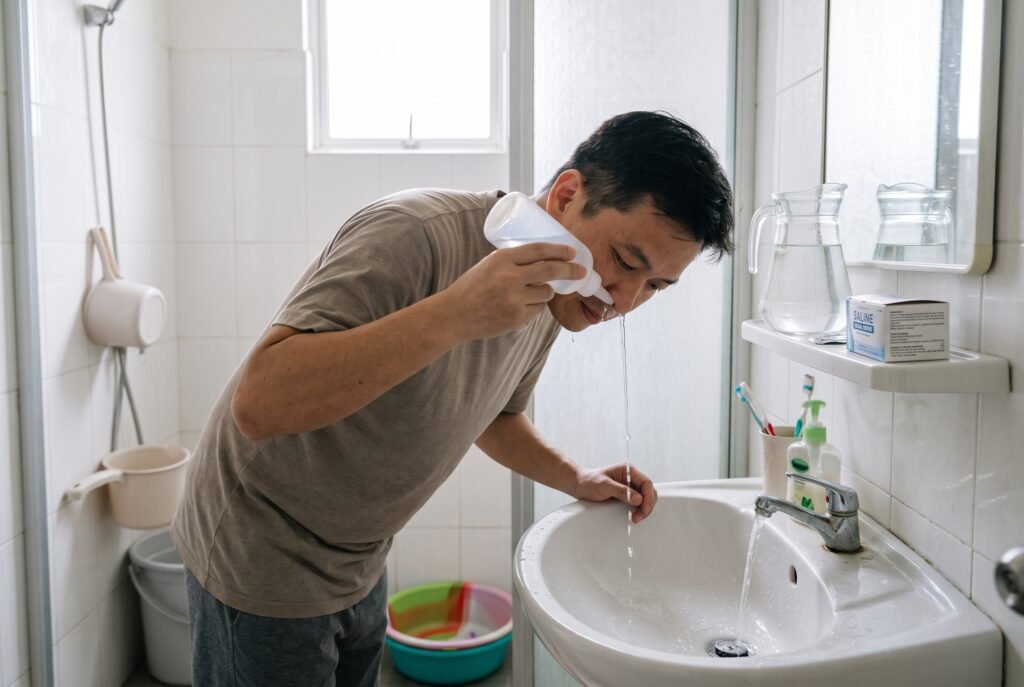
Saline rinsing is the single most useful home measure I recommend for haze symptoms. It mechanically washes out trapped particles and dried mucus, and it moistens the lining so the cilia can work again. The evidence is reasonable for a low-cost step:
- In a randomised controlled trial of 42 toll gate officers exposed to traffic pollution in Semarang, Indonesia, daily isotonic saline irrigation for 14 days significantly reduced nasal obstruction compared with no irrigation (Dewi, Diponegoro International Medical Journal, 2025). It is a small study, but the setting is close to a Malaysian roadside worker.
- A meta-analysis of nine randomised trials with 740 patients found hypertonic (saltier) saline gave a larger symptom benefit than isotonic saline, but with more minor side effects such as stinging (Kanjanawasee et al., American Journal of Rhinology & Allergy, 2018). If your nose stings, plain isotonic saline is a perfectly good choice.
- A JAMA Otolaryngology viewpoint explains the mechanism: rinsing disrupts the thick surface layer, removes particles, and supports ciliary beating (Farrell et al., 2020).
Water safety matters. Never use untreated tap water in a nasal rinse. Use pre-boiled and cooled water, distilled water, or sterile saline sachets. I explain why, and what to do in Malaysia, in Is Tap Water Safe for Nasal Rinsing?.
A reasonable routine is once or twice daily during heavy haze: once after coming home, and once before bed. Lean forward over a basin, let the fluid flow through one nostril and out the other, and gently blow out afterwards without pinching both nostrils shut.
Step 4: Keep the lining moist, but do not over-treat
- A saline gel or spray can be used through the day to prevent crusting. A thin film of a water-based nasal gel inside the front of the nostrils may help; avoid heavy oily products that you could inhale.
- Drink water regularly. Air-conditioned rooms dry the nose further, so avoid pointing the air-conditioner or fan directly at your face while sleeping.
- Do not pick crusts. Soften them with saline and let them come away on their own.
Step 5: Be careful with decongestant sprays
A decongestant spray can feel like a rescue when you cannot breathe, but using it for more than about three days can cause rebound swelling, where the nose becomes more blocked once the spray wears off. I explain this in Can You Really Get “Addicted” to Nasal Spray?. If saline and a doctor-recommended steroid spray are not enough, see a doctor rather than stretching a decongestant for weeks.
Step 6: Support the recovery
- Get enough sleep; the nasal lining repairs itself best when the rest of the body is not stressed.
- If you have known allergic rhinitis, continue your regular treatment. Haze often flares an existing condition rather than creating a new one. My guide to sensitive nose and rhinitis covers the usual treatments.
- If you have asthma or other chronic lung or heart disease, take your regular medication as MOH advises.
6. How long should recovery take?
There is no Malaysian study that gives a precise recovery time for haze-related nasal irritation, so I will not invent one. Based on general clinical experience, a simple irritated lining usually starts to feel better within several days of reduced exposure and regular saline rinsing, and often continues to settle over two to three weeks. If you have been exposed for a month or more, or you already have allergy or sinus disease, recovery can take longer.
The warning sign is not slowness itself. It is lack of any improvement, or a clear change for the worse.
7. Red flags — when to get checked sooner
Seek medical attention promptly if you have any of the following:
- Difficulty breathing, wheeze, chest tightness or worsening asthma. MOH advises that anyone with breathing difficulty or worsening symptoms should seek medical attention immediately.
- A fever lasting more than three days, or fever that returns after improving.
- Severe facial pain or swelling around the eyes or cheeks, a swollen or red eyelid, or changes in vision.
- Nosebleeds that are heavy, frequent or last longer than about 15 minutes of firm pressure. See what to do for a nosebleed.
- Blocked nose or nasal discharge on one side only that persists, particularly with blood-stained discharge, facial numbness or a lump in the neck.
- Loss of smell lasting more than two to three weeks.
- Ear pain, fullness or hearing change, which may mean the ear tube has become blocked.
- Symptoms in babies, young children or older adults that seem worse than a simple cold.
8. What an ENT doctor can do that home care cannot
Many patients wait weeks because they assume nothing can be done. In clinic, I examine the nose with a thin camera (nasal endoscopy), which shows whether the problem is swelling, crusts, polyps, infection or a structural issue such as a deviated septum. That one look often explains why a particular person has been struggling longer than their colleagues.
Treatment depends on the finding. It might be a nasal steroid spray to calm inflammation, a tailored rinse routine, treatment of an underlying allergy, a short antibiotic course when a bacterial infection is genuinely likely, or, in persistent cases, a CT scan to look at the sinuses. A scan is not needed for most haze symptoms, and I discuss when it is and is not useful in CT scan for sinus: when it is useful (and when it is not). If you are unsure whether to start with a GP or a specialist, my guide GP or ENT? can help.
Key takeaways
- Malaysia’s haze is ongoing as of mid-October 2026, with dozens of stations at Unhealthy and two Johor stations at Very Unhealthy on 16 October.
- Weeks of exposure can leave the nasal lining swollen, dry and slow to clean itself, so symptoms can outlast the worst air days.
- Reduce exposure first, wear a well-fitted N95 when you must go out, and rinse the nose with safe, sterile or boiled-and-cooled saline.
- Do not rely on decongestant sprays for more than about three days.
- See a doctor early for breathing difficulty, prolonged fever, severe facial pain, heavy nosebleeds, one-sided symptoms or lack of improvement.
Still struggling after weeks of haze? Talk to us directly
If your nose has stayed blocked, raw or bleeding, or you are not sure whether it is haze, allergy or something else, you do not have to wait for the sky to clear. A proper examination can tell you what is going on and what will help.
Message us on WhatsApp to arrange a consultation
Frequently asked questions
How long does it take for the nose to recover after haze?
There is no precise Malaysian figure. In general clinical experience, a simply irritated lining often begins to improve within days of lower exposure and regular saline rinsing, and may continue settling over two to three weeks. If you have allergy or sinus disease, or have been exposed for a long period, recovery can take longer.
Is it safe to rinse my nose every day during the haze?
For most healthy adults, once or twice daily rinsing with sterile, distilled, or boiled-and-cooled water mixed with saline is considered safe. Never use untreated tap water. Stop and see a doctor if you develop ear pain, bleeding or worsening symptoms.
Do I need an N95 mask indoors?
MOH advises N95 masks for necessary outdoor activity when the API is above 100. Indoors, closing windows and keeping the air clean is the main step. Wear a well-fitted mask indoors only if your home is also visibly hazy or you have been advised to by your doctor.
Why is my nose bleeding during the haze?
Dry, inflamed lining and crusts break easily, and rubbing or picking can start a bleed. Lean forward and pinch the soft part of the nose firmly for 10 to 15 minutes. If bleeding is heavy or does not stop, go to an emergency department.
Can haze cause sinusitis?
Haze irritation can swell the lining and block sinus drainage, which makes true sinus infection more likely in some people. Not every blocked nose is sinusitis, though. Symptoms such as fever, thick discharge, facial pain and worsening after initial improvement suggest infection and are worth checking.
Are children more affected by haze?
Children breathe faster for their size and often play outdoors, so they may take in more particles. Keep them indoors when the API is high and follow school announcements. Seek care early for breathing difficulty, high fever or ear pain.
When should I see an ENT doctor instead of a GP?
Start with a GP for a short illness. See an ENT doctor if symptoms last beyond about three weeks, keep coming back, involve one side only, include repeated nosebleeds or loss of smell, or do not improve with basic treatment.
References and further reading
- Malay Mail (Bernama), 16 Oct 2026. MOH says mask up, avoid outdoor activity as haze blankets Malaysia.
- Malay Mail, 16 Oct 2026. Haze watch: 29 areas recording unhealthy or worse air; Larkin, Pasir Gudang API hits 202.
- The Star, 11 Oct 2026. Rise in respiratory infections and conjunctivitis.
- Ministry of Health Malaysia. Health Advisory for Workplaces During Haze.
- Dewi AMK. Effect of nasal irrigation on nasal obstruction among toll gate officers: a randomised controlled trial. Diponegoro International Medical Journal, 2025.
- Kanjanawasee D et al. Hypertonic vs isotonic saline nasal irrigation: systematic review and meta-analysis. Am J Rhinol Allergy, 2018.
- Farrell N et al. Benefits and safety of nasal saline irrigations in a pandemic. JAMA Otolaryngol Head Neck Surg, 2020.
Medical disclaimer: this article is general information and does not replace an individual consultation.
No responses yet