
A few months ago, I wrote about patients who felt dizzy riding in electric vehicles: their bodies were genuinely moving through space, but the cabin was so quiet and smooth that their inner ears never got the usual warning signals. Lately, a different version of the same complaint has been showing up in my clinic, and it has nothing to do with cars.
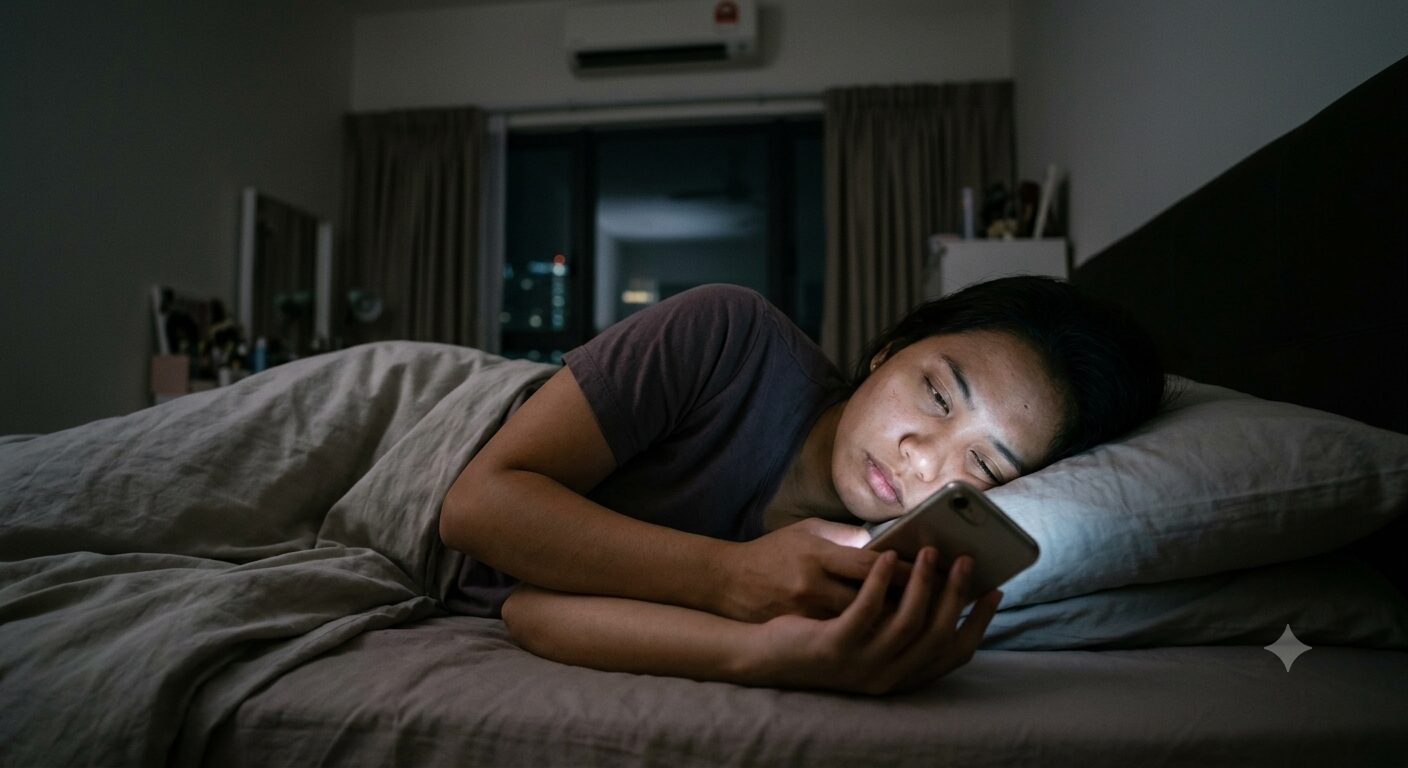
A university student came to see me describing almost exactly that. She would lie in bed scrolling TikTok for an hour or two before sleep, and by the time she put the phone down, the room would tilt. Not always a full spin, sometimes just a queasy, off-balance feeling that lingered for several minutes after she looked away from the screen. She was convinced something was wrong with her ears. In a way, she was right, just not in the way she expected. It took a couple of visits before she made the connection herself, mostly because nobody had ever told her that a phone screen, of all things, could do this.
The Reverse of the EV Problem
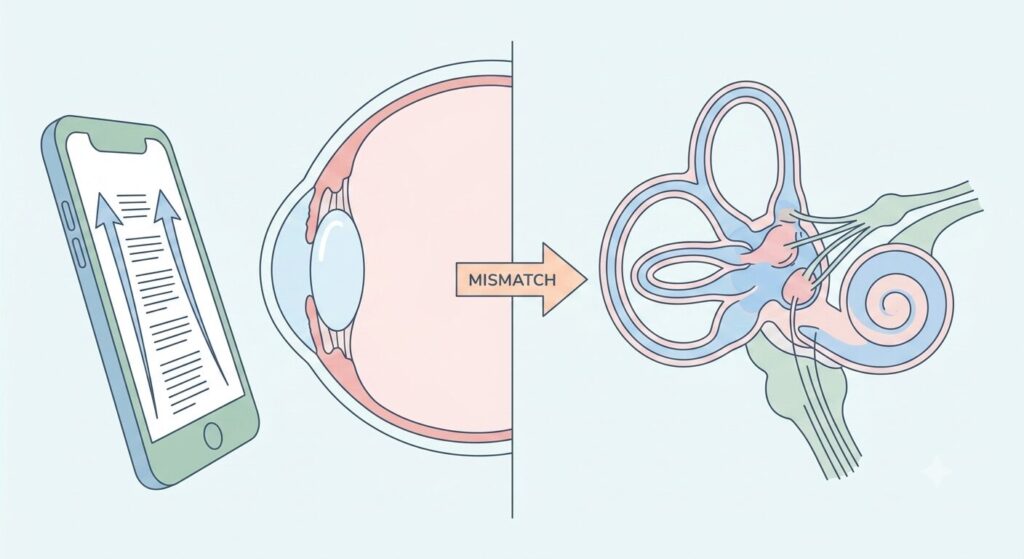
In the EV cases I described before, the body genuinely moves through space, but a smooth, quiet cabin gives the inner ear too few cues to keep up, creating a mismatch between what the eyes see and what the vestibular system feels. Scrolling dizziness runs in the exact opposite direction. Sitting in bed or on the sofa, your body is completely still. But your eyes are watching a stream of video content move rapidly upward, sideways, or in and out as one clip autoplays into the next. Your visual system is reporting motion. Your inner ear is reporting none. That contradiction has a name: visual-vestibular mismatch, and it is the same underlying mechanism responsible for seasickness, flight simulator sickness, and, for a growing number of my patients, TikTok sickness.
What’s Actually Happening in Your Brain
Clinically, what my student patient experienced falls under a condition called visually induced dizziness, sometimes shortened to cybersickness when the trigger is a screen. Researchers describe the core mechanism as visual-vestibular conflict: the eyes send a strong signal that the body is moving, while the balance organs in the inner ear insist otherwise, and the brain, unable to reconcile the two, responds with nausea, disorientation, and a sense of unsteadiness.
Not everyone is equally vulnerable. Brain-imaging studies on people with visually induced dizziness have found differences in how the visual and vestibular networks in the brain communicate with each other, which may explain why some people can scroll for hours with no ill effect while others feel the room tilt after a few minutes. Symptoms generally fall into three groups: nausea, disturbances in eye movement control, and general disorientation, and in more sensitive individuals, they can persist for hours after the phone is put down, sometimes affecting sleep quality that same night.
Why This Shows Up So Often in Malaysia
This is not a niche complaint. According to DataReportal’s Digital 2026 Malaysia report, 98 percent of the population is now online, and 85 percent of Malaysians use social media, with TikTok now the single largest platform in the country by reach. Malaysia is, by most global measures, one of the most continuously online populations in the world, and a great deal of that scrolling happens exactly where dizziness is most likely to strike: lying down, last thing at night, in a dim room where the phone screen is the only visual reference point left.
Malaysia’s climate plays a quiet supporting role too. Long stretches of heat, humidity, sudden downpours, and haze episodes all push people indoors, and indoors increasingly means a mattress and a phone rather than a walk outside. A Selangor-based study on public awareness of vertigo found that many Malaysians who experience dizziness struggle to describe or categorise it accurately, which matters here, because scrolling dizziness and true inner-ear vertigo genuinely feel different, even though patients often use the same everyday description for both when they first sit down in my clinic.
Add to that a culture where the smartphone doubles as an alarm clock, a messaging app, and the last thing checked before sleep, and you have a huge number of people spending their final waking minutes each day in exactly the position that maximises this kind of mismatch: lying flat, phone held close to the face, room lights already off. It is a habit built for convenience, not for the comfort of your inner ear.
Screen Dizziness vs. Real Vertigo

In clinic, I separate these into two categories, the same way I do for the EV cases:
- Screen-induced dizziness (cybersickness): triggered specifically by watching moving visual content on a screen; your body stays completely stationary throughout; symptoms typically ease within minutes to an hour of looking away and fixing your eyes on a still, distant object; rarely comes with hearing changes or ear symptoms.
- True vertigo: a spinning sensation that can start or continue with no screen in sight at all; often triggered by a specific head position, such as turning over in bed or looking up at a shelf; may come with hearing loss, tinnitus, or a feeling of ear fullness; usually linked to a genuine inner-ear or vestibular-nerve problem rather than anything happening on a screen.
Most people who come to see me after a scrolling-related episode have already tried to self-diagnose using whatever they found online, and the two categories above get blurred together constantly, partly because the sensation itself, that swaying, tilting, slightly seasick feeling, can seem remarkably similar in the first few seconds regardless of the cause. The distinguishing details, what triggers it, how long it lasts, and what else comes with it, matter far more than how dramatic it feels in the moment.
The overlap that confuses people is this: a handful of vestibular conditions are made noticeably worse by exactly the kind of visual stimulation a phone provides, which means screen time can act as a trigger or an unmasking event for a real underlying disorder, not just an isolated nuisance.
Conditions That Screens Can Unmask
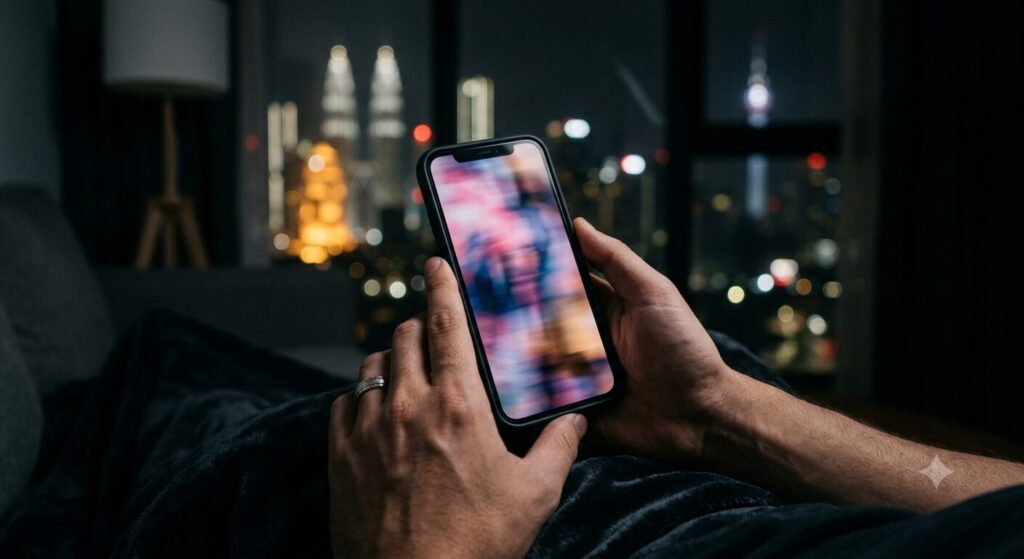
- Persistent postural-perceptual dizziness (PPPD): a chronic form of dizziness that, by definition, worsens in visually busy environments, including crowded shopping malls, patterned floors, and fast-scrolling screens. It is one of the most common causes of chronic dizziness in adults and is frequently missed.
- Vestibular migraine: episodes of dizziness accompanied by light sensitivity, head pressure, or a personal or family history of migraine; rapidly moving visual content is a recognised trigger.
- BPPV (benign paroxysmal positional vertigo): brief, intense spinning triggered by a change in head position; usually unrelated to screens directly, but often first noticed when someone tips their head back to look at a phone propped above them in bed.
None of this means TikTok causes these conditions. It means a phone screen can be the spotlight that reveals a vestibular problem that was already there, quietly, waiting for the right visual trigger. That distinction matters clinically, because treating the trigger alone, by simply scrolling less, only goes so far if the underlying vestibular condition itself is never diagnosed.
What to Do About It
- Give your eyes a fixed point. Every twenty to thirty minutes of scrolling, look up and fix your gaze on a still object at least a few metres away for twenty to thirty seconds before returning to the screen. This is the same underlying principle used for general eye strain and motion sickness alike: it gives your visual and vestibular systems a genuine chance to re-synchronise before the mismatch builds up again.
- Turn on a light. Scrolling in a completely dark room removes every other visual reference point except the screen, which worsens the mismatch. A dim bedside lamp is usually enough to help.
- Avoid scrolling flat on your back with the phone held directly overhead. This head position is also the one most likely to trigger BPPV in people who are prone to it, which can make the two problems hard to tell apart.
- Turn off autoplay and reduce continuous-scroll feeds where your app allows it, especially if you already know you are sensitive to motion.
- If you are prone to motion sickness generally, the same principles used for car or sea sickness, staying hydrated, not scrolling on an empty stomach, and building up screen tolerance gradually, tend to help here too.
When It’s Not Just Screen Time: See an ENT

Consider a proper ENT assessment if:
- You feel true spinning vertigo even when no screen is involved.
- Dizziness is triggered by turning over in bed or looking up or down, which can point to BPPV.
- You notice hearing loss, tinnitus, or a feeling of fullness in one ear alongside the dizziness.
- Symptoms last for hours to days rather than settling within an hour of putting the phone down.
- Episodes are recurring and come with migraine features such as light sensitivity or head pressure.
Urgent red flags: go to the emergency department
Seek immediate care if dizziness comes with sudden weakness, facial drooping, or slurred speech; a severe headache unlike any you have had before; double vision, fainting, or a significant loss of balance; or chest pain and a racing heartbeat.
Still Feeling Off-Balance?
If scrolling-related dizziness is becoming a regular part of your day, or you are not sure whether what you are feeling is screen-related or something more, it is worth having it properly assessed rather than guessing. Dr. Julius Goh and the team see vestibular complaints like this regularly in clinic.
Message us directly on WhatsApp to arrange a consultation with Dr. Julius Goh.
You can also reach us through our contact page or learn more about our ear specialist services in Petaling Jaya and Kuala Lumpur.
Frequently Asked Questions
Is “TikTok dizziness” a real medical condition?
It is not a formal diagnosis on its own, but it is a real, well-documented phenomenon called visually induced dizziness, or cybersickness, caused by a mismatch between what your eyes see and what your inner ear feels.
How is screen dizziness different from vertigo?
Screen dizziness happens only during, or shortly after, watching moving visual content, and usually settles within an hour. True vertigo can happen with no screen involved at all, is often triggered by specific head positions, and may come with hearing changes.
Can too much TikTok damage my inner ear?
No. Scrolling does not damage the inner ear itself. It can, however, trigger symptoms in people who already have an underlying vestibular condition such as vestibular migraine or PPPD.
Why do I only feel dizzy scrolling in bed at night?
Lying flat in a dim room removes most other visual reference points, leaving the screen as the dominant visual signal, which increases the mismatch between your eyes and your inner ear.
When should I see a doctor about this?
If dizziness happens even without a screen, is triggered by moving your head, comes with hearing loss or tinnitus, or lasts more than an hour after you stop scrolling, it is time for a proper ENT assessment.
By Dr. Julius Goh Liang Chye, Associate Professor of Otorhinolaryngology, Universiti Malaya
Internal Links
- Vertigo in an EV: why it feels worse than a petrol car (companion piece)
- Ear Specialist Clinic (vertigo & balance disorders)
- GP or ENT? When to see an ENT for dizziness
- Ear wax vs ear infection (when dizziness needs ENT review)
- Hearing loss red flags (includes dizziness/vertigo warning signs)
- Contact The ENT Doctor
External Links
- DataReportal: Digital 2026 Malaysia (internet & social media penetration)
- Awareness and Knowledge of Vertigo among Adults in Selangor, Malaysia (study)
- Vestibular Disorders Association: Vision Challenges with Vestibular Disorders
- Vestibular Disorders Association: Vestibular Rehabilitation Therapy (VRT)
- Cleveland Clinic: Persistent Postural-Perceptual Dizziness (PPPD)
- Johns Hopkins: Vestibular Migraine
- Balance & Dizziness Canada: Motion and Cyber Sickness
Discover more from The ENT Doctor
Subscribe to get the latest posts sent to your email.
Comments are closed