
Why Malaysians Are More Prone to Nasopharyngeal Carcinoma?
When we think of common cancers, breast, lung, and colorectal cancers usually come to mind. However, in Southeast Asia, and particularly in Malaysia, there is a silent, lesser-known threat that disproportionately affects our population: Nasopharyngeal Carcinoma (NPC).
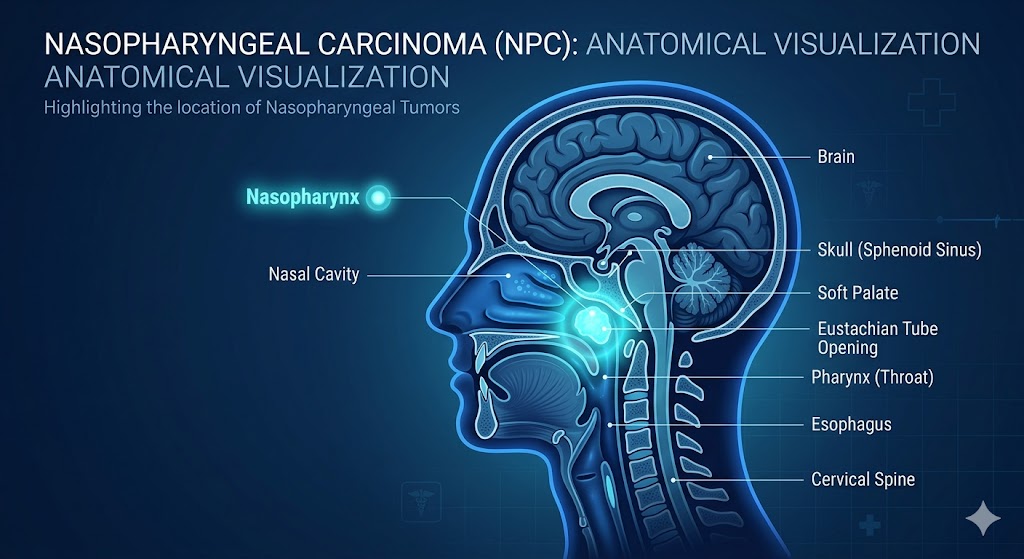
Often referred to colloquially as “nose cancer,” NPC is a unique malignancy that develops in the nasopharynx—the hidden area located behind the nasal cavity and above the back of the throat. Because of its concealed location, early symptoms are incredibly subtle. They often mimic everyday annoyances like a lingering cold, a stubborn sinus infection, or a blocked ear after a flight. As a result, diagnosis is frequently delayed, allowing the cancer to progress to advanced stages before it is finally detected.
According to the Malaysia National Cancer Registry, NPC is the fifth most common cancer overall in Malaysia and the fifth leading cancer among Malaysian men. But what is it about Malaysia that makes this specific type of cancer so prevalent here compared to the rest of the world?
In this comprehensive guide, we will explore the genetic, dietary, and environmental reasons behind Malaysia’s high NPC rates, break down the critical warning signs you must never ignore, and explain the steps you should take to protect your health.
Anatomy 101: Understanding the Nasopharynx

To understand why NPC is so difficult to detect, we first need to understand the anatomy of the region it affects.
The nasopharynx is a small, box-like chamber situated directly behind your nasal passages and just above the soft palate of your throat. It serves as a crucial passageway for the air you breathe, funneling it from your nose down into your lungs.
Crucially, the nasopharynx is also home to the openings of the Eustachian tubes—the tiny canals that connect the back of the nose to the middle ears, helping to equalize pressure.
When a tumor begins to grow in the nasopharynx (most commonly originating in a small groove called the Fossa of Rosenmüller), it can silently expand for months. Because this area is practically impossible to see simply by looking into the mouth or up the nose with a standard flashlight, specialized medical equipment is required to spot any abnormalities.By the time the tumor grows large enough to block the Eustachian tube or bleed into the nasal cavity, the cancer has often already begun spreading to the lymph nodes in the neck.
The Statistical Reality of NPC in Malaysia
Globally, Nasopharyngeal Carcinoma is considered a rare disease, with an incidence rate of roughly 1 to 2 cases per 100,000 people. However, in endemic regions like Southern China, Southeast Asia, and North Africa, the numbers tell a drastically different story.
In Malaysia, the incidence rate is strikingly high. Here is how the demographics break down:
- Gender Disparity: Men are overwhelmingly more susceptible to NPC than women. In Malaysia, males have about a 2.5 to 3 times higher risk of developing the disease compared to females.Frontiers Publishing Partnerships+ 1
- Age Factor: While NPC can occur at any age (even in young adults), the risk peaks significantly for individuals between the ages of 40 and 60.
- Ethnic Vulnerability: The distribution of NPC in Malaysia is heavily skewed by ethnicity.NPCSM
- The highest incidence rates in the world are actually found among the indigenous Bidayuh population in Sarawak, East Malaysia.
- Malaysian Chinese populations also face a remarkably high risk, ranking just behind populations in Southern China and Singapore.
- Malays face an intermediate risk, while the disease remains relatively rare among Malaysian Indians.
This stark ethnic division strongly suggests that NPC is not merely a product of random chance, but rather a complex interplay of genetics, deep-rooted cultural diets, and environmental exposures.
The Trifecta of Risk Factors: Why Malaysians?
The high prevalence of NPC in Malaysia is generally attributed to a “trifecta” of risk factors: genetic susceptibility, viral infections, and environmental/dietary habits.
1. The Dietary Culprit: Preserved Foods and Salted Fish

One of the most heavily researched links to NPC in Southeast Asia is the traditional diet, specifically the frequent consumption of preserved, cured, and salted foods from a very young age.
In many Chinese and indigenous Bornean households, salted fish (ikan masin), preserved vegetables, and cured meats are staple comfort foods. While delicious, the traditional methods of preserving these foods generate high levels of volatile nitrosamines—potent chemical compounds known to be carcinogenic.
When these foods are cooked (especially steamed or fried), nitrosamine vapors can be inhaled or ingested, coming into direct contact with the delicate epithelial cells lining the nasopharynx. Long-term, early-life exposure to these dietary carcinogens is a primary driver of the region’s high NPC rates.
2. The Viral Link: Epstein-Barr Virus (EBV)
Almost all NPC tumor cells contain the Epstein-Barr virus (EBV). EBV is an incredibly common virus globally; in fact, up to 95% of the world’s adult population has been infected with it at some point. For most people, an EBV infection is completely asymptomatic or causes a mild case of infectious mononucleosis (“mono”), after which the virus remains dormant in the body for life without causing further harm.
However, in certain individuals—particularly those with specific genetic backgrounds native to Southeast Asia—the immune system’s interaction with EBV is different. Instead of remaining harmlessly dormant, the virus infects the epithelial cells of the nasopharynx. Over time, and usually triggered by a combination of other factors like dietary carcinogens or smoking, the virus manipulates the cell’s DNA, initiating the uncontrolled growth that leads to cancer.
NPCSM
3. Genetic Susceptibility and Family History
Your DNA plays a massive role in your risk profile. Anthropological and genetic studies suggest that the elevated NPC risk observed in the Bidayuh and Malaysian Chinese populations reflects a shared ancestral genetic trait.
If you have a first-degree relative (a parent, sibling, or child) who has been diagnosed with Nasopharyngeal Carcinoma, your own risk of developing the disease increases by 7 to 10 times. This familial clustering is a strong indicator that certain inherited immune system traits make specific populations less equipped to suppress the cancer-causing mechanisms of the EBV virus.
4. Lifestyle and Occupational Hazards
While diet and genetics lay the groundwork, modern lifestyle choices act as the catalyst.
- Smoking: Tobacco smoking is a well-established risk factor for all head and neck cancers, including NPC. The carcinogenic smoke directly bathes the nasopharynx with every inhalation.
- Occupational Exposure: Individuals working in specific Malaysian industries—particularly furniture making, textiles, and construction—may face higher risks due to prolonged inhalation of wood dust and chemical solvents like formaldehyde.NPCSM
The Silent Threat: Warning Signs You Shouldn’t Ignore
Because NPC grows in a hidden space, it doesn’t cause obvious external changes in its early stages. The symptoms are notoriously deceptive. If you or a loved one experience any of the following symptoms—especially if they persist for more than three weeks—it is time to seek professional medical evaluation.
🔴 1. A Painless Lump in the Neck (The Most Common Sign)
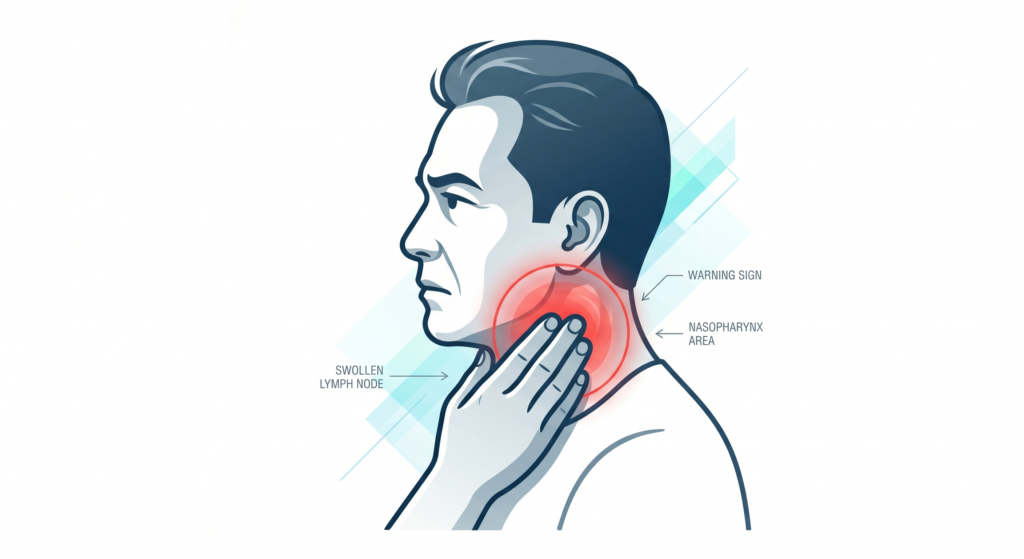
In more than 75% of NPC cases, the very first symptom a patient notices is a swollen lymph node in the neck. Unlike the tender, painful lymph nodes you get when you have a throat infection, an NPC-related lump is typically painless, firm, and slowly growing.
- Key Distinction: While thyroid swellings (goiters) occur in the middle of the front of the neck, NPC lumps usually appear on the side of the neck, often just below the ear or along the jawline.
🔴 2. Unilateral Ear Issues (Blocked Ear or Ringing)
Remember the Eustachian tube mentioned earlier? When a tumor in the nasopharynx grows, it often blocks the opening of this tube on one side. This causes fluid to build up in the middle ear, leading to:
- A persistent feeling of a “blocked” or “stuffy” ear.
- Unexplained hearing loss in just one ear.NPCSM
- Tinnitus (a constant ringing or buzzing sound).
- Key Distinction: If you have a cold, both ears might feel stuffy. If only one ear feels blocked for weeks with no other cold symptoms, it is a major red flag.
🔴 3. Blood-Stained Phlegm or Nasal Discharge
As the tumor grows, its surface can become ulcerated and bleed. You might notice small amounts of fresh or dark blood in your saliva when you clear your throat in the morning, or trace amounts of blood in your nasal mucus when you blow your nose.
🔴 4. Persistent Nasal Blockage
Similar to the ear symptoms, as the tumor expands forward, it can obstruct the nasal airway. This usually presents as a stuffy nose that only affects one side and does not respond to standard over-the-counter decongestants or allergy medications.
🔴 5. Advanced Neurological Symptoms
If left untreated, the tumor can grow upward and press against the cranial nerves at the base of the skull. This advanced stage can cause:
- Double vision (diplopia) or a sudden squint.NPCSM
- Numbness or pain on one side of the face.NPCSM
- Severe, persistent headaches, often localized to one side of the head.
Diagnosis: Don’t Wait Until It’s Too Late
If you present with the symptoms above, a general practitioner may initially suspect a stubborn sinus infection. However, if symptoms persist, it is absolutely critical to be referred to an Ear, Nose, and Throat (ENT) specialist.
What to Expect at the ENT
- Nasopharyngoscopy: This is the gold standard for detecting NPC. The ENT specialist will insert a thin, flexible, fiber-optic camera (an endoscope) through your nose to visually inspect the nasopharynx. It is a quick, outpatient procedure that takes only a few minutes.
- Biopsy: If a suspicious growth is spotted during the endoscopy, the doctor will take a tiny tissue sample (biopsy) to be analyzed in a lab for cancer cells.
- Blood Tests: You may be asked to take an EBV serology test. High levels of specific EBV antibodies (IgA) in the blood can indicate the presence of the disease.
- Imaging: If cancer is confirmed, imaging scans like MRI, CT, or PET scans will be ordered to determine the size of the tumor and whether it has spread to the lymph nodes or other organs.
Take Action Today: If you have persistent symptoms like a painless neck lump or a one-sided blocked ear, do not dismiss them. Schedule a screening with a certified specialist at The ENT Clinic to get peace of mind and expert care.
Treatment and Moving Forward
A diagnosis of Nasopharyngeal Carcinoma is undoubtedly frightening, but there is hope. Because of the anatomy of the head and neck, surgery is rarely the first line of defense for NPC, as the tumor is too close to critical blood vessels and nerves.
Instead, NPC is remarkably sensitive to Radiation Therapy. For early-stage NPC, highly targeted radiotherapy is often enough to cure the cancer. For more advanced stages, a combination of radiotherapy and chemotherapy (chemoradiation) is the standard protocol. Furthermore, recent advancements in targeted therapies and immunotherapy are providing new avenues of hope for patients with recurrent or late-stage disease.
Can You Prevent NPC?
While you cannot change your genetics or completely avoid the EBV virus, you can drastically reduce your risk by making targeted lifestyle changes:
- Change Your Diet: Limit your intake of salted fish, preserved meats, and fermented vegetables. Opt for fresh fruits, vegetables, and fresh proteins instea
- Stop Smoking: Quitting tobacco is one of the most effective ways to lower your risk of NPC and a myriad of other cancers.
- Workplace Safety: If you work in an environment with high levels of dust or chemical fumes, wear appropriate N95 masks and ensure proper ventilation.
Frequently Asked Questions (FAQs)
Q: Can a standard blood test detect NPC? A standard full blood count (FBC) will not detect NPC. However, a specialized EBV DNA or EBV IgA blood test can serve as a strong tumor marker. These are often used as screening tools for high-risk individuals with a family history of the disease.
Q: Is Nasopharyngeal Carcinoma contagious? No, cancer itself is not contagious. While the Epstein-Barr Virus (EBV) associated with NPC is contagious (often spread through saliva), getting the virus does not mean you will get cancer.Millions of people have EBV and never develop NPC.
Q: I have ringing in my ear. Should I panic? No. Tinnitus and blocked ears are most commonly caused by harmless issues like earwax impaction, mild middle ear infections, or age-related hearing changes. However, if the symptom is strictly in one ear, lasts more than three weeks, and is accompanied by a neck lump or nosebleeds, you should consult an ENT promptly.
Q: Why is the Bidayuh population at such high risk? Research is ongoing, but evidence points to a combination of genetic founder effects (specific inherited genetic traits within the community that dictate how their immune systems handle EBV) combined with traditional dietary practices involving preserved, smoked, and fermented foods.
Conclusion
Nasopharyngeal Carcinoma may be a localized threat in Malaysia, but its subtle warning signs make it a formidable opponent. Awareness is the first step toward survival. By understanding the risk factors—whether it’s your family history, your diet, or your ethnicity—you can become a better advocate for your own health.
Remember, a painless lump in the neck, a persistently blocked ear, or blood in your phlegm are not symptoms to “wait out.” Early detection dramatically increases the success rate of treatment.
If you are experiencing any of the warning signs mentioned in this article, or if you fall into a high-risk category and want to discuss screening options, don’t hesitate. Please book an appointment with us today. Your health is too important to leave to chance.
Comments are closed