The Problem With Buying or Renting a Sleep Test Online
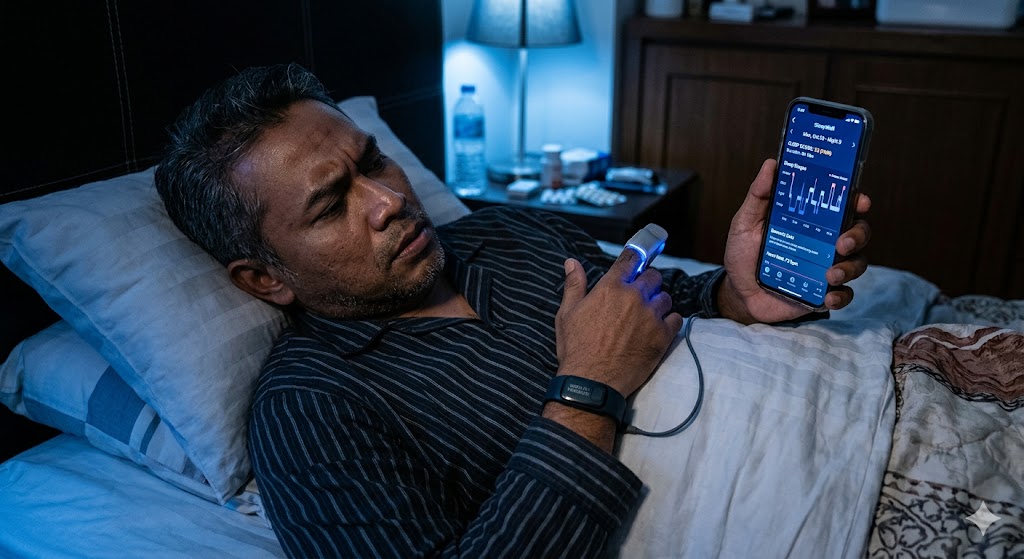
Walk into any major pharmacy chain today, or search Shopee for five minutes, and you’ll find home sleep monitoring devices for sale. Some of them are genuinely useful tools. The problem isn’t the technology. The problem is what happens after someone gets the result.
A person straps on the device, wakes up to a report saying their oxygen dipped to 85% twelve times an hour, googles “AHI above 10,” and within twenty minutes they’ve concluded they have moderate obstructive sleep apnea. They might be right. But they might also be completely wrong — and acting on a self-diagnosis in either direction can cause real harm.
This is happening more often now. Consumer sleep trackers and over-the-counter home sleep tests have made it easier than ever to generate numbers about your sleep. But numbers without context are not a diagnosis. And a diagnosis without a doctor is not a treatment plan.
What a Home Sleep Test Actually Measures
Let’s be precise about this, because the marketing around these devices is often vague.
Most consumer-grade home sleep tests — the kind you can buy without a prescription — measure a limited set of signals. Typically this includes:
- Peripheral oxygen saturation (SpO2): How much oxygen your blood is carrying
- Heart rate
- Body position
- Breathing effort or airflow (in more advanced devices)
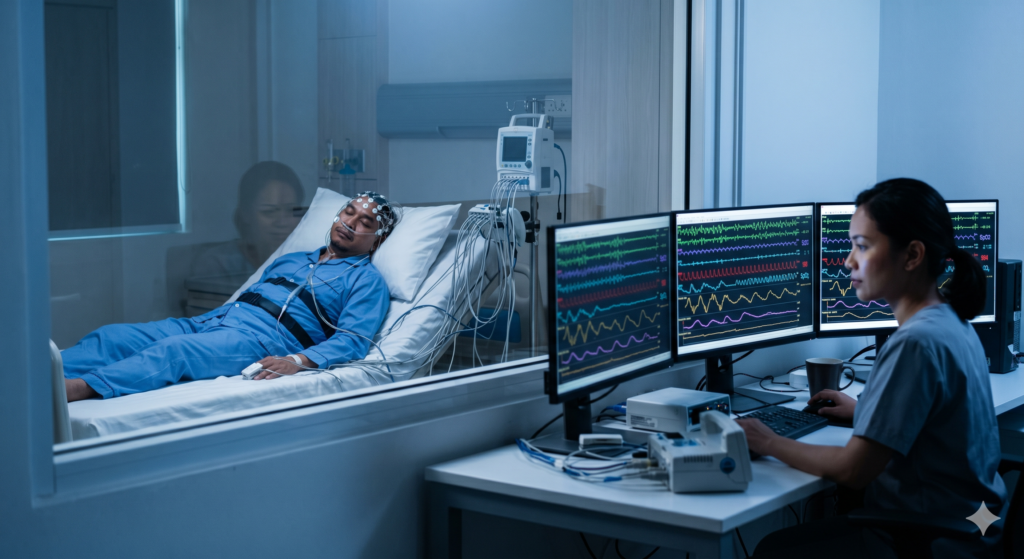
What they do not measure includes electroencephalography (EEG) — which is what tracks your actual sleep stages. They cannot tell you how much time you spent in REM sleep, how often you woke up at a neurological level, or whether you even slept during the recording period at all.
This matters because the formal measure of sleep apnea severity — the Apnea-Hypopnea Index, or AHI — is supposed to be calculated per hour of sleep, not per hour lying in bed wearing a device. A home test that doesn’t record sleep stages will estimate this. Some do it well. Some don’t.
The American Academy of Sleep Medicine has published clear guidelines on when home sleep testing is appropriate: specifically in adults with a high pre-test probability of moderate-to-severe OSA, without significant comorbidities. In other words, even the professional bodies that endorse these devices say they should only be used selectively, with a clinician involved in the decision.
Why “It Says I Have Sleep Apnea” Isn’t Enough
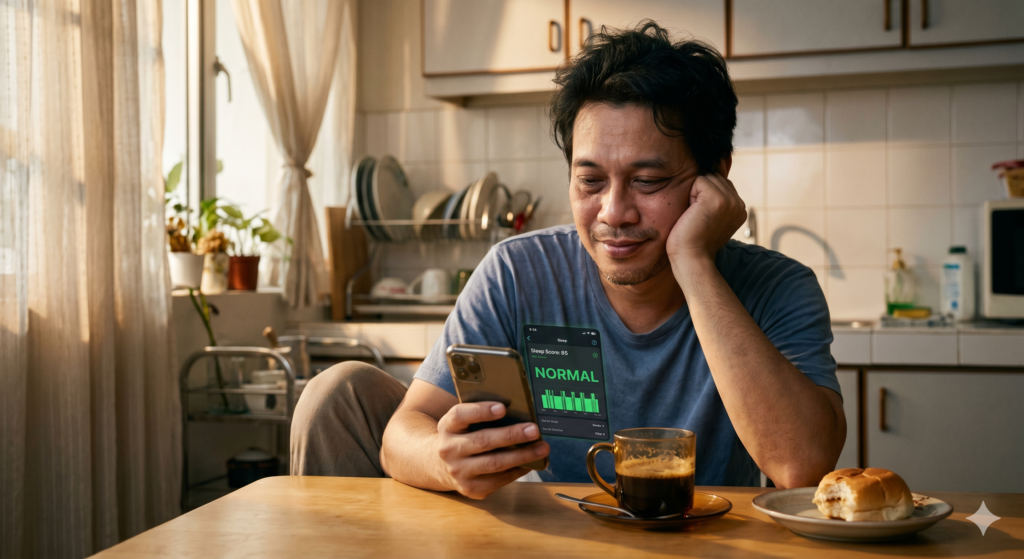
Here’s what I see in clinic fairly often now. A patient walks in with a printout from a home device or a consumer smartwatch report, certain they have OSA because the numbers say so. Sometimes they’re right. But the clinical picture is frequently more complicated than a single number suggests.
False positives are common. Home sleep tests tend to overestimate OSA severity in some patients and underestimate it in others. A poor sensor seal, a night of restless sleep, or even sleeping on your back for the first time in a while can produce readings that look alarming. A study published in the journal Sleep found that home sleep testing can misclassify a meaningful proportion of patients when compared to in-lab polysomnography — particularly in those with mild disease, where the margin for error matters most.
False negatives happen too. A patient with positional OSA — where apneas occur mostly when sleeping on the back — might have a relatively normal recording if they happened to sleep on their side that night. They’d read the result, feel reassured, and carry on. The underlying problem remains unaddressed.
Other conditions look like OSA. Upper airway resistance syndrome, central sleep apnea, periodic limb movement disorder, and even certain cardiac arrhythmias can produce symptoms — fatigue, unrefreshing sleep, nocturnal awakenings — that mirror obstructive sleep apnea. A home test might flag something, but it cannot reliably distinguish between these conditions. Getting that wrong means getting treatment wrong.
What a Doctor Brings That a Device Cannot
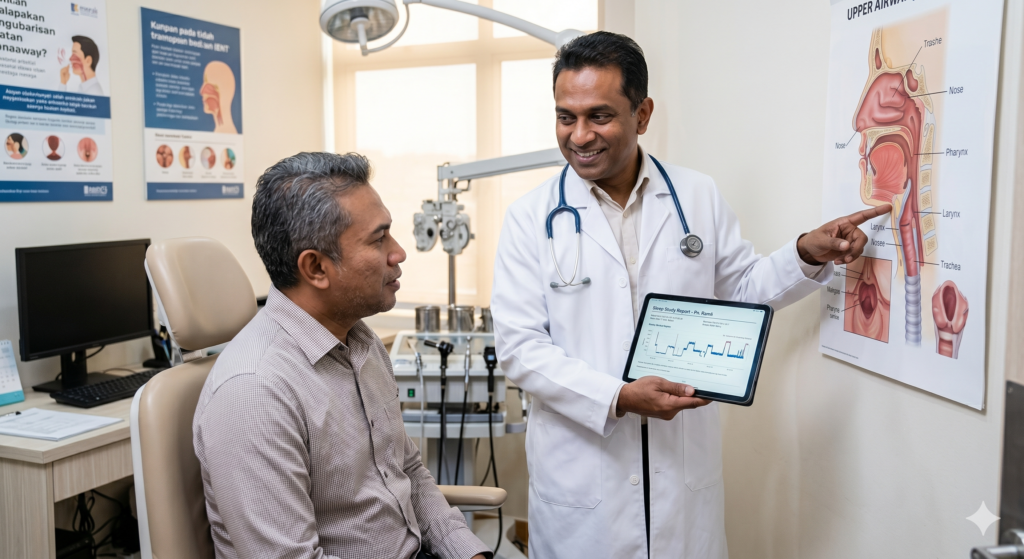
When you see a specialist for a sleep complaint, the evaluation is layered in ways that a gadget simply cannot replicate.
1. A Proper Clinical History
Before any test is ordered, a doctor will ask questions that change the interpretation of everything that follows. How long have you been snoring? Is the fatigue worse after nights when you drank alcohol? Do you wake with headaches? Is your bed partner witnessing actual apneas — complete pauses in breathing — or just loud snoring? Have you gained weight recently?
These details change the pre-test probability of OSA, which in turn determines what kind of test is appropriate, and how aggressively to interpret the result.
2. Physical Examination of the Upper Airway
This is something no consumer device will ever do. A proper ENT examination of a patient with suspected OSA includes assessment of nasal airflow and patency, the size and position of the soft palate and uvula, tonsillar grading, tongue size relative to the oropharynx (the Friedman tongue position), mandibular anatomy, and body habitus.
This matters because the cause of the obstruction shapes the treatment. A patient with massively hypertrophied tonsils and a narrow oropharynx has a different surgical profile than a patient with a retrognathic jaw and a relatively normal throat. You can’t see any of that on a waveform.
3. Identification of Comorbidities
OSA doesn’t exist in isolation. Hypertension, atrial fibrillation, type 2 diabetes, hypothyroidism, and chronic rhinitis are all conditions that either worsen OSA or are worsened by it. A doctor reviewing your case will flag these — and in some cases, treating the comorbidity first changes the sleep picture dramatically.
A patient who comes in with apparent OSA but actually has undertreated hypothyroidism is a different patient entirely. Treating the thyroid can sometimes resolve or significantly improve the sleep-disordered breathing on its own.
4. Ordering the Right Kind of Test
Not every patient needs the same sleep study. A young, otherwise healthy adult with witnessed apneas and an Epworth Sleepiness Scale score of 15 probably does fine with a home sleep test. A 60-year-old with COPD, heart failure, and an unclear clinical picture needs a full in-lab polysomnography where trained technologists can monitor multiple channels in real time and respond if something unexpected happens overnight.
This triage decision — home test versus lab study, level II versus level III versus level IV monitoring — requires clinical judgment. It’s not something you can arrive at by reading your own SpO2 readout.
5. Making Sense of the Result
Even when a home sleep test is the right choice, interpreting the output still requires a doctor. What does an AHI of 14.7 mean for this specific patient, with this specific symptom burden, at this age and BMI, with this anatomy? The number is a data point. The clinical decision — whether to treat, how aggressively, and with which modality — is a professional judgment call.
For patients in Malaysia navigating the healthcare system, this kind of structured evaluation is available through both public hospital sleep clinics and private specialist consultations. The approach from our center involves a stepwise workup that accounts for all of these variables before any treatment is recommended.
The Risk of Skipping the Doctor and Going Straight to CPAP
One outcome of the self-diagnosis trend is patients purchasing CPAP machines — continuous positive airway pressure devices — without a prescription or proper titration. In Malaysia this is technically possible; some suppliers will sell equipment without requiring documentation.
This is genuinely problematic for several reasons.
CPAP is not a benign intervention. The wrong pressure setting causes its own set of problems: aerophagia (air swallowing), central apneas induced by over-treatment, claustrophobia, and mask leak that disrupts sleep further. Proper CPAP titration — determining the right pressure for a given patient — is done either in a lab under supervision or via an auto-titrating device whose data is subsequently reviewed by a sleep physician.
Beyond this, some patients who present with what looks like OSA actually have significant central sleep apnea — where the brain periodically fails to signal breathing, rather than a mechanical obstruction occurring. For these patients, standard CPAP can paradoxically worsen the condition. This distinction absolutely requires a formal sleep study with proper channel recording, not a pulse oximeter from a pharmacy.
And then there’s the question of whether CPAP is even the right treatment at all. For patients with OSA driven primarily by nasal obstruction, septal deviation, or specific anatomical patterns, surgical options may offer better long-term outcomes. Patients who self-diagnose and self-prescribe CPAP never get to that conversation. They spend years tolerating a device they might not have needed, while the anatomical problem that was driving their OSA goes uncorrected.
You can read more about the range of OSA treatment options available — from conservative measures through to surgical interventions — to understand why the right first step always involves a proper diagnosis.
A Word on Drug-Induced Sleep Endoscopy
For patients who end up being evaluated for OSA surgery, there’s a further layer of specialist assessment that no home test can replicate: Drug-Induced Sleep Endoscopy or DISE
DISE involves sedating the patient to a sleep-like state and passing a flexible endoscope through the nose to watch the upper airway collapse in real time. It tells the surgeon where the obstruction is happening — whether at the soft palate, the tongue base, the epiglottis, or at multiple levels simultaneously. This information directly guides which surgical procedure is chosen.
No self-administered test gets anywhere near this level of information. DISE is mentioned here not to suggest everyone needs it — not everyone does — but to illustrate how far the rabbit hole goes between “my app says my oxygen dipped” and “here is the right treatment for your specific anatomy.”
What You Should Actually Do If You’re Worried About Sleep Apnea
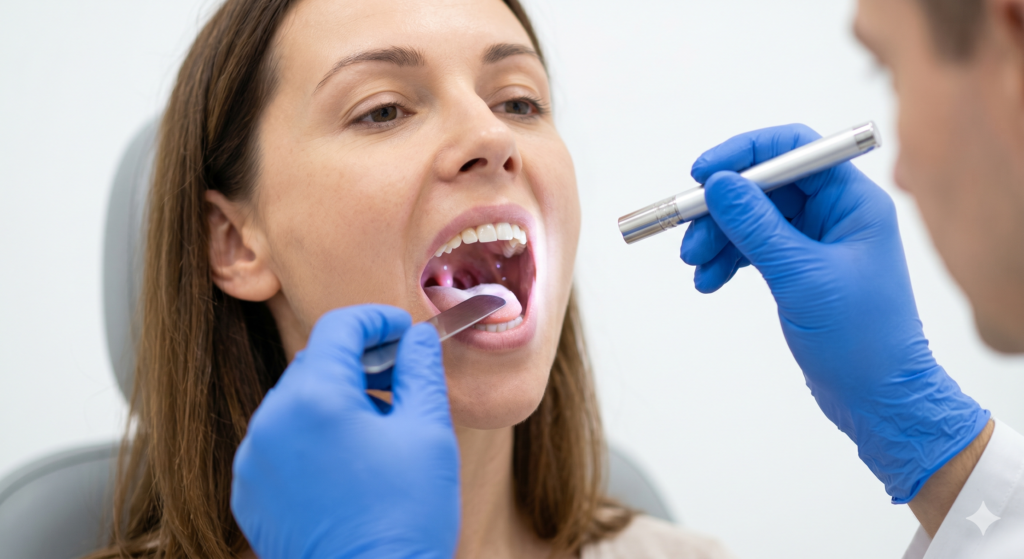
If you’re reading this because you’re concerned about your sleep — snoring, daytime tiredness, waking up unrefreshed, or a bed partner who’s mentioned you stop breathing — here’s a reasonable starting point.
See a doctor. In Malaysia, your GP can provide an initial assessment and refer you to a sleep physician or an ENT specialist with an interest in sleep-disordered breathing. If you have access to a public hospital, Hospital Kuala Lumpur and University Malaya Medical Centre both have sleep clinics.
If you’ve already done a home sleep test out of curiosity, bring the results to the appointment. That data isn’t useless — it gives the doctor something to work with. Just don’t act on it unilaterally.
The Epworth Sleepiness Scale is a validated, freely available questionnaire you can complete at home in about two minutes. A score above 10 is considered indicative of excessive daytime sleepiness and is a reasonable prompt to seek medical evaluation. The STOP-BANG questionnaire is similarly simple and widely used in clinical practice to screen for OSA risk.
Neither of these replaces a clinical assessment. Both of them are better starting points than a self-purchased oximeter.
Frequently Asked Questions
Can I buy a home sleep test in Malaysia without a doctor’s referral?
Yes, these are available over the counter and online. But the purchase is one thing — what you do with the result is another. Interpretation and any subsequent treatment decisions should involve a qualified doctor.
Is a home sleep test ever appropriate without seeing a doctor first?
In specific circumstances, yes — but even then, the result should be reviewed by a physician before acting on it. The device generates data; the doctor generates a diagnosis.
I’ve been snoring for years and feel fine. Do I still need a sleep study?
Snoring without symptoms is worth monitoring, but the absence of obvious daytime sleepiness doesn’t rule out OSA. Some patients with significant apneas have adapted to poor sleep quality over years and no longer recognise what well-rested feels like. Worth discussing with a doctor.
What’s the difference between a home sleep test and a polysomnography?
Polysomnography (in-lab sleep study) measures a much broader set of signals — including brain activity, eye movement, muscle activity, and full cardiorespiratory monitoring — with a trained technologist present overnight. It’s more accurate, particularly for complex or borderline cases, but also more expensive and logistically demanding.
Dr Julius Goh Liang Chye is a Consultant Otorhinolaryngologist and Head & Neck Surgeon at Universiti Malaya Specialist Center, with a specialist interest in obstructive sleep apnea . For appointments and enquiries, visit theentdr.com.
Discover more from The ENT Doctor
Subscribe to get the latest posts sent to your email.
Comments are closed