What’s the Best Sleeping Position? A Sleep Surgeon Settles the TikTok Debate
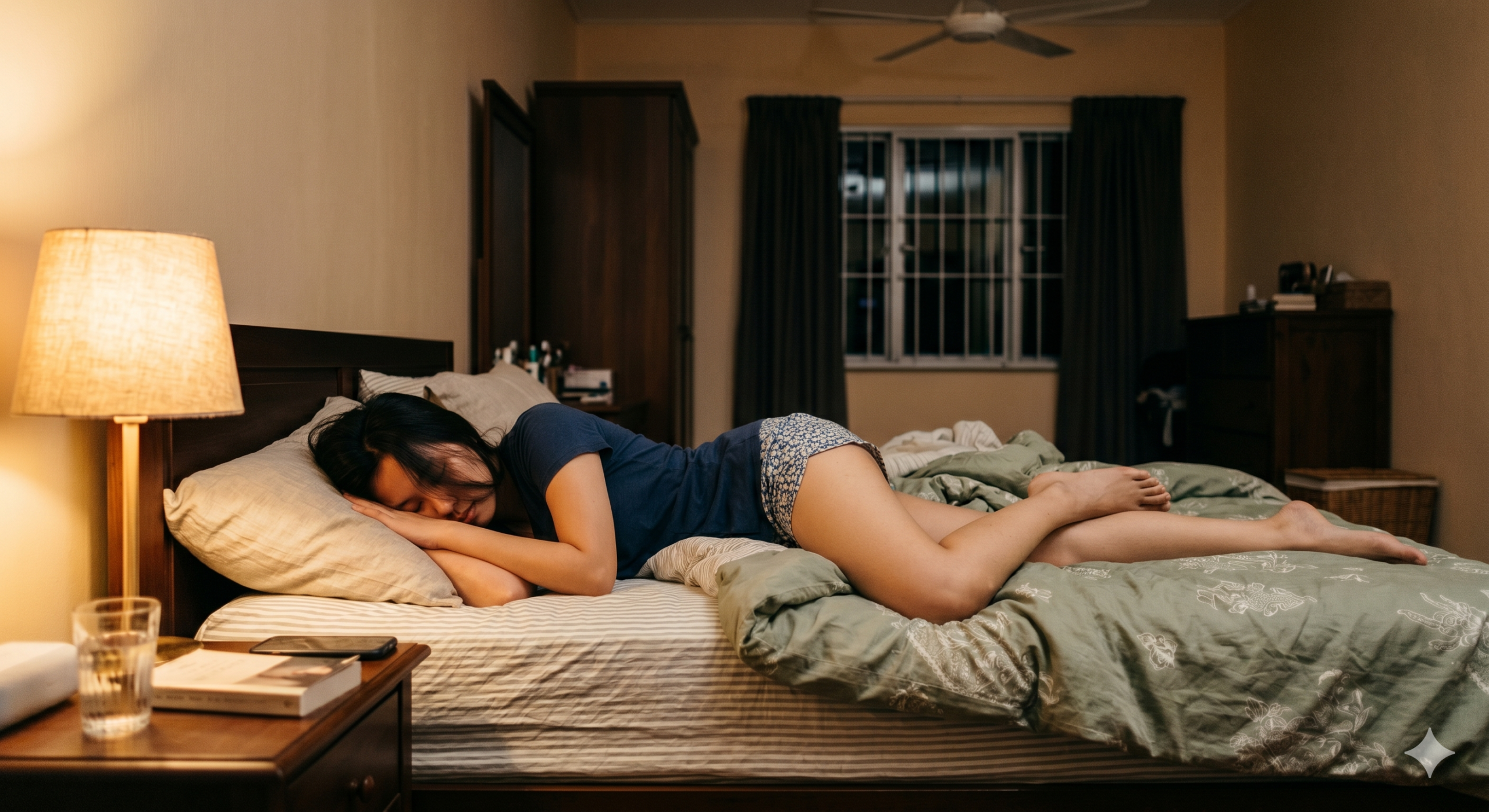
There’s a meme going around — you’ve probably seen it. Someone lying in bed with one leg straight and the other bent at the knee, forming a rough number 4 shape. The caption is always some version of “this is the only way I can fall asleep” and the comments are full of people tagging friends who apparently sleep the exact same way.
It’s funny. It’s also, accidentally, asking a real question: does how you sleep actually matter?
As someone who spends a significant part of his clinical work assessing airways, sleep patterns, and breathing during sleep, I can tell you — yes. Quite a lot, actually. Not in the “do this one weird trick” way that sleepmaxxing content on TikTok tends to suggest, but in a way that’s genuinely backed by decades of clinical research.
So let’s settle this properly. Back, side, or stomach — what does the evidence actually say, and what should you, specifically, be doing?
The short answer (with the longer answer right after)
If you want the one-line version: side sleeping, specifically on your left side, comes out ahead for the most people across the most conditions. It’s better for snoring, mild sleep apnea, acid reflux, and several other common issues.
But and this is the part most viral sleep content skips — the “best” position genuinely depends on what your body is dealing with. A position that helps one person’s reflux might do nothing for another person’s back pain. So let’s go through this properly, condition by condition.
Why back sleeping is the position doctors worry about most
Let’s start with the position most associated with problems: lying flat on your back.
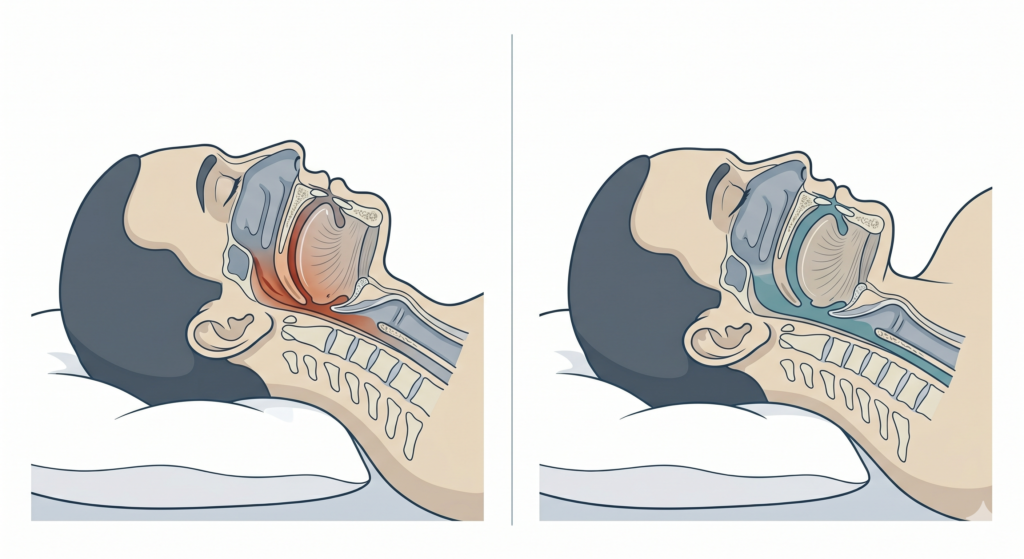
When you’re on your back, gravity does something specific and unhelpful. The base of your tongue and the soft tissues at the back of your throat — the soft palate, the sides of the throat — relax during sleep as they normally do. But on your back, gravity pulls all of that tissue downward and backward, directly into your airway. The space available for air to pass through narrows.
This is why snoring is often worse, or sometimes exclusively present, when sleeping on the back. The sound of snoring is the sound of air being forced through a narrowed passage. And in obstructive sleep apnea (OSA), this narrowing can progress to a full collapse — the airway closes completely, breathing stops, and the brain has to jolt the body into a lighter sleep state to reopen it.
In clinical sleep medicine, we have a specific term for this: positional OSA. Some patients have apnea that is genuinely much worse on their back and meaningfully better on their side. For these patients, something as simple as a position change can meaningfully reduce the severity of their condition — though I want to be clear that this doesn’t replace a proper diagnosis or treatment plan if OSA is confirmed.
Back sleeping is also linked to worse acid reflux. Lying flat removes the natural “uphill” angle that would otherwise make it harder for stomach acid to travel up the esophagus. People with GERD frequently report worse nighttime symptoms specifically when sleeping on their back.
Why side sleeping — particularly the left side — tends to win
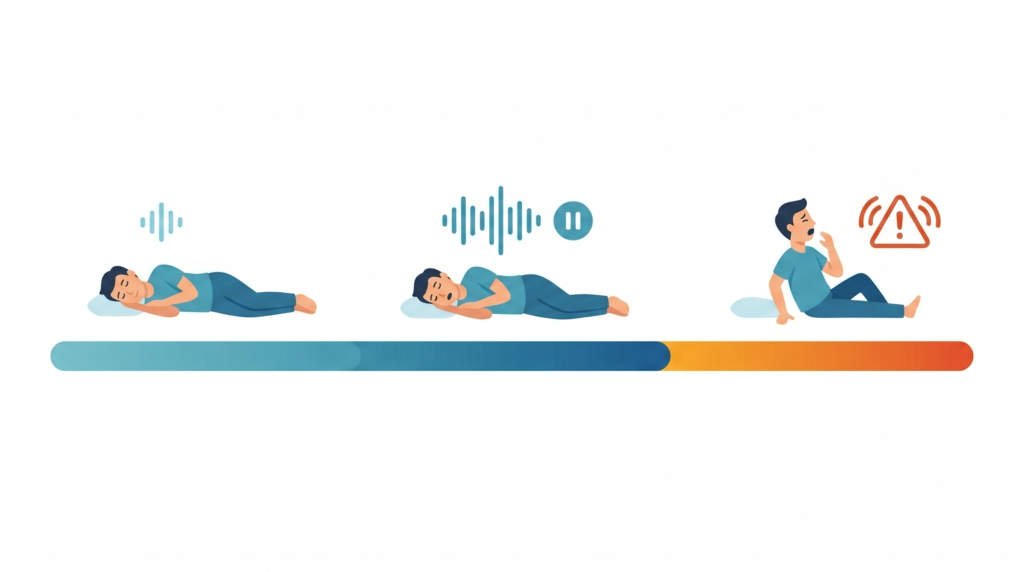
Side sleeping addresses both of the problems above, and does so for a fairly simple anatomical reason: gravity no longer has a direct path to pull tissue into your airway, and your stomach’s position relative to your esophagus changes in a way that makes reflux less likely.
For snoring and mild OSA: turning onto your side keeps the tongue and soft palate from falling backward into the airway. Many people who snore loudly on their back are completely silent on their side. This is well-established enough that it forms the basis of an actual clinical treatment — positional therapy, sometimes delivered through wearable devices that gently vibrate if you roll onto your back during the night.
For acid reflux specifically, the left side has an edge over the right. This comes down to anatomy: your stomach sits slightly to the left of your body’s midline, and the junction where your esophagus meets your stomach is positioned in a way that, when you’re lying on your left side, makes it mechanically harder for stomach contents to flow backward. Sleeping on your right side doesn’t offer the same protection, and some research suggests it may make reflux slightly worse for certain people.
For pregnancy, left-side sleeping is the most commonly recommended position from the second trimester onward, as it’s believed to support better blood flow.
The trade-off with side sleeping is mostly cosmetic and mechanical — sustained pressure on one shoulder or hip over the years, and the “sleep lines” some people notice on their face from a pillow pressing against the skin all night.
What about stomach sleeping?
Stomach sleeping is the position clinicians generally have the most reservations about — though not for the reasons people often assume.
It does help keep the airway relatively open, similar to side sleeping, which is why some people with mild snoring find genuine relief on their stomach. But the trade-off is significant: stomach sleeping typically forces your neck to rotate to one side for extended periods, and many people sleep with their lower back arched in a way that isn’t well supported. Over months and years, this combination is a common contributor to neck stiffness, shoulder discomfort, and lower back pain.
If stomach sleeping is the only position you can comfortably fall asleep in, the usual advice is to use a very thin pillow (or none at all) to reduce the neck angle, and consider a pillow under your pelvis to reduce the lower back arch.
So is the “number 4” sleep position actually fine?
Let’s go back to the meme.
The number 4 position — one leg extended, one leg bent up toward the chest, usually while lying partially on one side — is essentially a variant of side sleeping. And based on everything above, that’s reassuring news: if you’re someone who naturally gravitates toward this position, you’re likely getting many of the same airway and reflux benefits as standard side sleeping.
The main thing I’d watch for is hip and lower back strain if the bent leg is pulled very tightly toward the chest for hours at a stretch, which can put a rotational twist through the lower spine. A small pillow supporting the bent knee can reduce this.
So no, the internet has not stumbled onto anything dangerous here. It’s a side-sleeping variant, and side sleeping is, for most people, a reasonably good place to be.
“Sleepmaxxing” and the limits of optimizing your way to better sleep
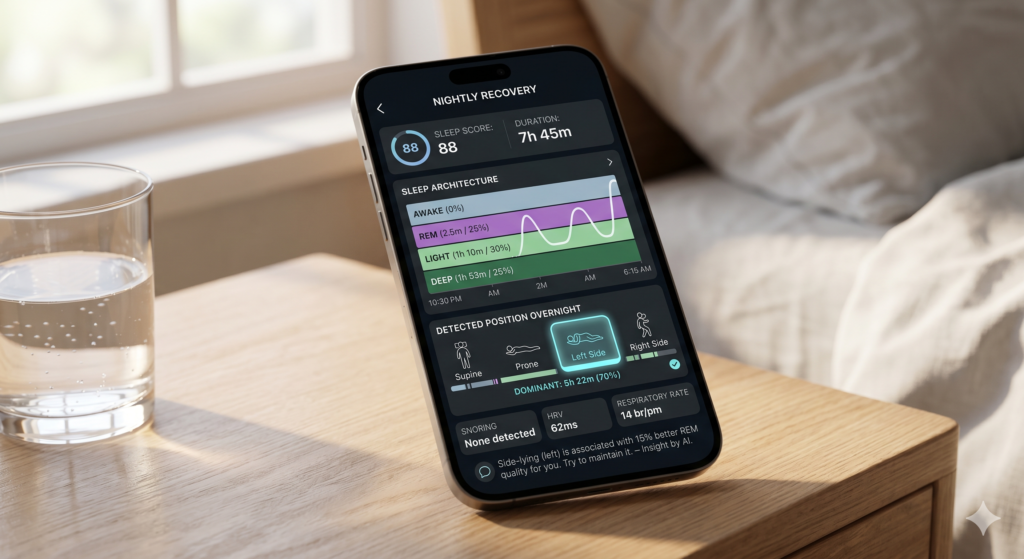
I want to address the broader trend this question sits inside, because I think it’s worth naming honestly.
“Sleepmaxxing” — the umbrella term for the current wave of viral sleep-optimization content — covers everything from blackout curtains and magnesium drinks to weighted blankets and elaborate pillow forts. Some of this is genuinely reasonable: consistent sleep schedules, a dark and cool room, and limiting screens before bed are all things sleep medicine has recommended for years, repackaged for a new audience.
But sleep position, specifically, sits in an interesting middle ground. It’s not a gimmick — the clinical evidence behind side sleeping for snoring and reflux is real and well-established. But it’s also not a fix for an underlying medical condition. If you have loud, frequent snoring, witnessed pauses in breathing, or you wake up gasping, changing your sleep position might genuinely help — but it is not a substitute for finding out whether you have obstructive sleep apnea.
This is the part that tends to get lost in a 30-second video. Sleep position is a useful tool. It is not a diagnosis, and it is not a treatment plan.
When a sleep position change isn’t enough
I’d encourage you to see a sleep specialist, rather than relying on positional adjustments alone, if any of the following apply:
You snore loudly enough that it disturbs others, regardless of position. Someone has witnessed you stop breathing, gasp, or choke during sleep. You wake up feeling unrefreshed despite a full night in bed. You experience excessive daytime sleepiness, to the point of nodding off in passive situations like watching TV or sitting in traffic. Your acid reflux symptoms persist most nights regardless of which side you sleep on. Or you’ve already tried adjusting your position and nothing has meaningfully changed.
These are signs that something more than positioning is at play, and they warrant a proper sleep assessment — typically starting with a consultation and, where indicated, a sleep study to understand exactly what’s happening to your breathing overnight.
The bottom line
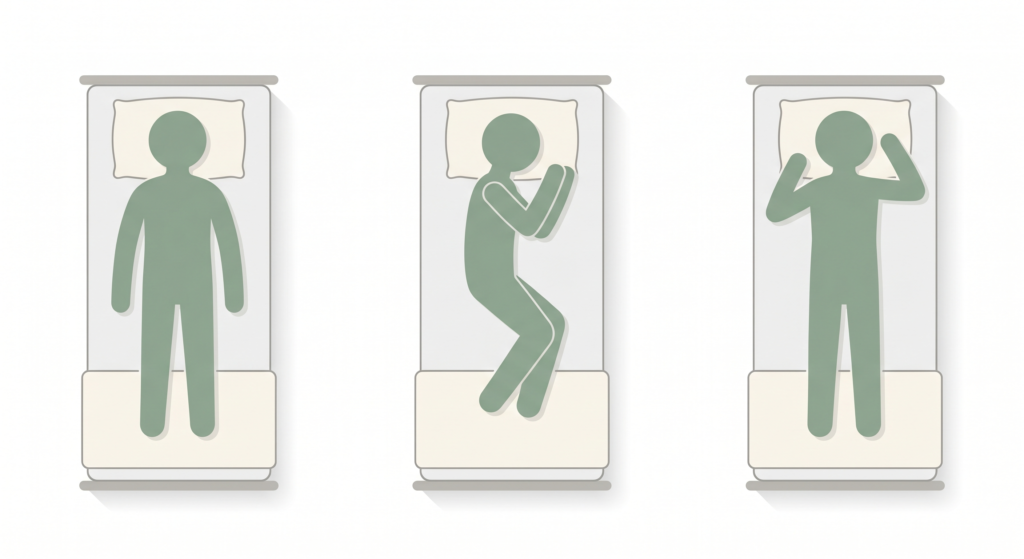
If you’ve been agonising over whether your sleep position is sabotaging your rest, here’s the practical takeaway: side sleeping, particularly on your left side, is a reasonable default for most people, with real benefits for snoring, mild sleep apnea, and acid reflux. Back sleeping is the position most likely to worsen both of those issues. Stomach sleeping can ease snoring slightly but tends to trade that for neck and back strain over time.
And if you’ve already tried changing position and you’re still waking up tired, still snoring, or someone’s told you that you stop breathing at night — that’s the cue to get assessed properly, not to keep troubleshooting it yourself at 1am with a TikTok algorithm.
Dr. Julius Goh Liang Chye is a Consultant Otorhinolaryngologist, Head & Neck and Sleep Surgeon at Universiti Malaya Specialist Center (UMSC), with a special interest in obstructive sleep apnea and sleep surgery. To book a sleep consultation, visit theentdr.com or contact UMSC.
Comments are closed