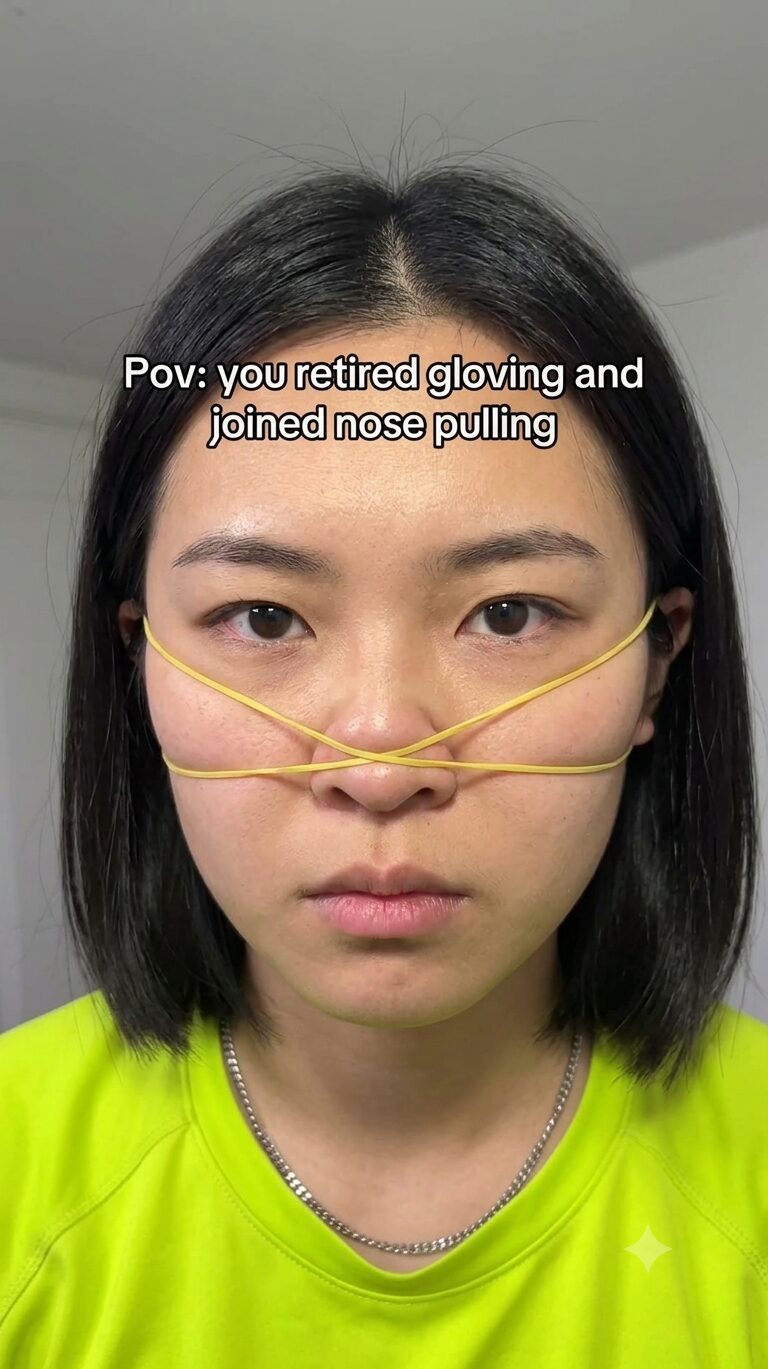
If your For You page hasn’t served it to you yet, it probably will soon. Someone pinches both nostrils open with two fingers, tips their head back, and inhales — and the caption underneath reads something like “I’m unwell” or “wait, is THIS what breathing is supposed to feel like?”
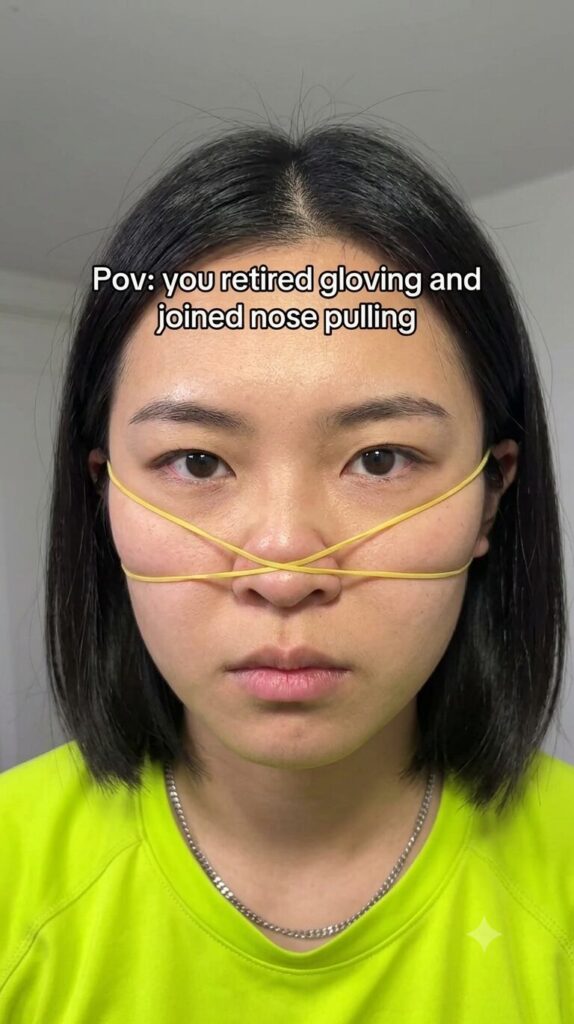
The clip that started this has been circulating for years now, and it keeps resurfacing every few months with a new wave of reactions, stitches, and duets, each one racking up millions of views. The claim attached to it is simple and dramatic: if pinching your nostrils open makes you feel like you can suddenly breathe properly, you have a deviated septum.
Patients have started bringing this up in clinic. Not vaguely — specifically. “Doctor, I did the TikTok test and it changed everything. Do I have a deviated septum?” It is a fair question, and the honest answer is more interesting than a simple yes or no. So let’s go through what is actually happening inside your nose when you do this test, what a deviated septum actually is, and why a satisfying fifteen-second video is not the same thing as a diagnosis.
What the Viral Test Actually Claims
The trick itself is simple. You use your fingers to gently pull the sides of your nostrils outward and upward, widening the opening, then take a deep breath in through your nose. For a large number of people, the sensation is startling — air seems to rush in more freely than it normally does, almost as if a blockage has been lifted.
One doctor who responded to the original clip online, a UK-based physician with a large following, explained it partly through something called the nasal cycle, and pointed out that a large majority of people have some degree of septal deviation, though only a small proportion of them actually have problems from it. That response is broadly accurate, and it is a good starting point — but it does not tell the full story of what is happening when you do this test, or what you should actually do with the result.
What’s Actually Happening in Your Nose During This Test
To understand why this test feels so convincing, it helps to know two things about how your nose works that most people never think about.
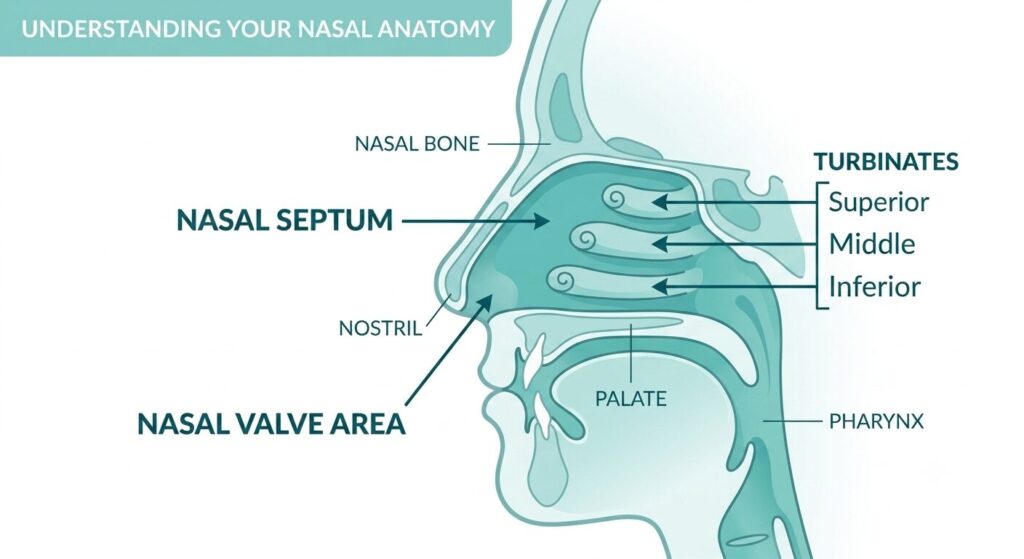
The first is the nasal valve. This is the narrowest point of the entire nasal airway, located just inside the nostril, where the upper and lower cartilages of your nose meet. Because it is the narrowest point, it contributes more to airflow resistance than almost any other part of your nasal passage — for everyone, not just people with a structural problem. When you physically pull your nostrils outward with your fingers, you are mechanically widening this exact bottleneck. This is not a diagnostic manoeuvre. It is the same basic principle behind the external nasal strips sold in pharmacies, which pull the nasal valve open with adhesive plastic instead of fingers. Almost anyone will feel some improvement in airflow when this area is widened, whether their septum is perfectly straight or significantly deviated.
The second is the nasal cycle, and this one surprises most people. Inside your nose, structures called turbinates are covered in tissue that behaves similarly to erectile tissue elsewhere in the body — it fills with blood and swells, or drains and shrinks, under the control of your autonomic nervous system. Throughout the day, one side of your nose is typically more swollen and congested while the other runs comparatively clear, and then the pattern flips, cycling back and forth roughly every two to six hours in most adults. This is entirely normal physiology, not a sign of a blocked nose or a structural problem. It is the reason one nostril often feels more “stuffy” than the other at any given moment, and it is also the reason the same person can do the nostril-pull test at 9am and feel almost no difference, then do it again at 3pm and feel a dramatic one.
Put those two facts together, and the TikTok test starts to look different. A positive result tells you that your nasal valve responds to mechanical widening — which is true of nearly everyone — and it may be amplified by wherever your nasal cycle happens to be at that exact moment. It does not, by itself, tell you whether the cause of any narrowing is your septum, your turbinates, allergic swelling, or nothing at all beyond normal variation.
So Does Most of the Population Actually Have a Deviated Septum?
The septum is the wall of cartilage and bone that divides your left and right nasal passages. In a perfect world it would run perfectly down the midline. In reality, studies examining this with imaging have found that a large majority of people — commonly cited figures range from around 70 percent up to over 90 percent depending on how deviation is measured and which population is studied — have a septum that sits at least slightly off-centre.
That statistic sounds alarming until you understand the second half of it: the overwhelming majority of people with a measurably deviated septum have no symptoms whatsoever and will go their entire lives without needing any treatment. A crooked septum, on its own, is closer to a variation in anatomy — like having one foot slightly larger than the other — than a disease.
Septal deviation generally comes from one of two sources. Some people are simply born with it, sometimes as a result of the pressures of birth itself. Others acquire it later from an injury to the nose — a fracture that displaces the cartilage, even one that seemed minor at the time and was never properly assessed.
The septum only becomes clinically relevant when the degree of deviation is severe enough to meaningfully narrow one nasal passage and cause persistent problems: chronic one-sided obstruction, recurrent sinus infections on that side, frequent nosebleeds from dried-out mucosa rubbing against the projecting edge, or snoring and disrupted sleep from chronic mouth breathing.
Why This Trend Resonates So Strongly Here
There is a reason this test tends to strike a nerve with Malaysian audiences in particular, and it is not really about TikTok at all — it is about how much time we spend noticing our noses.
The relentless swing between air-conditioned interiors and hot, humid air outside is a daily reality for most people working in Kuala Lumpur, Petaling Jaya, and other urban centres. Stepping from a cold office or shopping mall into thick outdoor humidity, then back into another air-conditioned car or building minutes later, dries and re-irritates the nasal lining repeatedly throughout the day. That cycle does not create a deviated septum, but it does make any existing narrowing — from your septum, your turbinates, or ordinary allergic irritation — considerably more noticeable.

Timing matters too. Haze season, driven largely by agricultural burning in neighbouring parts of the region, typically builds through August, September, and October, and particulate matter in the air is a well-documented irritant to the nasal lining. Anyone with even a mild, previously unnoticed septal deviation is more likely to feel congested and uncomfortable once the haze rolls in, simply because there is less spare capacity in an already-narrower passage.
Then there is how Malaysians tend to acquire a deviated septum in the first place. Motorcycles remain one of the most common ways to get around, and falls or collisions are a genuine, frequently under-recognised cause of nasal fractures that go unset or unchecked. Add in the popularity of contact and racquet sports — football, futsal, badminton, sepak takraw — and a knock to the nose during a weekend game is a common story I hear from patients only after I ask directly whether they have ever broken their nose. Many say yes, and many are surprised that it might still be relevant twenty years later.

When a Blocked Nose Is Actually Worth Investigating
Most nasal congestion, most of the time, is not a deviated septum requiring surgery. But certain patterns are worth paying attention to, and are reasonable grounds to book an assessment rather than simply living with it:
Obstruction that consistently favours the same nostril, rather than alternating sides the way the normal nasal cycle does, especially if it has persisted for months rather than days.
Frequent nosebleeds, particularly from one side, often from dried, irritated mucosa sitting over a deviated portion of the septum.
Recurrent sinus infections, especially when they consistently affect the same side of the face.
Snoring, mouth breathing at night, or waking up with a persistently dry throat, which can point to chronic nasal obstruction affecting sleep quality.
Noticeable breathlessness through the nose during exercise, when demand for airflow is at its highest and even modest narrowing becomes obvious.
A nose that was broken at some point — in a fall, an accident, or during sport — that was never assessed afterwards, particularly if breathing has never felt quite the same since.
If none of these apply and the TikTok test simply confirmed that pinching your nose open feels satisfying, that is a fun piece of trivia about your anatomy rather than a reason to worry.
What a Real Evaluation Actually Involves
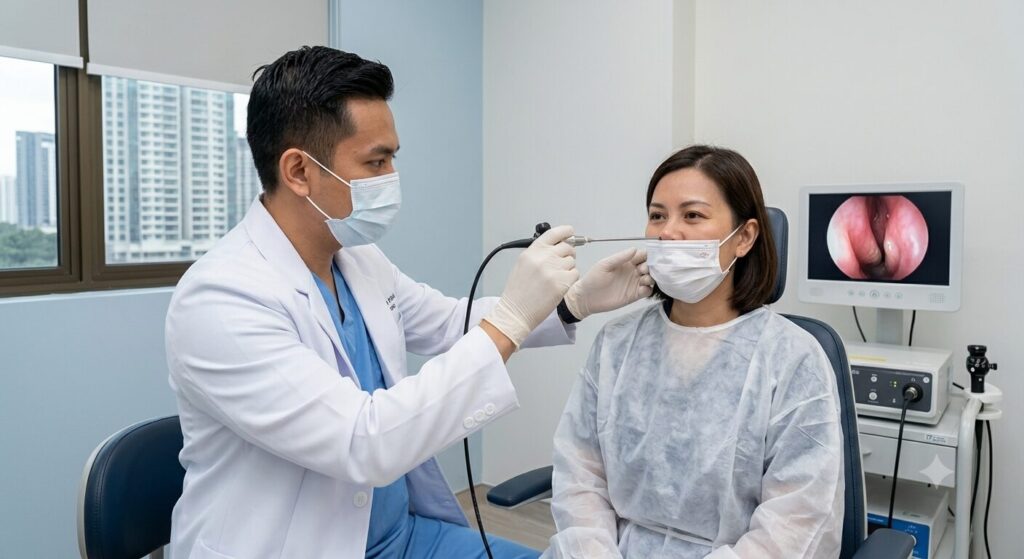
If you do come in with genuine nasal obstruction, the process is far more precise than a fifteen-second video. It typically starts with a detailed history — when the blockage started, whether it affects one side or both, whether it changes with position or time of day, and whether there is a history of nasal trauma. This is usually followed by nasal endoscopy, where a thin camera allows direct visualisation of the septum, turbinates, and sinus openings, giving a far clearer answer than guesswork ever could. A CT scan of the sinuses is sometimes added if surgery is being considered or if chronic sinusitis is suspected alongside the structural issue.
Treatment follows a ladder, and surgery is rarely the first step. Saline rinses, nasal corticosteroid sprays, and antihistamines (where allergy is a contributing factor) are the usual starting point, and for many patients this is enough to make the problem manageable. Septoplasty — the surgical procedure that straightens the septum and repositions it along the midline — is reserved for cases where symptoms are significant, persistent, and not responding to medical management.
It is worth being clear about one common point of confusion: septoplasty is not the same operation as rhinoplasty. Septoplasty addresses the internal structure to improve airflow and is not designed to change the external appearance of your nose at all — a distinction covered in more detail in Rhinoplasty Is Not Just a Nose Job. The two procedures can be combined when a patient wants both functional and cosmetic changes, but they answer two completely different questions.
In Malaysia, this kind of assessment and treatment is available both through university and government hospitals — including Universiti Malaya Medical Centre, where subsidised care is offered, typically with a longer waiting period — and through private hospitals and specialist centres in Kuala Lumpur and Petaling Jaya, where costs are higher but scheduling is typically faster. Whichever route you choose, the key step is the same: someone actually looking inside your nose, rather than relying on how it feels when you pull on it.
The Practical Takeaway
A viral test that makes your nose feel better for fifteen seconds is not measuring your septum. It is mostly measuring how your nasal valve responds to being physically widened, which works for almost anybody, layered on top of wherever your entirely normal nasal cycle happens to be at that particular moment.
Roughly seventy to ninety percent of people have some degree of septal deviation, and the overwhelming majority never need to do anything about it. What actually matters is not what a TikTok trend tells you in a fifteen-second clip, but whether your breathing is consistently one-sided, whether you are getting frequent nosebleeds or sinus infections, whether you are sleeping and breathing well at night, and whether an old nasal injury was ever properly checked.
If any of that sounds familiar, that is worth a proper look. If it doesn’t, go ahead and enjoy the oddly satisfying feeling of the trend — just don’t mistake it for a diagnosis.
Still Not Sure What Your Nose Is Telling You?
A viral clip is a fun way to notice that something might feel off. It isn’t a substitute for someone actually looking inside your nose with the right equipment.
If a blocked nostril has been bothering you for months rather than minutes, or if you broke your nose years ago during a game or an accident and never had it checked, it’s worth getting a proper assessment. Book a consultation with Dr. Julius Goh Liang Chye via WhatsApp and we’ll find out what’s actually going on.
Frequently Asked Questions
Q: If the TikTok test makes me breathe better, does that confirm I have a deviated septum?
A: Not on its own. It confirms that your nasal valve — the narrowest part of your nasal airway — responds to being mechanically widened, which is true for almost everyone regardless of whether their septum is straight or deviated. A deviated septum is one possible contributor to a narrow-feeling nose, but not the only one.
Q: I don’t have any symptoms — should I still be concerned if the test “works” on me?
A: No. The large majority of people with a measurable septal deviation have no symptoms at all and never need treatment. A deviation only becomes relevant when it is actually interfering with your breathing, sleep, or sinus health.
Q: Can a deviated septum get worse over time?
A: The deviation itself typically does not progress, but repeated nasal injury, age-related changes in cartilage support, or ongoing allergic inflammation can make existing symptoms more noticeable over the years.
Q: Is septoplasty the same procedure as a nose job?
A: No. Septoplasty corrects the internal structure to improve airflow and is not intended to change how your nose looks externally. Rhinoplasty reshapes the external nose and can be combined with septoplasty when a patient needs both.
Q: My nose was broken years ago and I never had it checked — is it too late?
A: It’s not too late. An old, unassessed nasal fracture is one of the more common causes of a symptomatic deviated septum we see in clinic, and it can still be properly evaluated and treated now.
Further Reading on theentdr.com
- Rhinoplasty Is Not Just a Nose Job — And Many Malaysians Don’t Know This
- I Had Surgery for My Blocked Nose — So Why Is It Blocked Again?
- Not Every Headache Is a Sinus Problem — And Not Every Headache Is Safe to Ignore
- GP or ENT: Which One Should You Visit for Ear, Nose & Throat Issues?
External Links
- Gleneagles Hospitals Malaysia — All You Need to Know about Deviated Septum
- Mayo Clinic — Deviated Septum: Symptoms & Causes
- ENT Health (American Academy of Otolaryngology–Head and Neck Surgery) — Deviated Septum
- National Institutes of Health (PMC) — Measuring and Characterizing the Human Nasal Cycle
Dr. Julius Goh Liang Chye is a Consultant Otorhinolaryngologist, Head & Neck and Sleep Surgeon at Universiti Malaya Specialist Centre (UMSC). For nasal and sinus assessments, visit theentdr.com or contact us here.
Discover more from The ENT Doctor
Subscribe to get the latest posts sent to your email.
Comments are closed