Why Some People Sleep Four Hours and Feel Fine (And Why You Probably Are Not One of Them)
 A/Prof. Dr Julius GohConsultant ENT surgeon · 19 Nov 2026 · 13 min read

By A/Prof. Dr. Julius Goh Liang Chye, Consultant ENT, Head & Neck and Sleep Surgeon, Universiti Malaya Specialist Centre, Kuala Lumpur
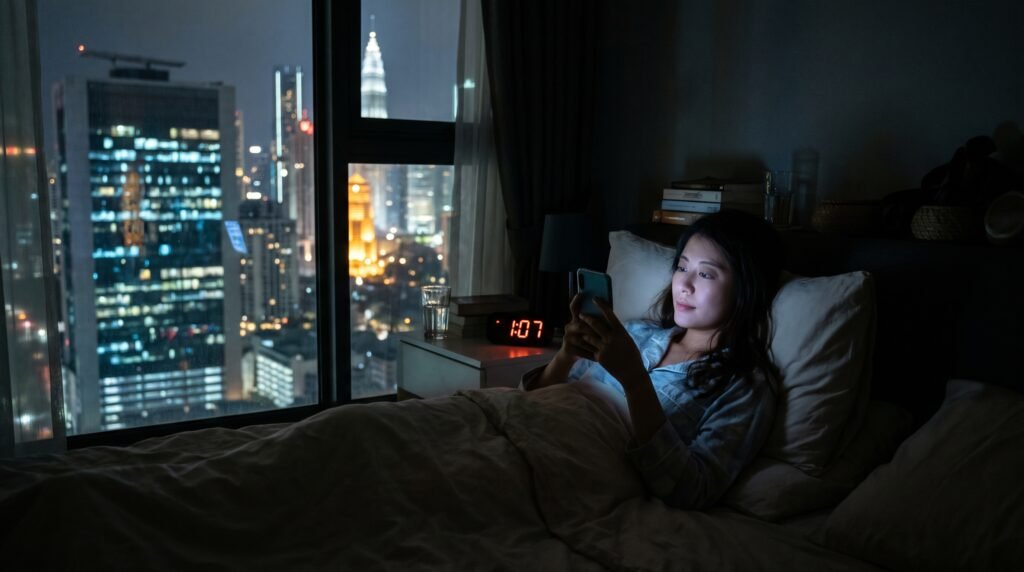
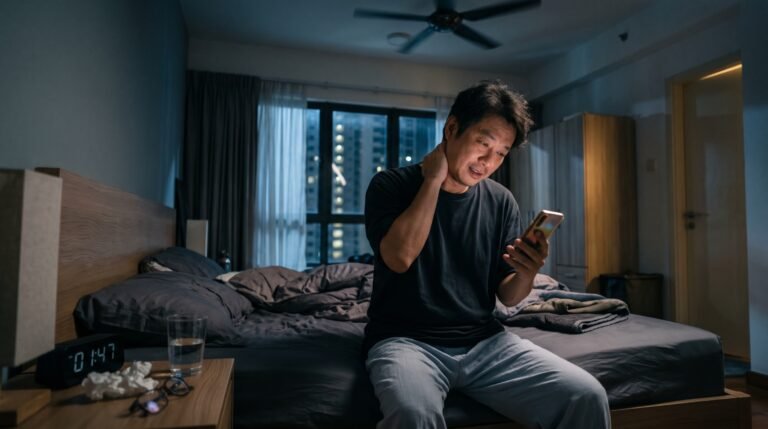
Picture a 41-year-old operations manager in Petaling Jaya. He is in bed after midnight, up before six to beat the Federal Highway jam, and runs on two coffees before ten. When his wife complains that he never sleeps, he laughs and says he is “one of those people who only needs four hours”. His father was the same, he says. He feels fine.
Some version of this conversation happens in my clinic almost every week. Sometimes it comes from the patient, more often from the spouse sitting next to them. And it raises three questions that I am asked constantly: why do some people sleep so little and not seem tired? Does everyone really need at least seven hours? And how do you know whether you are getting enough?
The honest answers are more interesting than the internet versions. Natural short sleepers are real, but they are rare. Most people who believe they are one are quietly running a sleep debt they cannot feel. And “seven hours” is a floor for the population, not a prescription stamped on every person. Here is how to tell which group you are in.
The short answer
- Natural short sleepers exist. A handful of families carry rare gene variants that let them sleep about four to six hours a night without the usual damage. Scientists have identified several of these genes since 2009.
- They are uncommon. The research on them comes from a small number of families, not from the general population.
- Most “short sleepers” are sleep-deprived. Laboratory studies show that people restricted to six hours a night keep getting worse at mental tasks while reporting that they feel only slightly sleepy.
- Seven hours is the expert minimum for adults, but individual need varies. The best test is how you function, not just the number on your watch.
- If you sleep “enough” and still wake unrefreshed, the problem may be the quality of your sleep, and that includes conditions like obstructive sleep apnoea.
How Malaysians are actually sleeping
Short sleep is common in Malaysia, and we now have national numbers to show it. The Ministry of Health’s National Health and Morbidity Survey (NHMS) 2023 fact sheet lists insufficient sleep among 37.7% of adults. Public health specialists quoted in The Star in October 2026 described this as roughly two in five Malaysian adults getting under seven hours in a 24-hour period, and pointed to long working hours, shift work, late-night screens and late-day caffeine as drivers.
A large online survey of 11,356 working Malaysian adults, published in Nature and Science of Sleep in 2021, found an average of 6.49 hours a night, with 54.7% sleeping under seven hours. Older age, smoking and high psychological distress were linked with insufficient sleep. A separate study of manufacturing workers in 11 Malaysian factories found that night-shift workers reported shorter sleep, poorer sleep quality and more daytime dysfunction than day workers (BMJ Open, 2020).
The consequences are not abstract. In February 2026, the director-general of the Malaysian Institute of Road Safety Research (MIROS) said brief episodes of microsleep account for an estimated 20% of road accidents in Malaysia each year. Anyone who has driven the North–South Expressway after a short night knows how quickly the eyelids get heavy on a straight, quiet stretch.
So when someone tells me they are fine on four or five hours, the statistics alone say: possibly, but probably not.
Natural short sleepers: the people who really do thrive on less
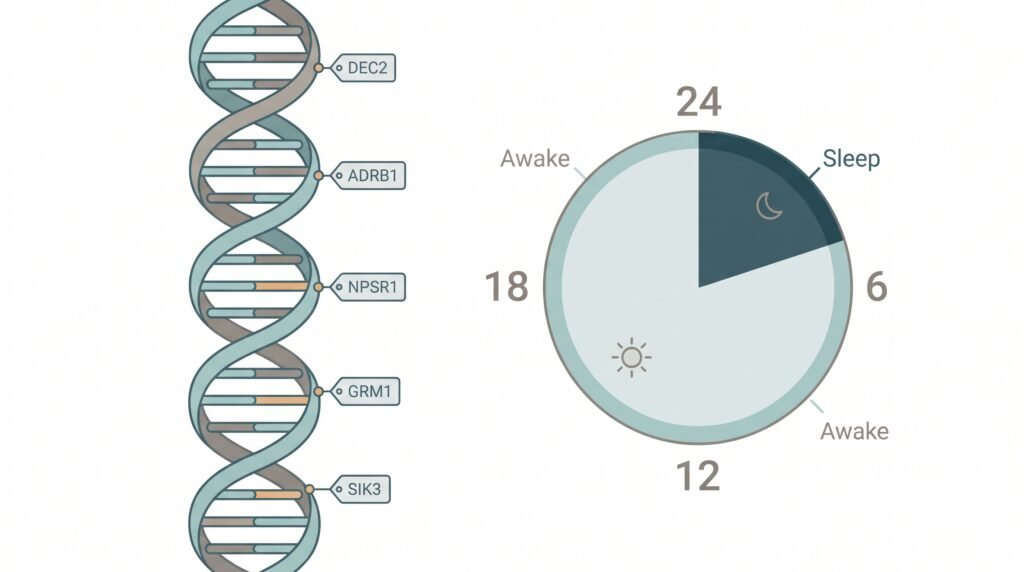
For decades, sleep scientists assumed that anyone sleeping far less than average was either unwell or slowly harming themselves. That changed in 2009, when a team from the laboratory of geneticist Ying-Hui Fu at the University of California, San Francisco, described a mutation in a gene called DEC2 (also known as BHLHE41) linked to a human short sleep trait. Mice engineered to carry the same mutation slept less and spent more time awake than ordinary mice (published in Science).
Since then, the same research group and their collaborators have found more genes in other short-sleeping families:
- ADRB1 (2019): a rare mutation in a beta-adrenergic receptor gene in people who need fewer hours of sleep than most. Mice with the mutation also slept less (Neuron).
- NPSR1 (2019): a mutation in a neuropeptide receptor gene. Mice carrying it slept less and, strikingly, were resistant to the memory problems that sleep deprivation normally causes (Science Translational Medicine).
- GRM1 (2020): two different mutations in the same glutamate receptor gene in two separate families. The researchers describe natural short sleepers as people who sleep significantly less than average “without a desire for more sleep and without any obvious negative health consequences” (Current Biology).
- SIK3 (2025): a mutation in a kinase gene linked to natural short sleep. Mice with the variant slept less and showed deeper slow-wave activity on brain recordings (PNAS).
The SIK3 finding hints at why these people may cope. Their sleep may be more intense, not just shorter, so they may get the restorative work done in less time. In plain terms, they are not winning by willpower. Their brains are built differently.
What a genuine short sleeper looks like
There is no routine clinical blood test for these genes, so in practice we recognise the pattern. A true natural short sleeper usually:
- has slept this way since childhood or adolescence, not since they started a demanding job;
- wakes naturally without an alarm after four to six hours and feels alert;
- does not “catch up” with long lie-ins on weekends or holidays;
- does not need coffee, energy drinks or afternoon naps to stay sharp;
- often has a parent or sibling with the same pattern.
If you need an alarm, sleep until noon on Saturday, and feel your concentration drop at 3pm, you are not a natural short sleeper. You are someone who sleeps short.
Why most “four-hour people” do not feel tired: the sleep debt you cannot feel
The most important experiment on this was published in the journal Sleep in 2003. Researchers at the University of Pennsylvania randomly assigned 48 healthy adults to 4, 6 or 8 hours in bed every night for 14 days, under laboratory supervision.
The results are sobering. People limited to four or six hours a night got steadily worse on tests of attention and thinking, day after day. By the end of two weeks, the six-hour group was performing about as badly as people who had been kept awake for up to two nights straight. Yet their own sleepiness ratings rose only a little after the first few days and barely separated the six-hour group from the four-hour group. In the authors’ words, the subjects were “largely unaware” of their growing deficits.
That is the trap. Your sense of feeling fine adapts; your performance does not. Add a strong morning coffee, the adrenaline of a busy workday and the stimulation of a phone, and it is easy to mistake a chronic debt for a natural gift. The bill often arrives as irritability, weight gain, frequent colds, poor focus or a near-miss on the highway, rather than as obvious sleepiness.
So must everyone sleep at least seven hours?
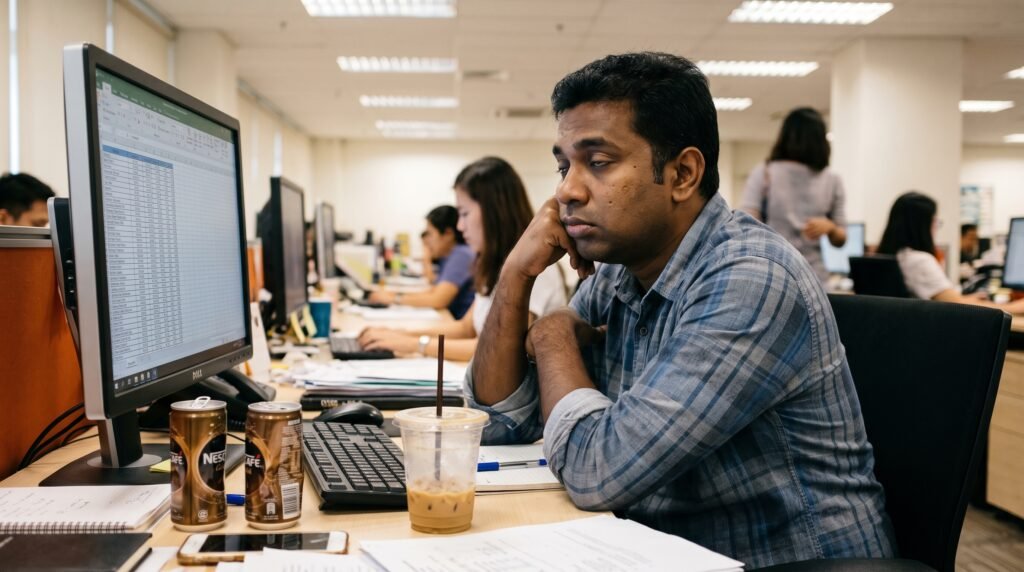
The most widely used recommendation comes from a joint consensus of the American Academy of Sleep Medicine and the Sleep Research Society. Their panel recommends that adults obtain seven or more hours of sleep per night to avoid the health risks of chronic inadequate sleep, and states that sleeping six or fewer hours a night is inadequate to sustain health and safety. Malaysian researchers use the same seven-hour cut-off in local studies.
Three nuances matter, though:
- Seven is a minimum for the population, not a target for every individual. Some people genuinely need eight or more. The panel set no upper limit, and noted that more than nine hours may be appropriate for young adults, people recovering from sleep debt, and people who are unwell.
- More is not always better. A large UK Biobank analysis published in Nature in May 2026 compared self-reported sleep with 23 “biological ageing clocks” across the brain and body. It found a U-shaped pattern: the smallest gap between biological and actual age was seen at roughly 6.4 to 7.8 hours, while sleeping under six or over eight hours was associated with higher risk of disease and death. This was an observational study in people aged 37 to 84, so it shows association rather than proof of cause.
- Regularly needing far more than nine hours is worth checking. Persistent long sleep can be a sign that something is disrupting sleep quality, or of conditions such as depression, thyroid disease or a primary sleep disorder.
How to know if you are getting enough sleep
You do not need a gadget to answer this. These five questions, which I use in clinic, are more revealing than any sleep tracker score:
- Do you wake up without an alarm on most days, feeling reasonably refreshed? If you depend on an alarm every single day, you are likely cutting your sleep short.
- Do you doze off when you sit still? Falling asleep in a meeting, at the cinema, as a passenger, or in traffic is not normal tiredness. Doctors measure this with the Epworth Sleepiness Scale, a short questionnaire that rates your chance of dozing in eight everyday situations (Sleep, 1991).
- Do you sleep much longer on weekends? As a rule of thumb, if you regularly sleep two or more hours longer on your days off, your weekdays are probably short-changing you.
- Do you need caffeine to function before noon, or crash mid-afternoon? Heavy reliance on coffee or energy drinks often hides a debt.
- What happens on a long break? The year-end school holidays are a good natural experiment. After the first few days of a holiday, go to bed when sleepy and wake without an alarm. The amount you settle into is a fair estimate of your real need.
If your answers point to too little sleep, the fix is often simply protecting a longer sleep window. If you are already giving yourself seven to eight hours and still answer “yes” to dozing off, that is a different problem, and it brings us to my specialty. I have written separately about telling sleepiness apart from fatigue, which is worth reading if you feel drained rather than drowsy.
When the problem is not hours, but quality
As a sleep surgeon, I see many patients who are in bed for seven or eight hours and still wake exhausted. Very often the cause is obstructive sleep apnoea: the airway at the back of the nose and throat repeatedly narrows or collapses during sleep, the oxygen level dips, and the brain wakes briefly to reopen it. These arousals are usually too short to remember, but they break sleep into fragments. You can spend eight hours in bed and get far less real, restorative sleep.
Clues that this may be happening include:
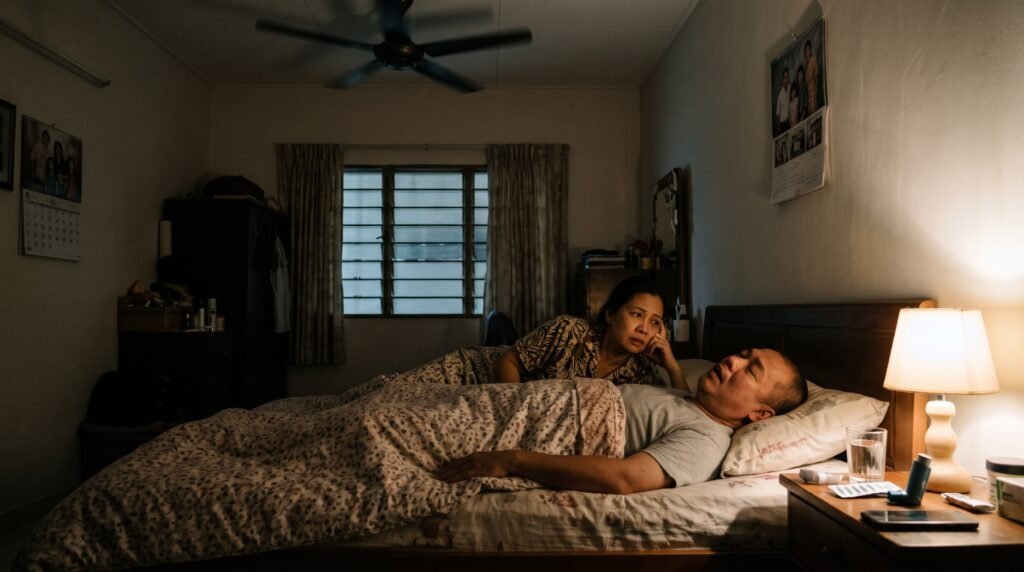
- loud snoring, or a bed partner noticing pauses, choking or gasping;
- waking with a dry mouth, sore throat or morning headache;
- getting up to pass urine more than once a night;
- a blocked nose most nights, or a thick neck and recent weight gain;
- high blood pressure that is hard to control.
Snoring is not always present. Slim people, younger adults and many women can have sleep apnoea with little or no snoring, which I explain in Can You Have Sleep Apnea Without Snoring? Women around menopause are a group I see missed often, covered in this post on perimenopause and sleep. Untreated sleep apnoea is not just about tiredness; I have also written about why it matters in adults under 40.
Other causes of unrefreshing or short sleep include insomnia, anxiety and depression, shift work, some medications, and alcohol close to bedtime. Each needs a different approach, which is why guessing based on hours alone rarely works.
Practical steps to sleep enough in a Malaysian routine
- Fix your wake-up time first. A consistent wake time, including weekends, anchors your body clock more than a fixed bedtime does.
- Work backwards. If you must leave at 6.30am to beat the traffic, a seven-hour sleep means lights out before 11pm, not “after one more episode”.
- Set a caffeine cut-off. Avoid coffee, milk tea, cola and energy drinks after early afternoon. Caffeine lingers in the body for hours.
- Treat late suppers as part of sleep hygiene. A heavy meal at a 24-hour eatery just before bed can worsen reflux and fragment sleep.
- Keep the bedroom cool, dark and quiet. In our heat and humidity, a fan or air-conditioning set at a comfortable temperature helps, as do blackout curtains in brightly lit condominiums.
- Never push through drowsy driving. Stop at the next rest area, nap for 15–20 minutes, and swap drivers if you can.
- Shift workers: protect your daytime sleep. Use eye masks, earplugs and a phone on silent, and ask family to treat your sleep hours like office hours.
When to see a doctor
Please seek a medical assessment if you:
- regularly fall asleep unintentionally, especially while driving;
- sleep seven or more hours but still wake unrefreshed most days;
- snore loudly, or someone has seen you stop breathing in your sleep;
- cannot fall or stay asleep for more than three nights a week for several months;
- have recently started needing much more sleep than before.
A proper history and examination of the nose, throat and airway often tells us more than a home gadget. If a sleep study is needed, it should be the right type for your question, which I explain in The Truth About Sleep Studies and Why You Need a Doctor Before Getting a Sleep Study.
The bottom line
Yes, a lucky few are built to thrive on four to six hours of sleep. Their genes make their sleep more efficient, and they have usually slept that way all their lives. For everyone else, sleeping short is a habit, not a talent, and the cost builds quietly. Aim for at least seven hours, judge yourself by how alert you are rather than by how tough you feel, and if you are sleeping enough but still exhausted, get your airway checked.
Not sure whether you are a short sleeper or just short on sleep?
If you are waking up tired, dozing off during the day, or your partner is worried about your snoring, you do not have to guess. I see patients with sleep and snoring problems at Universiti Malaya Specialist Centre in Kuala Lumpur. Message me directly on WhatsApp to arrange a consultation: chat with us on WhatsApp. You can also read more about my sleep and snoring service.
Frequently asked questions
Is six hours of sleep enough?
For most adults, no. The American Academy of Sleep Medicine and Sleep Research Society consider six or fewer hours a night inadequate for long-term health and safety, and laboratory studies show that people on six hours a night accumulate mental performance deficits without noticing. A small number of people with rare gene variants are exceptions.
How do I know if I am a natural short sleeper?
True short sleepers have usually slept four to six hours since childhood, wake without an alarm feeling alert, do not sleep in on weekends, do not rely on caffeine, and often have a family member with the same pattern. There is no routine clinical test for the genes involved.
Can I train myself to need less sleep?
There is no good evidence that you can. People who restrict their sleep tend to feel adapted, but objective testing shows their attention and memory keep declining.
Can I catch up on sleep at the weekend?
Sleeping longer on days off can reduce some sleepiness, but regularly needing big weekend lie-ins is itself a sign your weekday sleep is too short. A steady schedule is better than a weekly cycle of debt and repayment.
I sleep eight hours but still feel tired. Why?
Possible causes include obstructive sleep apnoea, insomnia, low mood, thyroid problems, anaemia, some medications and alcohol. Persistent unrefreshing sleep deserves a medical assessment rather than more time in bed.
References
- Institute for Public Health, Ministry of Health Malaysia. National Health and Morbidity Survey 2023: Fact Sheet. https://iku.moh.gov.my/images/nhms2023/fact-sheet-nhms-2023.pdf
- Chan CMH, et al. Prevalence of insufficient sleep and its associated factors among working adults in Malaysia. Nat Sci Sleep. 2021;13:1109-16. https://doi.org/10.2147/NSS.S295537
- Lim YC, et al. Association between night-shift work, sleep quality and health-related quality of life: a cross-sectional study among manufacturing workers in a middle-income setting. BMJ Open. 2020;10(9):e034455.https://doi.org/10.1136/bmjopen-2019-034455
- He Y, et al. The transcriptional repressor DEC2 regulates sleep length in mammals. Science. 2009;325(5942):866-70. https://doi.org/10.1126/science.1174443
- Shi G, et al. A rare mutation of β1-adrenergic receptor affects sleep/wake behaviors. Neuron. 2019;103(6):1044-55. https://doi.org/10.1016/j.neuron.2019.07.026
- Xing L, et al. Mutant neuropeptide S receptor reduces sleep duration with preserved memory consolidation. Sci Transl Med. 2019;11(514). https://doi.org/10.1126/scitranslmed.aax2014
- Shi G, et al. Mutations in metabotropic glutamate receptor 1 contribute to natural short sleep trait. Curr Biol. 2021;31(1):13-24. https://doi.org/10.1016/j.cub.2020.09.071
- Chen H, et al. The SIK3-N783Y mutation is associated with the human natural short sleep trait. Proc Natl Acad Sci U S A. 2025;122(19):e2500356122. https://doi.org/10.1073/pnas.2500356122
- Van Dongen HPA, et al. The cumulative cost of additional wakefulness: dose-response effects on neurobehavioral functions and sleep physiology from chronic sleep restriction and total sleep deprivation. Sleep. 2003;26(2):117-26. https://doi.org/10.1093/sleep/26.2.117
- Watson NF, et al. Recommended amount of sleep for a healthy adult: a joint consensus statement of the American Academy of Sleep Medicine and Sleep Research Society. Sleep. 2015;38(6):843-4. https://doi.org/10.5665/sleep.4716
- Sleep chart of biological ageing clocks in middle and late life. Nature. 2026 (UK Biobank analysis; corresponding author Wen J). https://doi.org/10.1038/s41586-026-10524-5
- Johns MW. A new method for measuring daytime sleepiness: the Epworth sleepiness scale. Sleep. 1991;14(6):540-5. https://doi.org/10.1093/sleep/14.6.540
This article is for general education and does not replace a consultation. If you are worried about your symptoms, please see a doctor.
More about Dr Goh →