
Can Sleep Apnea Kill You?
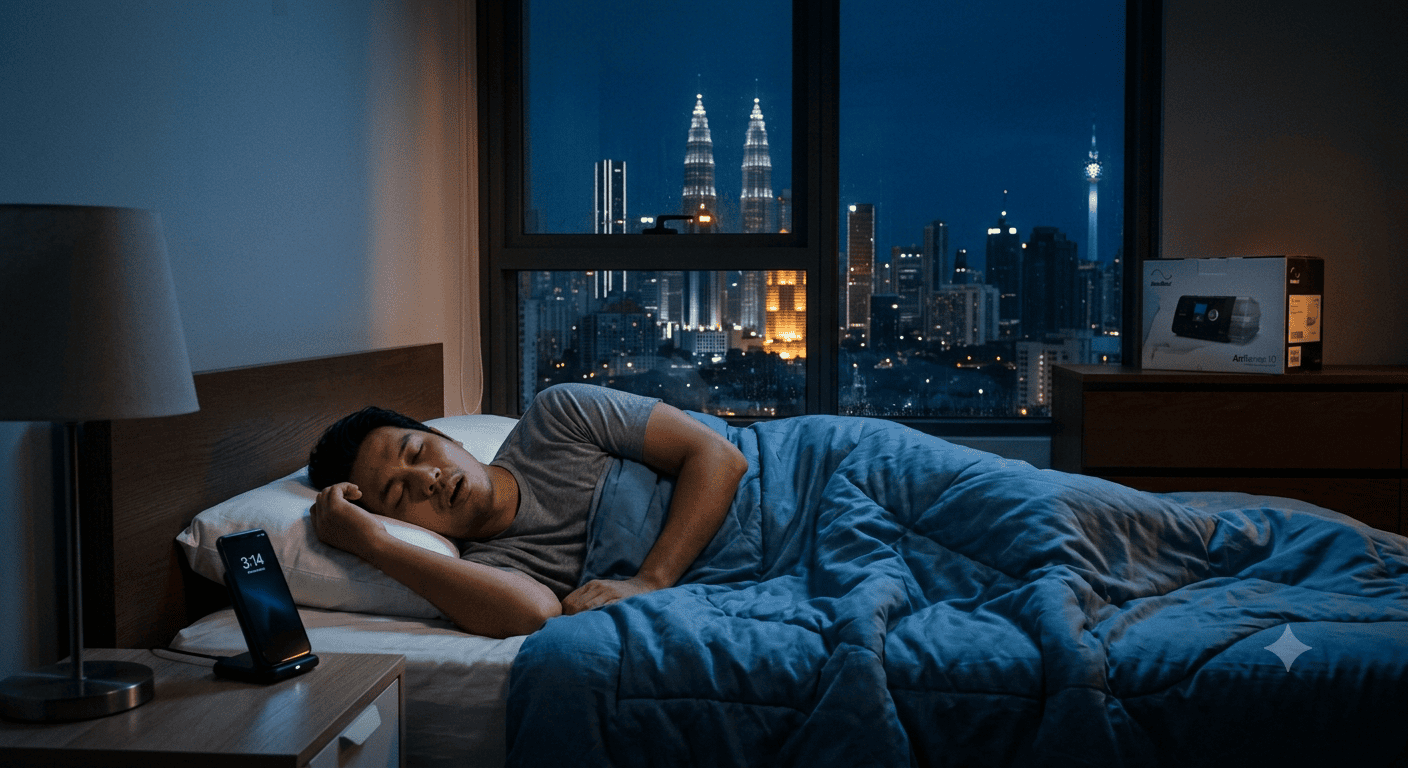
A middle-aged man ran a small logistics company in Petaling Jaya and had never spent a night in a hospital. For two years, his wife complained about his snoring—not the gentle kind. It stopped for ten or fifteen seconds before he gasped back, as if underwater. He brushed it off, not significantly overweight, he did not smoke, and he felt fine during the day. It wasn’t until his wife played a recording of the silence, then the gasp, that he sat in my clinic. He asked the question most people fear: can sleep apnea kill you?
The honest answer is: for some people, yes.
Not from every snore, and not from every mild case.
However, the link between obstructive sleep apnea and sudden death during sleep is more specific and relevant to Malaysians.
What Is Actually Happening in the Body When You Stop Breathing
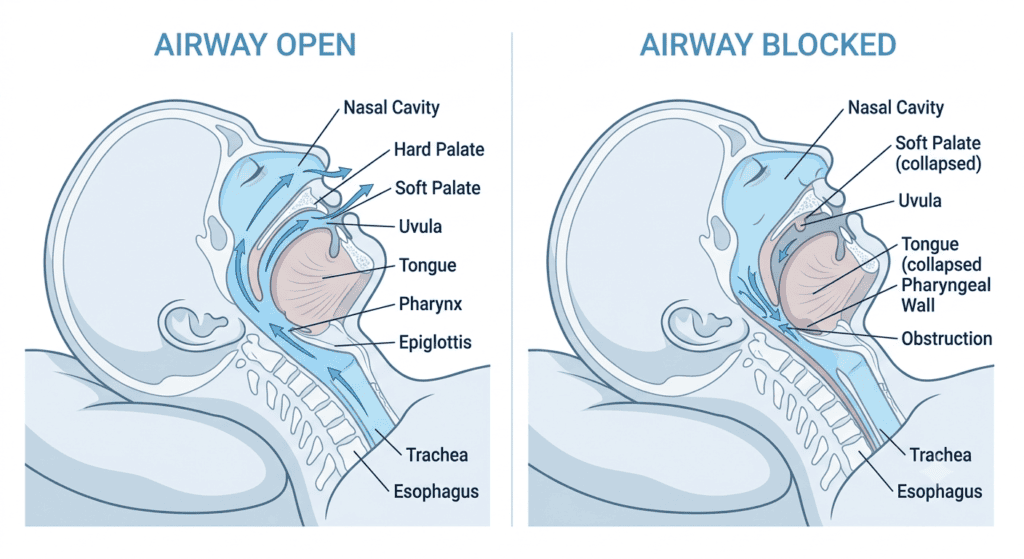
Obstructive sleep apnea (OSA) happens when the soft tissue at the back of the throat collapses and blocks the airway during sleep, cutting off airflow even though the chest is still trying to breathe. Each pause can last anywhere from ten seconds to over a minute, and in more severe cases this can repeat dozens of times an hour, all night, for years — often without the person ever waking up enough to remember it.
What makes this dangerous is not simply the interrupted sleep. Every time the airway blocks, blood oxygen levels fall and carbon dioxide builds up. Heart rate typically slows during the pause itself, then surges the moment the person gasps back to breathing, as the nervous system floods the body with stress hormones to force the airway open. Repeated dozens of times a night, this cycle of slowing and surging places real strain on the heart’s electrical system — the same system responsible for keeping a heartbeat regular, and implicated in dangerous rhythms such as atrial fibrillation. In someone with underlying heart disease, or arteries already narrowed by years of poor diet or high blood pressure, this nightly stress test can be enough to trigger a fatal rhythm. Over months and years, that same repeated surge in blood pressure is also a major reason obstructive sleep apnea is so strongly linked to hypertension — doctors now routinely screen for it in patients whose blood pressure will not come down despite medication.
The Study That Changed How Doctors Think About Dying in Your Sleep
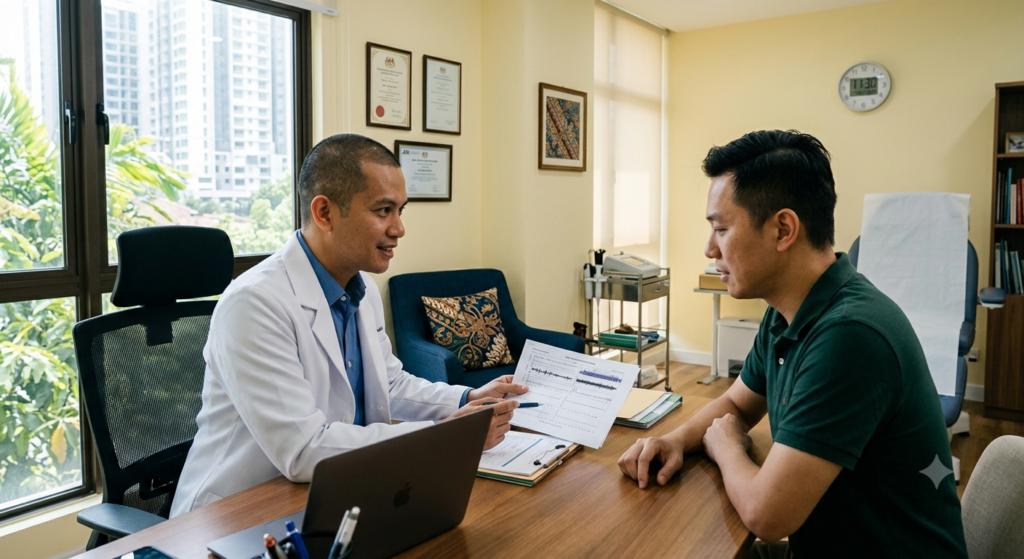
For a long time, doctors assumed sudden cardiac death followed roughly the same clock in everyone: risk peaks in the late morning, when the body’s stress hormones surge to wake it up, and is lowest between midnight and 6 a.m., during the deepest hours of sleep. A landmark Mayo Clinic study, published in the New England Journal of Medicine, tested whether that held true for people with obstructive sleep apnea — and found the opposite.
Reviewing more than a decade of sleep studies and death records, the researchers found that people with OSA who died suddenly of cardiac causes were most likely to die between midnight and 6 a.m.: 46% of their sudden cardiac deaths fell in that window, compared with just 21% in people without sleep apnea and 16% in the general population. For most people, in other words, the riskiest hours for the heart are in the morning. For someone with untreated, severe sleep apnea, the riskiest hours are the ones spent asleep in bed.
Later research reported by Mayo Clinic and Cleveland Clinic has reinforced this pattern: severe OSA roughly doubles the overall risk of sudden cardiac death compared with the general population, with some studies putting the increase as high as two- to fourfold in the most severe cases. The clearest predictors are a breathing-pause count of 20 or more per hour of sleep, blood oxygen levels that fall below 78%, and age over 60 — though, as Malaysia’s own recent numbers suggest, younger adults are not as protected as once assumed.
Malaysia’s Own Warning Sign
In January 2024, Dr S. Denesh of the Heart Bit E-ECP Wellness Center told Bernama that sudden death among Malaysians aged 40 and below — sometimes referred to internationally as Sudden Adult Death Syndrome, or SADS — was on the rise, driven mainly by cardiac arrest and stroke. Alongside a post-pandemic surge in sudden physical exertion and elevated stress, he specifically named inadequate sleep and a history of cardiac disease as contributing factors — a warning picked up by The Star and Malaysiakini, with the New Straits Times later calling the trend “a blow to the nation.”
What that coverage did not explore is how many of those cases might trace back to undiagnosed sleep apnea rather than simply too few hours in bed. That distinction matters. Ischemic heart disease remains Malaysia’s leading cause of death by a wide margin, responsible for 17,421 deaths in 2024 alone — 13% of all medically certified deaths that year, according to the Department of Statistics Malaysia. Sleep apnea does not appear anywhere in that statistic, because it is rarely what is written on a death certificate. It is usually the hidden condition sitting quietly behind the heart disease that is.
Why This Risk Is Bigger in Malaysia Than Most Realize
Sleep apnea’s biggest risk factor is excess weight around the neck and airway, and Malaysia’s numbers here are stark. The 2023 National Health and Morbidity Survey found that 54.4% of Malaysian adults are now overweight or obese, up from 44.5% just over a decade earlier — the second-highest rate in ASEAN. Separately, population studies among Malaysian adults have found that close to half snore habitually, around 15% report witnessed breathing pauses, and roughly 7% screen as clinically suspected OSA cases, with some primary care clinic studies putting the “high risk” figure closer to one in three patients.
The risk profile also shifts with sex and life stage. Malaysian screening studies have found OSA suspected in nearly twice as many men as women, though that gap narrows sharply after menopause, when hormonal changes raise women’s risk substantially — a pattern I have written about separately in Why Perimenopausal Malaysian Women Can’t Sleep.
The bigger problem is how few of these cases are ever caught. Even conservative estimates suggest 9–15% of middle-aged Malaysian adults have obstructive sleep apnea, and global data suggests 70–80% of people with the condition remain undiagnosed, often because they, like Wei Jian, feel generally “fine” and assume loud snoring is simply something some people do.
Who Should Actually Be Worried
To be clear: the vast majority of people who snore, or who have mild sleep apnea, are not walking around at meaningful risk of dying in their sleep. The danger climbs specifically with severity — frequent, prolonged breathing pauses, oxygen levels that drop significantly overnight, and existing cardiovascular risk factors such as high blood pressure, diabetes, obesity, or a family history of heart disease. Age over 60 raises risk further, but Malaysia’s under-40 sudden death trend is a reminder that a relatively young, otherwise healthy-looking adult is not automatically in the clear, particularly when several risk factors overlap.
Neck circumference tends to matter more than overall body weight in predicting severity, because a thicker neck narrows the airway more directly during sleep. This is why some slimmer patients are surprised to learn they have severe disease, while some larger patients turn out not to have it at all — which is also why a proper sleep study, rather than a guess based on appearance, is the only reliable way to know where someone actually stands.
The Warning Signs Worth Taking Seriously
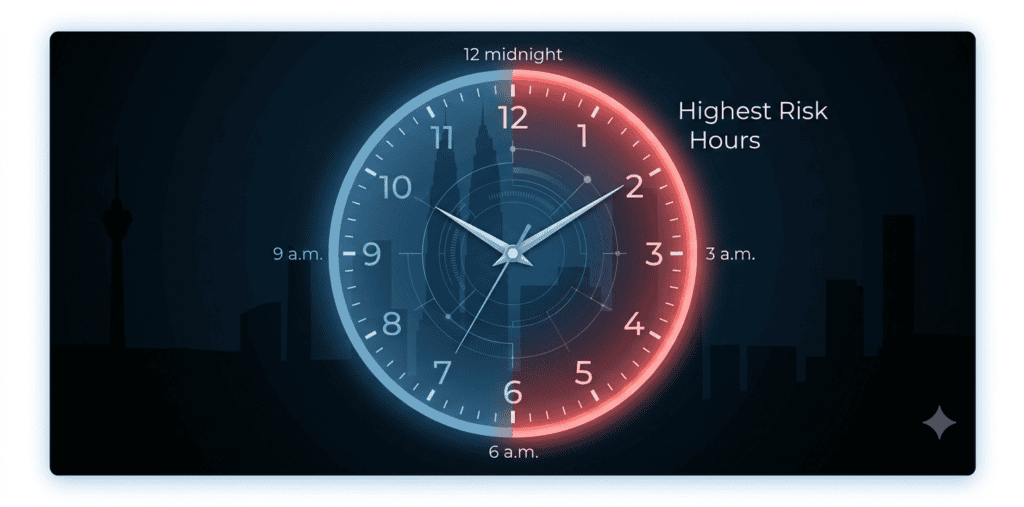
Most people eventually diagnosed with dangerous, severe sleep apnea had signs for years before anyone connected them to their heart. Worth paying attention to: loud, habitual snoring; a partner reporting pauses in breathing followed by gasping or choking sounds (snoring itself can be a useful clue, though not a diagnosis on its own); waking up with a dry mouth, sore throat, or headache; excessive tiredness during the day despite a full night in bed; and high blood pressure that does not respond well to medication. None of these alone confirms sleep apnea, and none guarantees danger — but together, especially in someone carrying extra weight or with a family history of heart disease, they are a reasonable trigger to get checked rather than wait it out.
The Part That Should Actually Be Reassuring
None of this is meant to suggest that a single bad night’s sleep is a countdown clock. Sleep apnea is one of the more treatable conditions in medicine once it is actually diagnosed. A proper sleep study measures exactly how severe the breathing pauses are and how much oxygen is being lost overnight, which is the information that actually determines risk, and is increasingly available as an overnight test rather than requiring a hospital admission. From there, treatment ranges from positional therapy and weight management for milder cases, to CPAP therapy or oral appliances, to surgical options for patients who genuinely cannot tolerate CPAP. Multiple studies have shown that effectively treating moderate-to-severe OSA meaningfully reduces cardiovascular risk — which is the entire point of catching it early rather than after a health scare forces the issue. (For the basics of the condition itself, see An Overview on Sleep Apnea.) Even modest weight loss, cutting back on alcohol or sedatives before bed, and sleeping on one’s side rather than flat on the back can measurably reduce the number of breathing pauses in milder cases, alongside formal treatment.
Wei Jian’s sleep study showed severe OSA, with his blood oxygen dropping into the low eighties more than forty times an hour. Six months into CPAP therapy, his blood pressure had normalized — and, more to the point for his wife, she no longer lay awake listening for the next gasp.
Call to Action
If someone in your household snores loudly, has ever stopped breathing audibly during sleep, or wakes up gasping, this is not something to keep quietly monitoring for another year. A sleep assessment is a straightforward, low-drama first step, and for most people it ends in a solution, not a diagnosis to fear.
We are based at UM Specialist Center (UMSC) in Kuala Lumpur. To ask about a sleep assessment, message the clinic directly: Message us on WhatsApp.
Frequently Asked Questions
Q: Can sleep apnea really kill you while you’re sleeping?
A: In severe, untreated cases, yes — though it is not the snoring itself that is dangerous but the repeated drops in blood oxygen and the strain this places on the heart’s rhythm over years. Research shows people with obstructive sleep apnea are far more likely than the general population to die suddenly from cardiac causes specifically between midnight and 6 a.m. Most people with mild sleep apnea are not at meaningful risk; the danger rises with severity and existing heart risk factors.
Q: I’m under 40 and otherwise healthy — can I still have dangerous sleep apnea?
A: Yes. While age over 60 is a recognized risk factor, Malaysia has seen a documented rise in sudden death among adults under 40, with doctors specifically flagging inadequate sleep as a contributing factor. Being young and generally fit does not rule out significant sleep apnea, especially if there is a family history of heart disease or high blood pressure.
Q: My partner says I stop breathing at night, but I feel fine during the day. Should I still get checked?
A: Yes. Many people with even severe sleep apnea report feeling reasonably fine, especially if they have been sleeping poorly for years and no longer remember what properly rested feels like. A witnessed breathing pause is one of the more reliable warning signs and is worth a proper sleep study regardless of how you feel during the day.
Q: Does treating sleep apnea with CPAP actually lower the risk?
A: Yes — studies consistently show that effectively treating moderate-to-severe obstructive sleep apnea reduces cardiovascular strain and associated risks. The key word is “effectively”: CPAP only helps if it is used consistently, which is why finding a comfortable setup, or exploring alternatives if CPAP truly is not tolerable, matters as much as starting treatment in the first place.
Q: How is sleep apnea actually diagnosed in Malaysia?
A: The standard is a sleep study (polysomnography), which can often now be done as an overnight home-based or clinic-based test rather than requiring hospital admission. It measures breathing pauses, oxygen levels, and sleep quality to determine severity and guide treatment.
Q: What should I do if I recognize these signs in myself or someone I love?
A: Start with a conversation with an ENT or sleep specialist rather than waiting for a health crisis to force the issue. A sleep assessment is low-risk and usually clarifies, rather than confirms, the worry.
Discover more from The ENT Doctor
Subscribe to get the latest posts sent to your email.
No responses yet