
Fish Bone Stuck in Throat? Home Remedies to Avoid
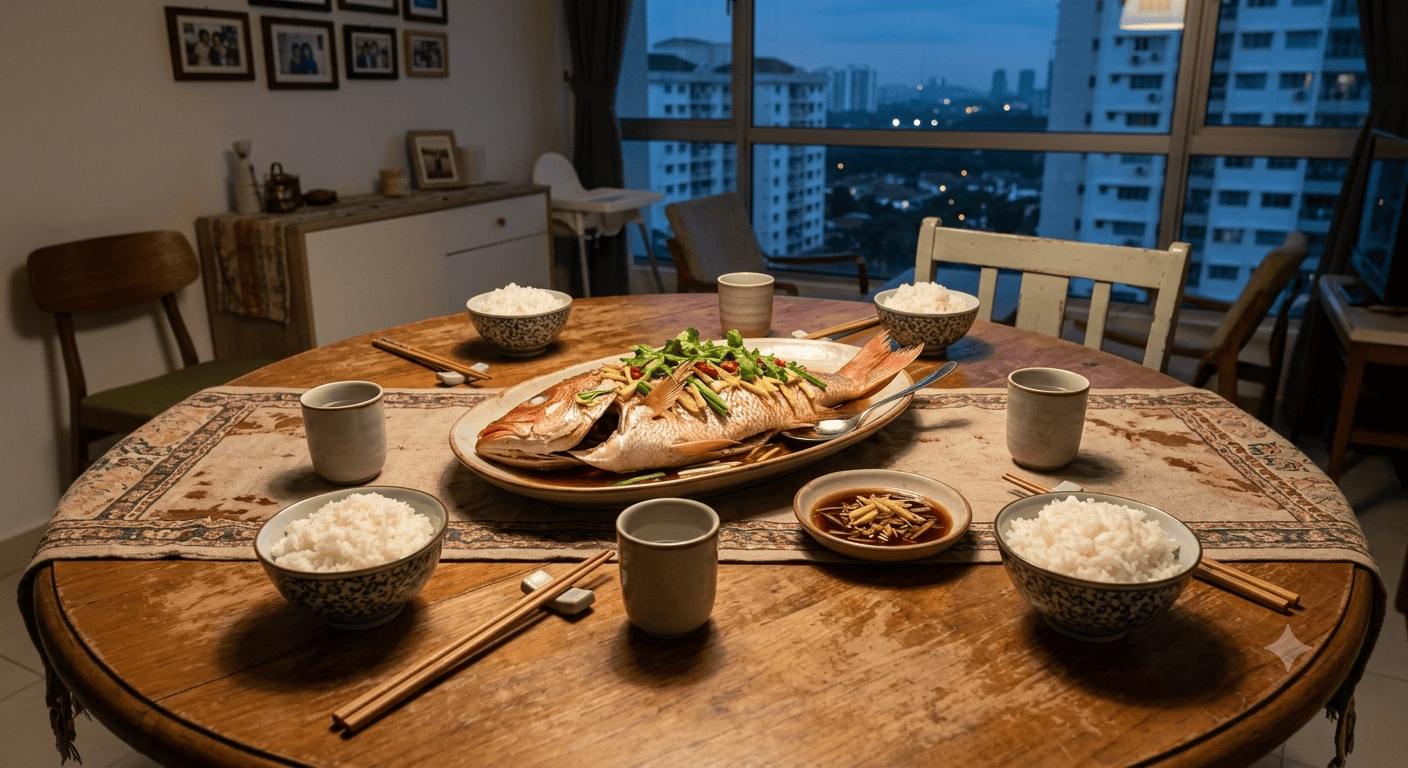
A 29-year-old graphic designer from Petaling Jaya sat in my clinic on a Tuesday evening, a day after a family dinner of steamed threadfin at her parents’ home. Halfway through the meal she had felt a sharp scratch on the right side of her throat, swallowed hard, and assumed it had gone down with the rest of the fish. By the next morning, that scratch had turned into a stabbing pain every time she swallowed. In the hours in between, she had tried almost everything her family suggested: a mouthful of rice swallowed whole, two slices of white bread soaked in water, and finally a spoonful of vinegar that someone on TikTok swore would “dissolve” the bone. None of it worked. By the time she reached me, the sliver of threadfin spine — barely the length of a fingernail — had lodged itself firmly in the soft tissue at the base of her tongue, and two days of well-meaning home remedies had made it considerably harder to remove.
I see some version of this story in my clinic almost every month, and I suspect most Malaysian ENT surgeons could say the same. Fish bone injuries are one of the most common reasons Malaysians end up needing urgent ENT care, and yet the advice passed around at the dinner table — swallow some rice, force a cough, try vinegar — is almost the opposite of what actually helps.
Why This Is So Common at Dinner Tables
It isn’t a coincidence that this happens so often here. Malaysians eat more fish than almost anywhere else in the world — per capita fish and seafood consumption reached roughly 51 kilograms a year as of 2023, placing Malaysia among the top ten fish-consuming nations globally and ahead of countries like Japan. Fish is the single largest source of animal protein in the Malaysian diet, and surveys suggest more than a third of Malaysians eat fish daily, with most of the rest eating it several times a week. Popular species like mackerel, Spanish mackerel, and threadfin are usually prepared whole — steamed, grilled, simmered into a fish head curry, or wrapped and grilled in banana leaf — and whole preparation means whole bones.
Add in the way Malaysians typically eat fish: family-style, shared plates, conversation and laughter flying across the table, children and elderly parents often served in a hurry so the rest of the meal doesn’t go cold. All of that makes it easy to miss a bone until it’s already gone down the wrong way. A 2024 case series from a tertiary hospital in Sarawak described exactly this pattern, noting that ingested fish bones remain a recurring otorhinolaryngology emergency across Malaysian hospitals, not an occasional oddity.
Not all fish are equally risky. Naturally bony species like mackerel and other small, oily fish common at Malaysian wet markets tend to have fine, hair-like bones scattered through the flesh, which are easy to miss even when you’re eating carefully. Larger, meatier fish such as Spanish mackerel or fillet cuts tend to have fewer, more predictable bones, which is part of why many parents already instinctively reach for fillets when cooking for young children — a habit worth keeping deliberately rather than only doing it by accident.
What’s Actually Happening When a Bone Gets Stuck
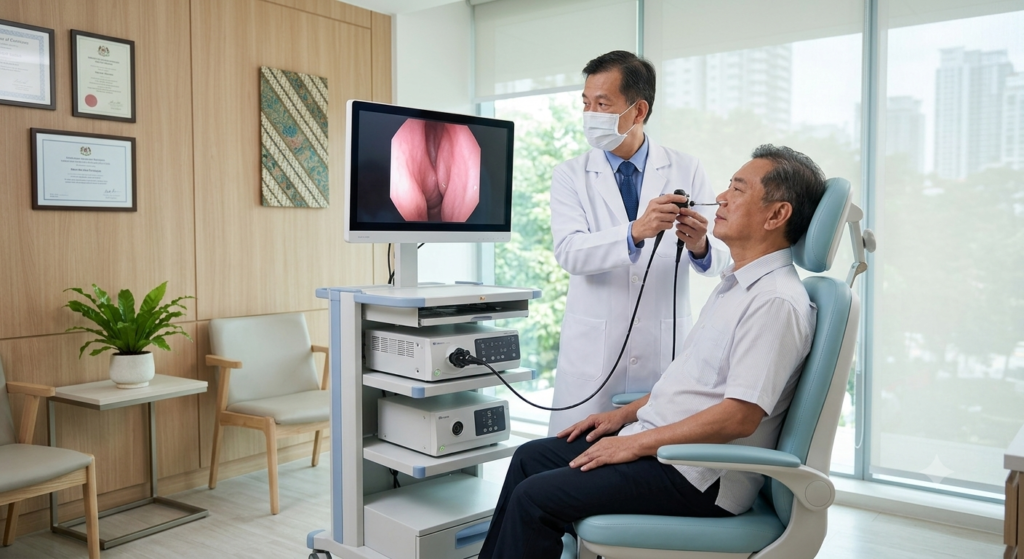
When a fish bone goes down, it rarely makes it all the way to the stomach without a fight. The body’s gag reflex is strongest around the tonsils, the base of the tongue, and a pouch-like area behind the voice box called the pyriform fossa — so this is where most bones get caught. That’s actually the more fortunate outcome, because these areas are visible and reachable with the right instruments during an ordinary clinic visit.
The less fortunate outcome is a bone that slips past this first line of defence and lodges further down, in the oesophagus. Sharp objects like fish bones are more likely to cause impaction and tissue injury than blunt ones, so a bone stuck lower down carries a real risk of working its way through the oesophageal wall over hours or days if it isn’t removed — a complication that is rare, but serious enough that international guidance from centres like Johns Hopkins Medicine treats any suspected oesophageal foreign body as something requiring prompt evaluation rather than a wait-and-see approach.
The Home Remedies Malaysians Reach For and Why They Backfire

This is exactly where the home remedies Malaysians grow up trusting tend to do more harm than good.
Swallowing a mouthful of rice or a wad of bread works on the theory that the bulk will “carry” the bone down. In practice, it just as often pushes a sharp bone deeper into the tissue it’s already caught in, burying it further and making it harder for a doctor to see and retrieve later. That is precisely what happened to the patient described above.
Forcing a hard, deliberate cough to dislodge the bone is another common instinct. It occasionally works for something loosely caught, but it can also tear the delicate lining of the throat, adding a fresh injury and a new source of bleeding on top of the original problem.
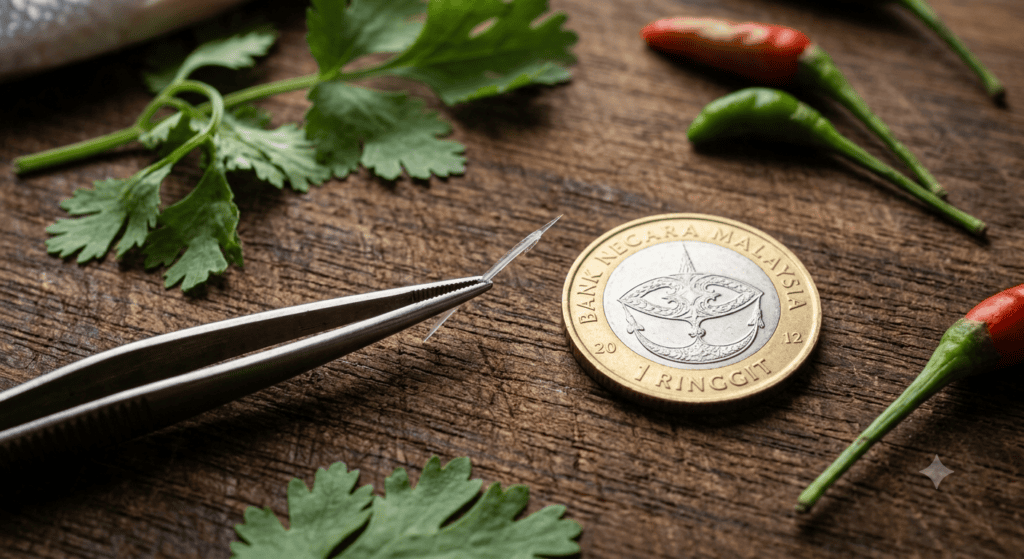
Then there’s the more recent, TikTok-driven suggestion of vinegar, or sometimes a fizzy soft drink, on the idea that the acid will dissolve the bone. Fish bones are made largely of calcium phosphate, and dissolving one meaningfully in the short time someone holds a mouthful of vinegar simply isn’t realistic — all this really does is delay a trip to someone who can actually remove it.
Even the gentler suggestions, like a spoonful of olive oil to “lubricate” the throat, aren’t a reliable substitute for having the bone properly located and removed. None of these methods are recommended in ENT or emergency first-aid guidance, and the common thread across all of them is the same: they create a false sense of progress while the clock keeps running on a problem that usually takes an ENT doctor only a few minutes to solve properly.
When It Stops Being a “Just Wait It Out” Situation
Most fish bone injuries are genuinely minor and resolve with a short, straightforward clinic visit. But it’s worth knowing the signs that mean it’s time to stop experimenting and get seen without delay: pain that doesn’t ease within a few hours, difficulty or pain swallowing your own saliva, drooling, fever, blood-streaked saliva, chest or back pain, or any difficulty breathing.
That last group of symptoms matters because, in rare cases, an unretrieved fish bone can migrate through the oesophageal wall and cause a deep infection in the chest cavity. A case report published in the Medical Journal of Malaysia documented two such cases of posterior mediastinal abscess following fish bone ingestion, where delayed and initially misdiagnosed presentations allowed the problem to progress — one of the two cases was fatal. I mention this not to alarm anyone over an ordinary scratchy throat after dinner, which is overwhelmingly the more likely explanation, but because it’s the clearest illustration of why “it’ll probably pass” is the wrong instinct once pain persists or red-flag symptoms appear.
What Actually Happens at the ENT Clinic
What happens when you come in is far less dramatic than the home remedies suggest. In most cases, I can numb the throat lightly and pass a thin, flexible scope through the nose to look directly at the tonsils, the base of the tongue, and the area around the voice box. If the bone is visible — which it usually is when patients come in early — it can be grasped with fine forceps and removed in the same sitting. The whole process typically takes only a few minutes and is far less unpleasant than the hours some patients spend trying home remedies first. If the bone has migrated lower or isn’t visible on scope, the next step is usually imaging or an endoscopy under sedation to locate and retrieve it safely.
When It’s Not Actually a Fish Bone
Occasionally, a patient comes in convinced a bone is still lodged even after a clear scope shows nothing there. This is a different and usually benign condition called globus sensation — a persistent feeling of a lump in the throat, often related to reflux, muscle tension, or anxiety rather than any physical object. I’ve written previously about that exact sensation and how to tell it apart from an actual obstruction, which is worth reading if your “stuck” feeling has lingered for weeks without a clear triggering meal behind it.
Prevention: Practical Tips for Malaysian Meals
A little caution at the dining table goes a long way. Debone fish fully before serving it to young children or elderly family members, whose reflexes and attention are often less reliable around bones — running your fingers through a child’s portion before handing over the bowl takes seconds and catches most of the obvious culprits. Slow down during meals built around whole fish — steamed fish, fish head curry, or fish wrapped and grilled in banana leaf — rather than talking, laughing, or rushing through them, and encourage children to eat fish sitting down and unhurried rather than while distracted by a screen or a game. And if something does feel caught, treat that as a signal to stop eating and assess, not a cue to swallow more food on top of it in the hope of pushing it through.
If you’re dealing with ongoing throat discomfort more generally, my guide to throat specialist care covers when it’s worth booking a proper consultation rather than waiting things out.
Got a Fish Bone Stuck Right Now?
Don’t experiment with rice, vinegar, or forceful coughing. If you’re struggling to breathe, drooling, or can’t swallow your own saliva, go to your nearest emergency department immediately. For everything else — persistent pain, uncertainty, or a scratch that hasn’t settled after a few hours — message Dr. Julius Goh directly on WhatsApp for guidance or to arrange an urgent clinic review.
Frequently Asked Questions
How long can a fish bone safely stay stuck in my throat?
Most fish bones caught in the tonsils or base of the tongue cause no lasting harm if removed within the first day. Problems become more likely the longer a bone stays lodged, particularly past 24 hours, so persistent pain is a reason to get it checked rather than wait it out.
Will swallowing rice, bread, or vinegar actually get rid of it?
Not reliably. Rice and bread can push a bone deeper into the tissue instead of carrying it down, and vinegar doesn’t dissolve a fish bone quickly enough to matter. These home remedies are common in Malaysia but aren’t recommended by ENT specialists.
Can I try to remove it myself with tweezers or a flashlight?
This isn’t advisable. Without proper visualisation and instruments, you risk pushing the bone deeper, injuring the surrounding tissue, or triggering a gag reflex that makes things worse. An ENT clinic visit with a proper scope takes only a few minutes.
What if a scope or X-ray shows nothing, but I still feel like something is stuck?
Small bones can sometimes be missed on plain X-ray, so your doctor may still watch you closely or repeat imaging if suspicion is high. If everything is genuinely clear, a lingering “stuck” sensation is often globus sensation, a separate condition related to reflux or muscle tension rather than a physical object.
Are certain Malaysian fish dishes riskier than others?
Any whole fish dish prepared with the bones intact carries some risk — steamed, grilled, simmered into a curry, or wrapped and grilled in banana leaf. The bones themselves, not the cooking method, are the issue, so the same caution applies across all of them.
Is this more dangerous for children or elderly relatives?
Yes. Children may not clearly communicate what’s wrong, and elderly relatives can have reduced sensation or slower reflexes, so both groups deserve extra care when eating whole fish and a lower threshold for seeking medical review if something seems off.
Sources Referenced
- Medical Journal of Malaysia — posterior mediastinal abscess secondary to oesophageal perforation following fish bone ingestion (2008)
- Indian Journal of Otolaryngology and Head & Neck Surgery — fish bone migration case series, tertiary hospital, Sarawak (2024)
- Johns Hopkins Medicine — Foreign Bodies in the Aerodigestive Tract
- Mayo Clinic — Foreign object swallowed: First aid
- Helgi Library — Fish Consumption Per Capita, Malaysia
- Asia Pacific Journal of Sustainable Agriculture, Food and Energy — patterns of fish and seafood consumption in a Malaysian population
Discover more from The ENT Doctor
Subscribe to get the latest posts sent to your email.
No responses yet