
The short answer
No. The so-called six-second sleep therapy is not sleep and it is not a treatment. A practitioner presses on the neck, shoulders or nape until the person loses consciousness for a few seconds. Malaysia’s Ministry of Health (KKM) has said there is no scientific or medical evidence that it works, that it is not recognised under the Traditional and Complementary Medicine Act 2016, and that it can cause stroke, carotid artery injury, abnormal heart rhythm, permanent brain damage and death. As an ENT surgeon who treats problems of the neck, throat and sleep, I would ask you not to try it, not to demonstrate it and not to share the clips.
A note on timing: the main Malaysian warnings were issued between February and April 2026, so this is not breaking news. I am writing it now because the clips keep circulating, and because the underlying question, what really happens when someone presses on your neck, is one patients still ask me.
A scene many Malaysians will recognise
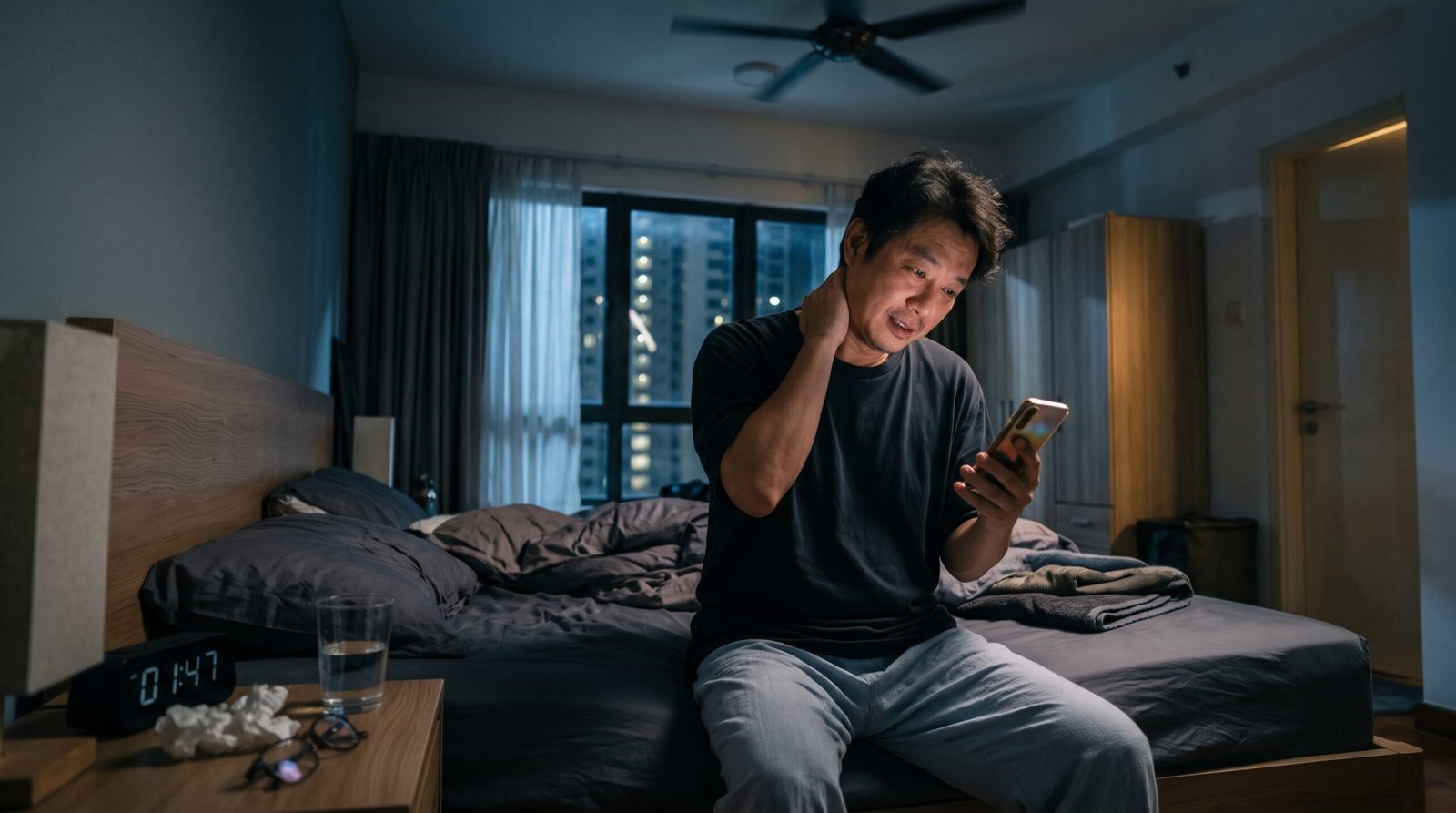
Picture a 45-year-old executive in the Klang Valley. This is an illustrative scenario, not a real patient. He sleeps badly, wakes with a heavy head and a stiff neck, and is tired by mid-afternoon. Late one night he watches a short video of someone lying down, being pressed at the neck, going limp for a few seconds and then sitting up smiling. The caption says it resets the brain and removes stress. The comments are full of people saying it worked for them.
His reaction is entirely understandable. He wants his sleep back, the video is persuasive, and the practitioner looks calm and confident. What the video does not show is what the body is doing during those few seconds.
What Malaysian health authorities and doctors have said
Several Malaysian voices have addressed this trend, and they agree with one another:
- The Ministry of Health. In a response to MyCheck Malaysia, Bernama’s fact-checking initiative, in March 2026, KKM said the loss of consciousness is not real sleep but induced convulsive syncope, which is a faint with seizure-like movements. It called the practice a high-risk physical act that could cause serious harm, and noted that it had raised the issue earlier in its December 2025 MyHealth e-magazine. See the FMT report and The Star’s QuickCheck of 10 March 2026.
- Neurologists. In February 2026 consultant physician and neurologist Dr Schee Jie Ping wrote in CodeBlue that misrepresenting induced fainting as sleep therapy is misleading and dangerous. The Malaysia Stroke Council and the Malaysian Society of Neurosciences issued a joint statement urging the authorities to act, describing the practice as physical harm rather than treatment. The society’s president, Dr Ahmad Shahir Mawardi of Hospital Kuala Lumpur, explained the mechanism to Bernama in a BFokus feature published on 8 April 2026.
- Other specialists. Sinar Daily, citing Bernama on 26 March 2026, quoted cardiologist Prof Dr Sazzli Shahlan Kasim, who warned of life-threatening heart rhythm problems, especially in people with undiagnosed heart disease, and said the risk of death may be as high as 50 per cent. I could not find published data behind that figure, so please read it as a warning from a cardiologist rather than a measured statistic. The same report quoted Assoc Prof Dr Aryati Ahmad of UniSZA, who said there is no scientific evidence that the therapy treats stress, hypertension or insomnia.
To be fair to the other side, the same Bernama feature quoted a practitioner who disputed the warning. He described the method as a long-practised traditional technique and said clients report feeling lighter and more refreshed, while acknowledging that the outcomes are subjective and that the risks are higher with untrained practitioners. That is an honest account of what people experience. The question is whether feeling refreshed means it is safe or effective, and the medical answer is no.
What actually happens when the neck is pressed
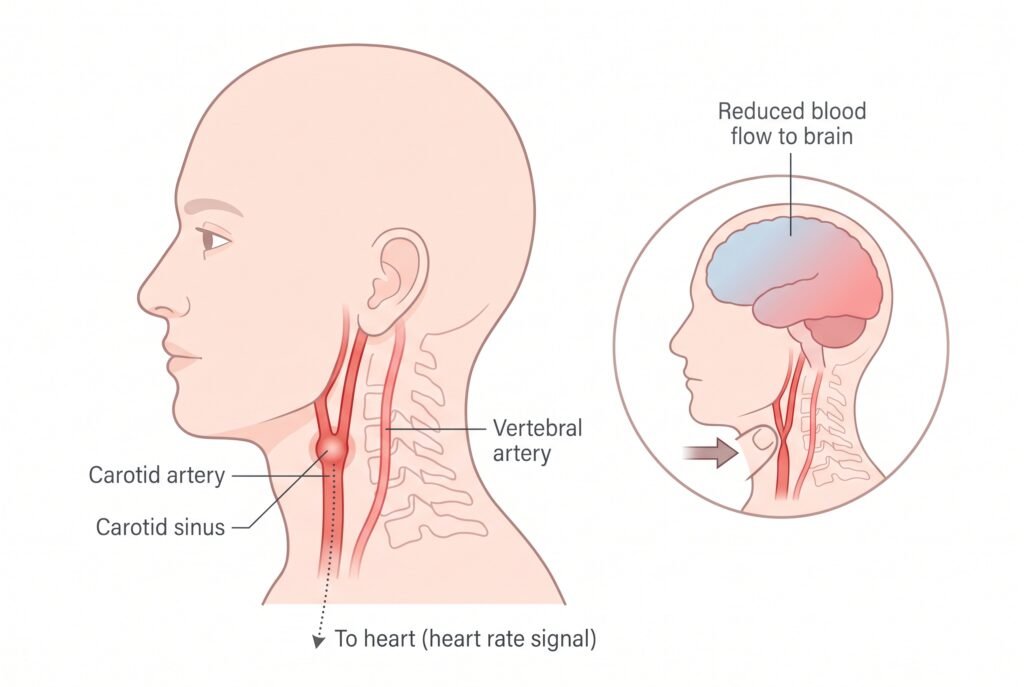
Your brain depends on a constant supply of blood. Most of it arrives through the two carotid arteries, which run up the sides of your neck, and the two vertebral arteries, which run along the spine. As Public Health Malaysia explained, the brain has no oxygen reserve and needs blood flow every second.
Pressing on the neck can squeeze the carotid arteries and interfere with the signals from the carotid sinus, a small area in the artery wall that senses blood pressure and tells the heart to slow down. Dr Ahmad Shahir explained that when pressure is applied to these arteries, blood flow and oxygen to the brain fall, a state called cerebral hypoperfusion. The person may look asleep, disoriented or have seizure-like shaking. Once the pressure is released, blood flow returns and consciousness comes back. Shaking and eyes rolling upward are signs of a brain starved of oxygen, not signs of peaceful sleep.
Two things follow from this. First, the margin for error is small. The practitioner cannot know in advance how your arteries, your heart and your blood pressure reflexes will respond. Dr Ahmad Shahir noted that brain tissue can suffer irreversible damage after about four minutes without adequate oxygen, and a heart that is slowed by a strong reflex may not restart smoothly in someone with an undiagnosed heart condition. Second, you cannot tell in advance whether you are one of the people for whom it goes wrong.
Why people say they feel better afterwards
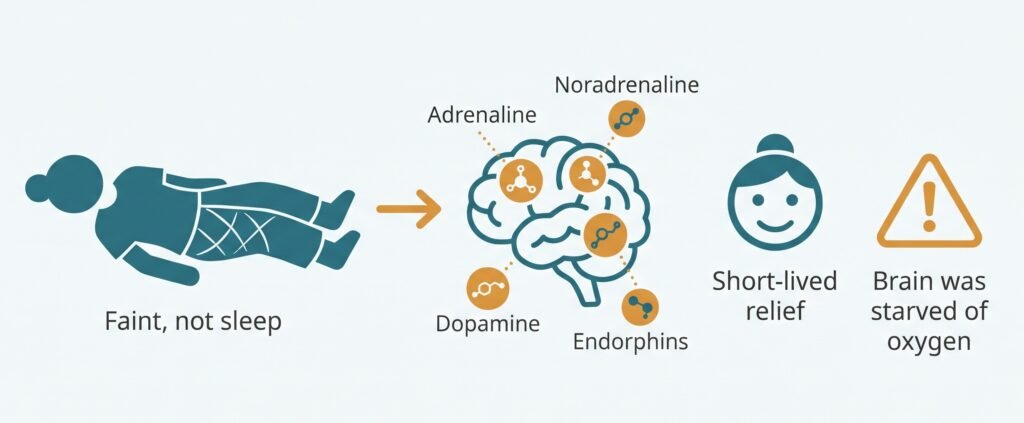
This is the part that makes the trend so convincing. Public Health Malaysia explained that when the brain is briefly deprived of oxygen, the body releases a surge of stress and reward chemicals, including adrenaline, noradrenaline, dopamine and endorphins. This can produce a short feeling of relief or even euphoria. They compared it to someone who has nearly drowned and then gasps for air: the relief is real, but it follows a genuine emergency.
Feeling better after an experience does not prove that the experience treated anything. People feel lighter after a good cry or a hard sprint too, but we would not prescribe either for insomnia. No study I could find shows that this practice improves sleep, blood pressure or nerve function, and the Malaysian specialists quoted above say the same.
What can go wrong: an ENT and neck perspective
The Malaysian warnings focus on the brain and the heart, and that is where the greatest danger lies. From the viewpoint of a surgeon who spends the working week on the neck, here is how I would group the risks.
- Injury to the neck arteries. A tear in the wall of a neck artery, called a cervical artery dissection, can lead to a clot and a stroke. A 2014 scientific statement from the American Heart Association and American Stroke Association, published in the journal Stroke, describes dissection as an important and often unrecognised cause of stroke in young and middle-aged adults. The statement was about neck manipulation, not neck compression, and it stressed that a cause-and-effect link with manipulation has not been established and that the risk is probably low. I mention it because it shows how vulnerable these vessels are to mechanical stress, and a strong squeeze is a different matter from a routine movement. Summary of the statement.
- Heart rhythm problems. The carotid sinus reflex can slow the heart sharply. In people with undiagnosed heart or blood vessel disease, Public Health Malaysia and Dr Sazzli warned that this can lead to arrhythmia or sudden cardiac arrest.
- Falls and head injury. A person who suddenly goes limp can strike their head or neck on the way down or on the treatment surface.
- Injury to the throat structures. I did not find Malaysian reports of voice box or airway injury linked to this trend, so I will be careful here. But the neck also contains the voice box, windpipe and swallowing tube, and forceful pressure on the neck is a recognised way to injure them in general. After any strong neck compression, hoarseness, pain on swallowing, a noisy or laboured breathing pattern or a swelling in the neck should be checked urgently, because swelling in the airway can build up over hours.
- Repeated sessions. One doctor quoted by The Star warned that the risk of sudden death rises with repeated sessions. Many centres encourage repeat visits, which means the risk does not stay at one exposure.
If you have recently had neck dizziness after a massage, my earlier post on feeling dizzy after a massage or neck adjustment explains the milder end of the same problem. The difference here is that loss of consciousness is the stated aim, not an accident.
Who is most at risk?
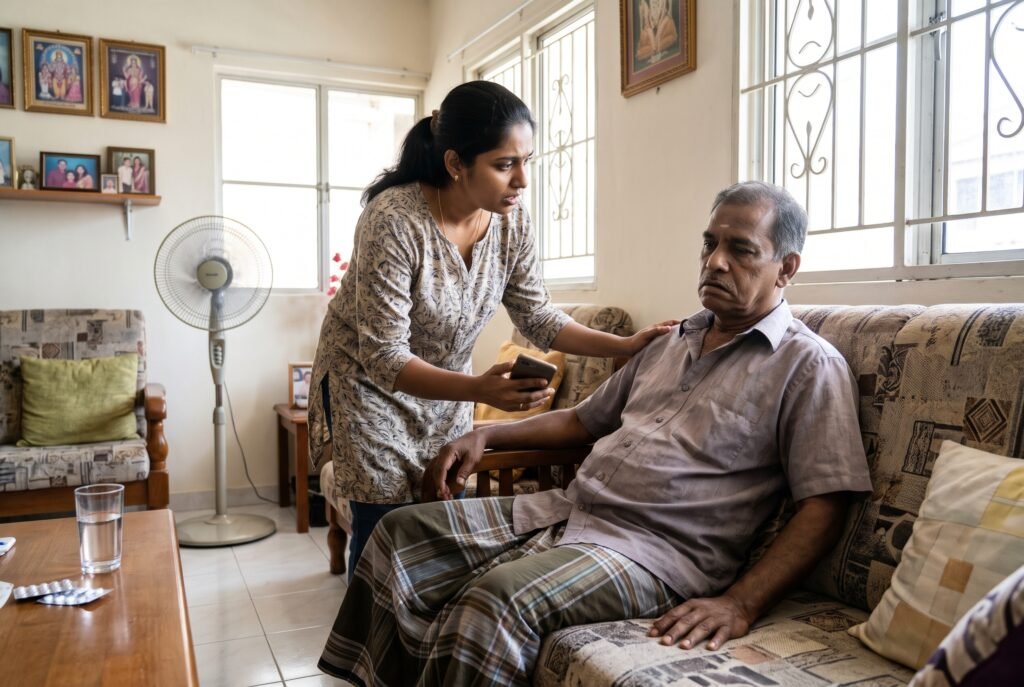
In principle anyone, because the problem is the mechanism and not the person. But the people most likely to come to harm include those with undiagnosed heart disease, high blood pressure, narrowed neck arteries, a history of fainting or seizures, older adults, and people taking medicines that slow the heart or lower blood pressure. Many of these conditions give no symptoms until something goes wrong, which is the reason a practitioner’s reassurance that you look fine is not a safety check.
The “traditional” argument and who regulates it
Some centres promote the method as a traditional practice with a long record of safe use. KKM has said that no medical or health body recognises it and that it is not a recognised practice under the Traditional and Complementary Medicine Act 2016 (Act 775). The Malaysia Stroke Council and the Malaysian Society of Neurosciences pointed to a regulatory gap and called on the authorities to act. The Star’s fact-check found that the clips it examined offered no medical evidence and no risk warnings.
KKM’s advice is to seek treatment only from registered healthcare practitioners, including in traditional and complementary medicine. If a centre cannot tell you who is registered, what their training is and what the risks are, treat that as your answer.
If you are really chasing better sleep, start here
The reason these clips spread is that tiredness, poor sleep, head heaviness and neck tension are common. Dr Ahmad Shahir recommended good sleep hygiene and, if that fails, seeing a medical specialist. I would add that poor sleep has causes that can be found and treated:
- Snoring and sleep apnea. Repeated pauses in breathing at night cause unrefreshing sleep, morning headaches and daytime fatigue. See Can Sleep Apnea Kill You While You Sleep? and why you need a doctor before getting a sleep study.
- Tiredness that is not sleepiness. Fatigue and sleepiness are different problems with different causes. See Tired All the Time? Sleepiness vs. Fatigue.
- Hormonal and life-stage changes. See why perimenopausal Malaysian women cannot sleep.
- Other sleep trends that carry risk. Mouth taping is another viral idea that I have written about in Why Mouth Taping in Sleep Apnea Can Be Dangerous.
- Neck tension. Stiffness from long hours at a desk and screen is usually muscular and responds to posture changes, gentle stretching and a physiotherapist. A lump or swelling in the neck that does not go away is different and deserves assessment: see Neck Swelling: What To Do & What To Expect.
If you are not sure whether your problem needs a GP or an ENT specialist, my guide on which one to visit can help.
If you or someone you know has already had it done
Many people have tried this and felt fine, and I do not want to frighten anyone unnecessarily. But anyone who has had neck pressure used to cause fainting should know the warning signs. Dr Schee listed emergency signs as limb weakness, facial drooping, slurred speech, severe headache, confusion, chest pain and fainting. The American Heart Association statement adds pain in the back of the neck or head, dizziness or vertigo, double vision, unsteady walking and jerky eye movements. Go to an emergency department straight away if any of these appear, and tell the doctor exactly what was done to the neck and when.
See a doctor soon, but not as an emergency, if you have a persistently hoarse voice, pain on swallowing, neck pain that is getting worse, or any palpitations after a session. And please do not repeat the experiment to see whether the symptoms go away.
Book a consultation with Dr. Julius
If poor sleep, snoring, morning headaches, neck problems or worrying symptoms after neck pressure are on your mind, you do not have to sort it out through viral videos. I see patients at UM Specialist Centre in Kuala Lumpur and can assess the nose, throat, neck and sleep problems together. You can message me directly on WhatsApp to ask about a consultation: Chat with Dr. Julius on WhatsApp.
Frequently asked questions
Is six-second sleep therapy safe?
No. KKM has said there is no scientific or medical evidence that it works and that it is a high-risk practice that could cause serious harm. Malaysian neurologists and a cardiologist have warned of stroke, carotid artery injury, abnormal heart rhythms, brain damage and death.
Is the therapy legal in Malaysia?
It is not recognised under the Traditional and Complementary Medicine Act 2016 (Act 775), according to KKM, and it is not an approved medical or traditional treatment. If you are unsure about a particular centre, ask whether the practitioner is registered and check with the Ministry of Health.
Why do people feel relaxed afterwards?
Public Health Malaysia explained that a brief loss of oxygen to the brain triggers a surge of adrenaline, noradrenaline, dopamine and endorphins, which can cause a short feeling of relief. That relief is the body’s emergency response and does not mean the neck pressure treated anything.
Is it real sleep?
No. The person is unconscious from reduced blood flow to the brain, a faint with possible seizure-like movements called convulsive syncope. Real sleep is a regulated brain state and is not caused by cutting off blood supply.
What are the warning signs after neck pressure?
Go to an emergency department for weakness of an arm or leg, a drooping face, slurred speech, severe headache, confusion, chest pain, repeated fainting, double vision, vertigo or unsteady walking. See a doctor promptly for a hoarse voice, pain on swallowing, noisy breathing or neck swelling.
What should I do instead if I cannot sleep?
Start with sleep hygiene and see a doctor if problems last more than a few weeks. Snoring, pauses in breathing, morning headaches and daytime sleepiness suggest a possible sleep disorder, which an ENT or sleep specialist can assess and treat.
References and further reading
- Free Malaysia Today (9 Mar 2026). Health ministry, experts caution against viral ‘six-second sleep’ trend. https://www.freemalaysiatoday.com/category/leisure/2026/03/09/health-ministry-experts-caution-against-viral-six-second-sleep-trend
- The Star (10 Mar 2026). QuickCheck: Can the viral ‘six-second sleep’ therapy seen on TikTok kill you? https://www.thestar.com.my/news/true-or-not/2026/03/10/quickcheck-can-the-viral-039six-second-sleep039-therapy-seen-on-tiktok-kill-you
- Sinar Daily (26 Mar 2026). Viral ‘six-second sleep therapy’ may cause seizures, death, warn doctors. https://www.sinardaily.my/ampArticle/734780
- Bernama BFokus (8 Apr 2026). Six-Second Sleep Therapy: Between Benefits And Risks. https://www.bernama.com/en/bfokus/news.php?id=2542321
- CodeBlue (13 Feb 2026). Stop Dangerous 6-Second Sleep Therapy Practice, Dr Schee Jie Ping. https://codeblue.galencentre.org/2026/02/stop-dangerous-tidur-6-saat-6-second-sleep-therapy-practice-dr-schee-jie-ping/
- Malaysia Stroke Council and Malaysian Society of Neurosciences. Joint statement on the practice marketed as 6-second sleep therapy. https://neuro.org.my/assets/MSCxMSN.pdf
- Biller J, Sacco RL, et al. Cervical arterial dissections and association with cervical manipulative therapy: a statement for healthcare professionals from the American Heart Association/American Stroke Association. Stroke 2014 (summary by UNMC). https://www.unmc.edu/newsroom/2014/08/11/neck-manipulation-may-be-associated-with-strokes/
- Ministry of Health Malaysia. https://www.moh.gov.my
This article is for general education and does not replace a medical consultation. If you are worried about your symptoms, please see a qualified doctor.
No responses yet