Bed Rotting: Harmless Rest or a Sleep Problem in Disguise? A Sleep Surgeon Explains
 A/Prof. Dr Julius GohConsultant ENT surgeon · 26 Nov 2026 · 10 min read
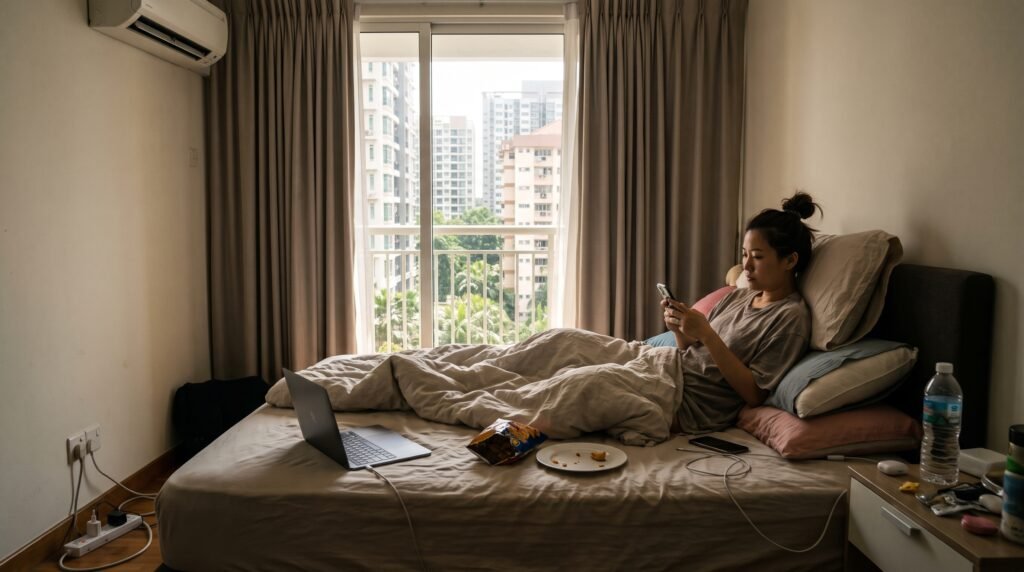
It is a wet Saturday in Kuala Lumpur. The rain has been falling since morning, your calendar is empty, and your bed is warm. By noon you are still under the blanket, phone in hand, switching between videos and snacks. By evening you wonder why you feel more tired than when you woke up.
This has a name on social media: bed rotting. It began as a TikTok trend, where people post themselves staying in bed for hours or whole days as a form of self-care, and it has not gone away. In January 2026 the UK health site Patient.info described it as spending long periods in bed doing low-energy activities, and quoted a sleep scientist who pointed out that there is no clinical definition of bed rotting. A US magazine summary cited a survey by the American Academy of Sleep Medicine suggesting that almost a quarter of 14 to 30 year olds regularly do it, though I have not seen that survey myself.
Is it harmless rest, or is it a problem? As an ENT and sleep surgeon, my answer is: it depends on how often, why, and what it does to your sleep. This guide goes through the common beliefs one by one. I have found no Malaysian studies or news reports on bed rotting, so the research and expert comments below come from overseas, and I say so where it matters.
Myth 1: Bed rotting is just self-care, so it cannot hurt
There is a fair point inside this myth. Rest is not a luxury, and many people in Malaysia live with long commutes, long working hours and little downtime. A sleep scientist quoted by CBS News described the trend as a kind of rejection of productivity culture, and a psychiatrist in the same report agreed it is fine to slow down for a day once in a while when you are truly exhausted. Cleveland Clinic physician Dr Meghan Galili, quoted by the news site Tyla, said it is good to take time out and reflect on what is going on in your life.
The problem is the word once in a while. The same experts warn that when it becomes a pattern, it can backfire. The psychiatrist said it can foster avoidance, a pattern seen in anxiety, and can make depression worse. Dr Nicole Hollingshead of the Ohio State Wexner Medical Center described a loop in which low mood leads to inactivity, which deepens the low mood, and advised that bed rotting should be used infrequently. A counsellor quoted in the same article put it more bluntly: if you are doing it because of anxiety or depression, you are not coping, you are hiding.
So the first rule is that self-care should leave you better off. If it does not, it is probably not self-care.
Myth 2: Lying in bed is the same as resting
Resting your body and resting your brain are not the same thing. A day in bed on a phone is often not rest at all. It involves scrolling, comparing, worrying or watching, and the brain stays switched on. Many people find that they feel more drained afterwards, not less. Psychiatrist Samantha Boardman, quoted by Tyla, noted that people do not feel much better after bed rotting and if anything feel a little more drained.
True rest is something that lowers your stress and gives you energy: a nap, a slow walk, a book, a conversation, a meal you enjoy, or simply sitting quietly. The test is not where your body is. It is how you feel afterwards.
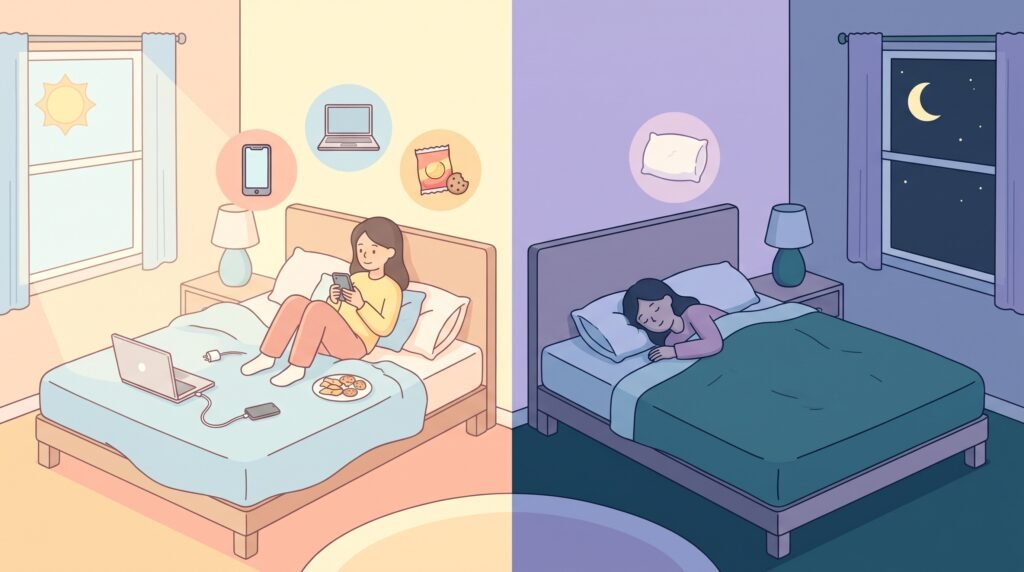
Myth 3: Staying in bed all day will not affect how you sleep at night
This is the part I care about most as a sleep specialist, because the effect on sleep is real and fairly well understood. There are several reasons.
- Less daylight. Light in the morning and through the day is the main signal that sets your body clock. Hannah Shore, head of sleep science at a UK mattress retailer, told Patient.info that long periods indoors reduce your light exposure and body clock cues, which makes it harder to fall and stay asleep. This matters in Malaysia, where we often spend the day in air-conditioned rooms and offices and may see little natural light even on a good day, and a rainy or hazy weekend makes it worse.
- Lower sleep drive. The longer you are awake, the more sleep pressure builds up in your brain, which is what helps you fall asleep at night. A day of lying down uses up less energy and builds up less pressure, so bedtime arrives and you are not sleepy.
- A bed that means wakefulness. The brain learns associations. If your bed is where you scroll, snack, work and worry, your brain starts to treat it as a place for being awake. Psychology Today columnist Amy Morin makes this point, noting that staying awake in bed can contribute to insomnia and train the brain to stay awake in bed. Shore described the same thing as a negative association with the bed. This idea is the basis of a standard part of cognitive behavioural therapy for insomnia, which advises using the bed only for sleep.
- Later and lighter sleep. Putting these together, many people who bed rot at the weekend sleep badly on Sunday night and start Monday exhausted, which sets up the cycle again.
I have written about the other end of this problem in my article on the best sleeping position, which includes a section on how chasing perfect sleep can backfire. Bed rotting is a good example of the opposite mistake: too much time in bed also damages sleep.
Myth 4: If I am tired, I should just stay in bed longer
Sometimes tiredness is just tiredness. But wanting to stay in bed day after day, even after a full night’s sleep, can be a clue to something medical. I would think about the following.
- Sleep apnoea. Interrupted breathing at night can leave you exhausted despite enough hours in bed, with a dry mouth or headache on waking. Many people do not know they snore or stop breathing. I explain in my article that you can have sleep apnea without snoring, and in my article on whether sleep apnoea can kill you in your sleepwhy it should not be ignored.
- Sleepiness versus fatigue. These feel similar but have different causes. If you are tired all the time, my article on sleepiness versus fatigue explains how doctors tell them apart.
- Hormonal changes. Women in perimenopause often have disrupted sleep, as I describe in my article on why perimenopausal women often cannot sleep.
- Low mood, anxiety or burnout. A strong urge to withdraw to bed, or difficulty getting up, can be a sign of depression or burnout. Several of the experts I read said the same: that bed rotting can be a sign of a deeper problem.
- Other medical causes. Thyroid problems, anaemia, infections and medicines can all cause tiredness, which is why a proper check-up is worth having.
A sleep study may be needed if sleep apnoea is suspected. I explain why a doctor should be involved in my article on why you need a doctor before getting a sleep study, and what the different tests involve in my article on the different types of sleep studies.
Myth 5: It does not matter what I do in bed, as long as I am lying down

It does. Phones in bed are the biggest issue. The Singapore publication Thirst, quoting a counsellor, pointed to blue light affecting melatonin and the body clock, as well as the emotional effect of endless content. Eating in bed, working on a laptop and watching series until the early hours all make the bed a place for activity. A simple fix is to give each activity its own place: work at a desk, eat at a table, relax on a sofa, and keep the bed for sleep and quiet reading.
Myth 6: Everyone is doing it, so it must be fine
Popularity is not evidence. The trend is spread by social media, where people tend to show the restful part and not the days that follow. It is also true that taking a break from constant productivity is a healthy impulse. The aim is not to shame anyone for needing rest. It is to find a form of rest that works.
A healthier way to rest
If you want a rest day, here is how I would do it:
- Set a time limit. Decide beforehand how long you will rest and set an alarm or a timer.
- Move off the bed. Use the sofa or a chair for daytime rest, and keep the bed for sleep.
- Open the curtains. Get daylight early, even if it is cloudy. A short walk outside helps your body clock more than another hour under the blanket.
- Put the phone across the room. Or at least choose something calm, like reading or music, instead of scrolling.
- Keep a regular wake-up time. A consistent time protects your sleep at night, even after a poor night.
- Eat, drink and move a little. Hydration, a proper meal and gentle movement help your energy and mood.
- Do a nap properly if you need one. Keep it short, and early in the afternoon.
Afterwards, ask yourself the questions that experts suggest. Dr Galili advises asking whether you feel energised or depleted, and if it is not helping, stopping. A Singapore counsellor suggested asking whether it left you feeling more positive or more negative, and whether you feel more able to connect with other people. If the answer is repeatedly negative, treat that as information, not failure.
Warning signs: when to speak to a doctor
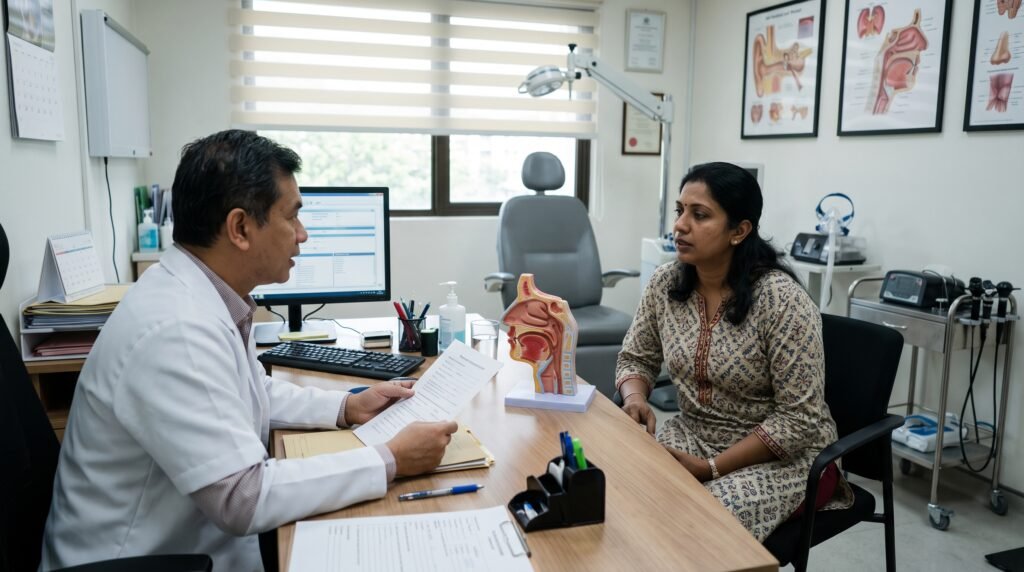
Please see a doctor if any of the following apply:
- You spend most of the day in bed for more than several days at a time.
- You are missing work, studies or responsibilities because you cannot get up.
- You have lost interest in things you normally enjoy, or feel persistently low, anxious or hopeless.
- You wake unrefreshed despite enough hours in bed, or you have been told that you snore loudly or stop breathing in your sleep.
- You are feeling more tired, not less, after rest days.
- You have difficulty sleeping at night that has lasted for more than a few weeks.
If you are not sure where to start, my guide on GP or ENT: which one should you visit explains how to decide. If you are struggling with low mood or thoughts of harming yourself, please contact a mental health professional or a helpline straight away. In Malaysia, support is available through the Ministry of Health’s mental health helpline and through Befrienders Kuala Lumpur, which runs a 24-hour emotional support line.
The bottom line
An occasional lazy day in bed is not a health problem, and nobody should feel guilty for resting. The trouble starts when it becomes a habit, when it replaces sleep at night, or when it is a way of hiding from something that deserves attention. Use rest to refill your energy, not to avoid your life, and if you cannot tell the difference, that is a good reason to talk to a professional.
Talk to Us
If you are always tired, sleeping badly, or finding it hard to get out of bed, a proper assessment can find out whether something like sleep apnoea or another sleep problem is behind it. Contact us directly for a consultation on WhatsApp: Message us on WhatsApp.
Frequently Asked Questions
What is bed rotting?
It is a social media term for spending long periods in bed, awake, doing low-energy activities such as scrolling or watching shows. There is no medical definition.
Is bed rotting bad for you?
Occasionally it is not harmful, and experts say one rest day is fine when you are truly exhausted. Frequent bed rotting can worsen sleep at night and may make low mood or anxiety worse.
Does bed rotting cause depression?
I am not aware of evidence that it causes depression. Experts warn that it can worsen existing low mood or anxiety by encouraging inactivity and avoidance, and that it can also be a sign of an underlying problem.
How does bed rotting affect sleep?
It can reduce your exposure to daylight, lower the sleep pressure that helps you fall asleep, and train your brain to associate the bed with being awake, all of which can make night-time sleep worse.
Why do I want to stay in bed all day?
Reasons range from simple tiredness to sleep apnoea, hormonal changes, burnout, depression or other medical problems. If it keeps happening, see a doctor.
How long is it okay to stay in bed during the day?
There is no official limit. Rest is fine if it leaves you energised, you do it occasionally, and you can get on with your day afterwards. Set a time limit and move to the sofa for daytime rest.
Can sleep apnoea make me want to stay in bed?
Yes. Sleep apnoea can cause daytime exhaustion even after a full night in bed. Loud snoring, pauses in breathing, a dry mouth or morning headaches are reasons to have it assessed.
This article is for general education and does not replace a consultation. If you are worried about your symptoms, please see a doctor.
More about Dr Goh →