
Cartilage Piercing Infection: The Ear-Curation Trend’s Real Risk
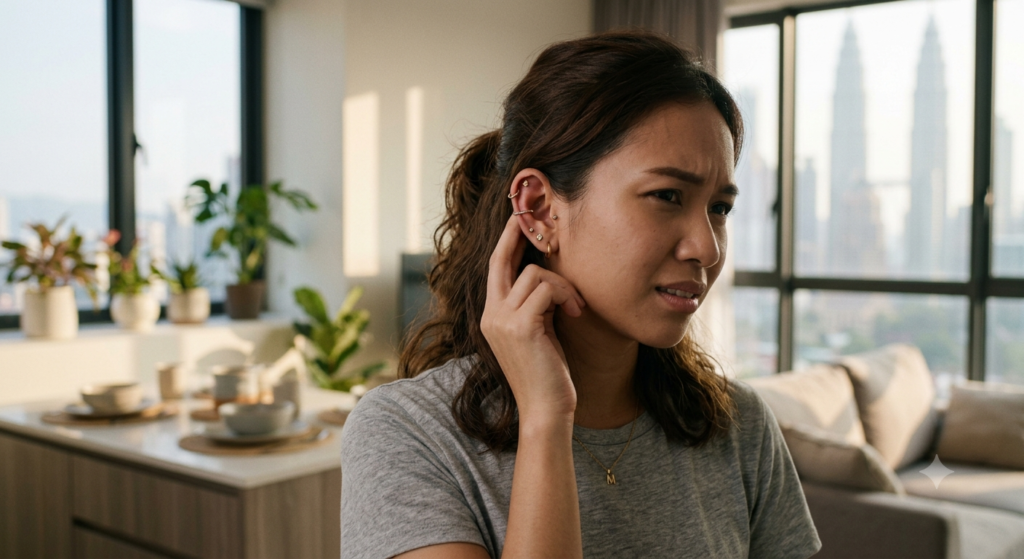
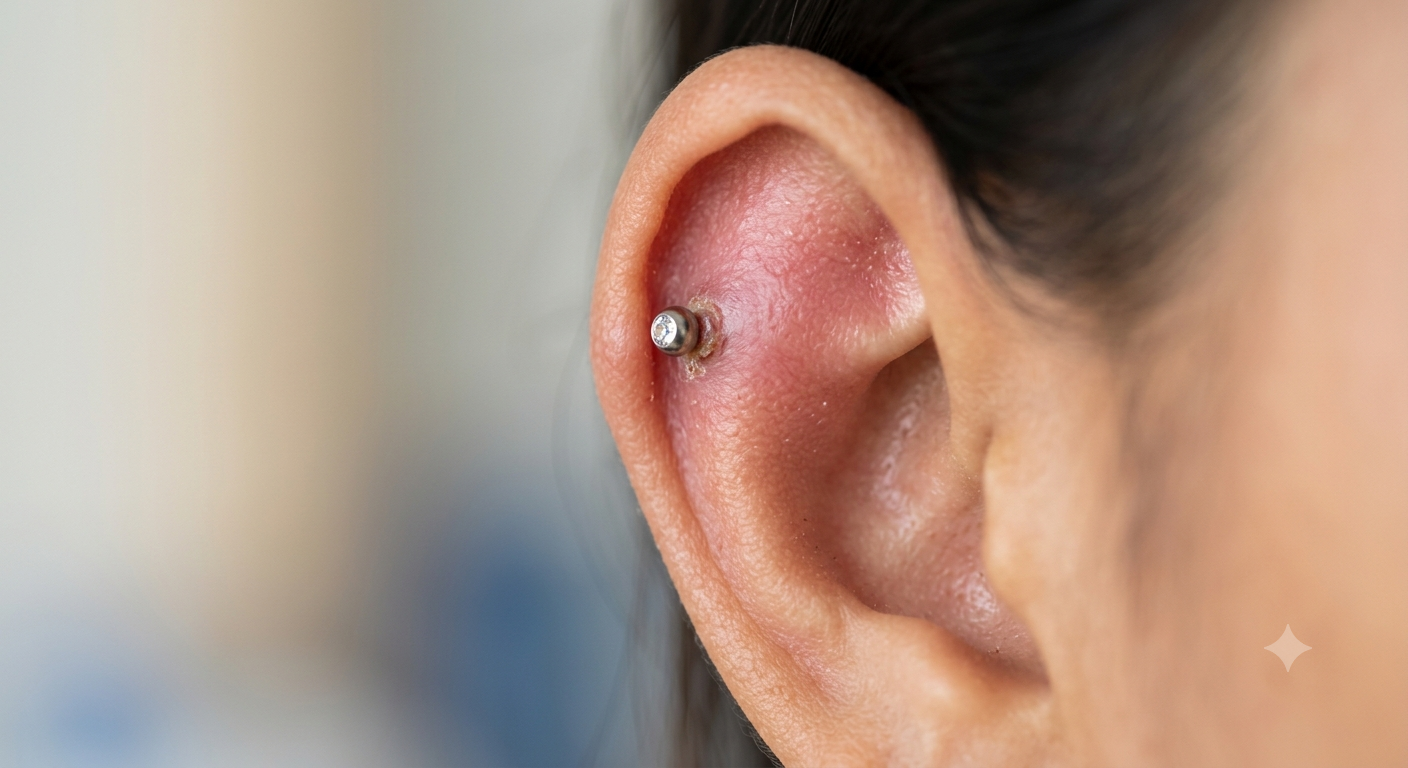
A 24-year-old marketing executive sat in my consultation room in Petaling Jaya three weeks ago with her hand cupped protectively over her left ear, reluctant to let me look. Over the past year she had been building what she called her “ear curation” — five piercings climbing the edge of one ear, copied from a Pinterest board and a string of Instagram Reels long before the look reached Malaysia. The newest addition was a helix piercing, done ten days earlier at a mall kiosk between work meetings. What should have been a small, quietly healing dot of jewelry was instead a hot, swollen ridge of cartilage, angry red and weeping slightly, with a throbbing pain sharp enough that she hadn’t slept properly in two nights.
By the time she sat in my chair, she wasn’t dealing with “just a bad piercing.” She was dealing with perichondritis — an infection of the tissue wrapped around ear cartilage — and if we had caught it a few days later, she could have lost part of the shape of her ear for good.
Ear Curation Is Everywhere Right Now — Including in Malaysia
“Ear curation,” sometimes called ear stacking or ear styling, is the practice of building up a deliberately arranged collection of piercings along one ear — a lobe piercing or two, then working up through the flat, helix, tragus, and conch, each hung with a different stud, hoop, or huggie. It has been building steadily on Instagram and Pinterest for a few years now, and 2026 has pushed it further into the mainstream on TikTok, where “ear stack” and “ear curation” content routinely appears alongside jewelry hauls and piercing-healing diaries.
Malaysia hasn’t been left out of it. Piercing studios and appointment-only jewelers have opened across the Klang Valley in the past few years, alongside long-running mall kiosks offering walk-in piercings between errands, and I’ve watched the pattern show up in my own clinic waiting room: more teenagers and twenty-somethings coming in with three, four, or five piercings on one ear rather than the single lobe piercing that used to be the norm.
None of that is inherently dangerous. What worries me isn’t ear curation as an idea — it’s that most of the new piercings being added aren’t on the lobe anymore. They’re on cartilage. And cartilage does not forgive the same mistakes that a lobe piercing shrugs off.
Why Cartilage Isn’t Just “Another Piercing”
An earlobe is soft, fatty tissue with a generous blood supply, which is exactly why lobe piercings heal in six to eight weeks and rarely cause serious trouble. Cartilage is different. The firm structure that gives your outer ear its shape has almost no blood supply of its own — it depends on a thin membrane wrapped around it called the perichondrium to deliver oxygen and nutrients. That same lack of direct blood flow that keeps your ear looking sculpted also means that once bacteria get into cartilage tissue, your immune system — and any antibiotic you take — has a much harder time reaching the site to fight them off.
This is reflected in the numbers. Published studies comparing piercing complications have found infection rates as high as 41% for cartilage piercings, compared with roughly 20–30% for earlobe piercings [1], and cartilage piercings carry more than double the odds of any complication compared with lobe piercings [2]. A small but real percentage — around 2 to 3% of all cartilage piercings — go on to need antibiotics, hospitalization, or surgery [2]. A helix, tragus, or conch piercing is simply a different medical proposition than the lobe piercing most of us grew up with, even though a piercer can put both through with the same speed and the same friendly smile.
Perichondritis: The Infection Hiding Behind “Normal” Piercing Pain
The infection that turns a cartilage piercing into an emergency is called perichondritis — inflammation and infection of the perichondrium, usually triggered within hours to three days of the piercing itself. The most common culprit by far is Pseudomonas aeruginosa, a bacterium that thrives in water: tap water, aftercare sprays mixed with tap water, swimming pools, and humid, sweaty environments are its favorite entry points [3].
Some tenderness, mild redness, and pinpoint soreness for the first few days are a normal part of any piercing healing. Perichondritis looks and feels different. The pain is often described as throbbing or burning rather than a dull ache, it tends to worsen rather than settle after the second or third day, the redness and swelling spread beyond the piercing site to involve the whole curve of the ear rather than staying neatly localized, and there may be pus, a foul smell, or fluid that doesn’t look like ordinary healing discharge [4]. That was exactly the pattern my patient described: a piercing that had felt fine for the first few days and then rapidly turned hot, swollen, and unbearable — a timeline that, in my experience, is far more telling than the pain scale alone.
The Malaysian Climate Problem Nobody Warns You About
Impacts on climate health
What this means locally
There’s a layer of risk here that’s rarely mentioned in the piercing aftercare cards handed out at the counter, and it’s a distinctly Malaysian one: our climate. Kuala Lumpur’s humidity regularly sits above 80%, and a fresh cartilage piercing tucked into the folds of the upper ear is an easy place for sweat and moisture to sit trapped against the skin for hours at a stretch, whether you’re commuting on a hot bus, training at the gym, or simply going about an ordinary day in this weather. I see the same seasonal pattern with piercing infections that I see with other ear complaints: a small but noticeable uptick during the hottest, most humid stretches of the year, and again around monsoon season, when everything, including a half-healed piercing, seems to stay damp for longer than it should.
Given that Pseudomonas aeruginosa spreads through water, this is also where well-meaning aftercare can backfire. Rinsing a fresh piercing under a running tap, or mixing a homemade saline soak with ordinary tap water, introduces exactly the bacteria most likely to cause perichondritis in the first place — a risk I’ve written about before in the context of nasal rinsing, where the same waterborne organisms are the concern rather than the cure.
Red Flags: When It’s Not “Just a Normal Piercing Bump”
See an ENT specialist rather than waiting it out if you notice:
- Pain that gets worse after day two or three instead of gradually easing
- Redness, heat, or swelling spreading across the whole ear, not just around the jewelry
- Pus, cloudy fluid, or a foul smell from the piercing
- A fever, or feeling generally unwell alongside the ear symptoms
- Pain that feels disproportionate to how the piercing actually looks
- Jewelry that appears to be sinking into swollen, puffy skin
None of these are things a longer cleaning routine or a stronger dab of tea tree oil will fix. They’re signs the infection has moved into the cartilage itself, and every day of delay narrows the window for treatment that doesn’t involve surgery.
What Happens If It’s Left Untreated: Cauliflower Ear
Left untreated, perichondritis can progress to an abscess and, eventually, necrosis — death of the cartilage tissue itself. Because cartilage has so little blood supply to begin with, once a section of it dies, the body cannot simply regrow it the way skin heals over a cut. What’s left behind is a thickened, lumpy, permanently misshapen ear, popularly known as cauliflower ear — the same deformity familiar from long-term wrestlers and rugby players, except caused here by an infected piercing rather than years of impact. It is extremely difficult to fully correct with reconstructive surgery, and most patients are left with some permanent change to the shape of their ear.
The treatment window that avoids this is narrower than most people expect. Standard management is immediate removal of the jewelry, a course of systemic antibiotics — usually a fluoroquinolone such as ciprofloxacin, chosen specifically because it works against Pseudomonas aeruginosa — and, if an abscess has already formed, surgical drainage under local or general anesthesia [3][4]. Caught in the first day or two, this is often a course of oral antibiotics and a follow-up visit. Caught a week later, it can mean a hospital admission and a procedure. The infection doesn’t announce which version you’re going to get; it simply gets harder to treat with every day that passes.
Getting the Look Without the Risk
None of this means giving up on ear curation. It means treating every cartilage point on that ear with the seriousness it actually requires.
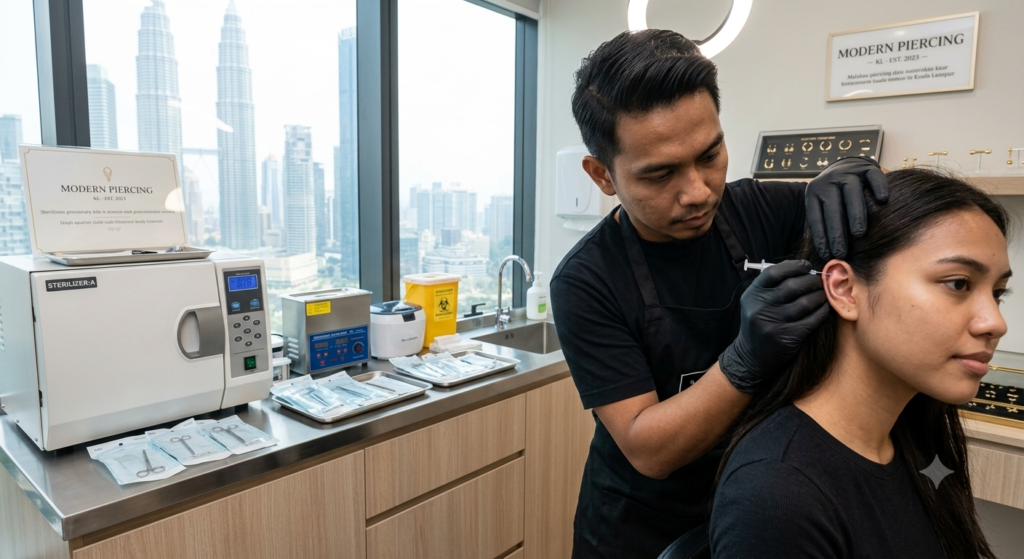
- Choose a piercer who uses a single-use, sterile hollow needle for any cartilage piercing, never a spring-loaded piercing gun. Piercing guns rely on blunt force that can crush and shatter delicate cartilage tissue, and the body of the gun itself is very difficult to fully sterilize between clients — the Association of Professional Piercers advises against their use on cartilage entirely [5].
- Ask whether the studio autoclaves its reusable equipment and uses sealed, single-use jewelry and needles opened in front of you.
- Choose implant-grade titanium or niobium jewelry rather than cheaper nickel-heavy alloys, which are more likely to trigger irritation that can be mistaken for infection — or that genuinely opens the door to one.
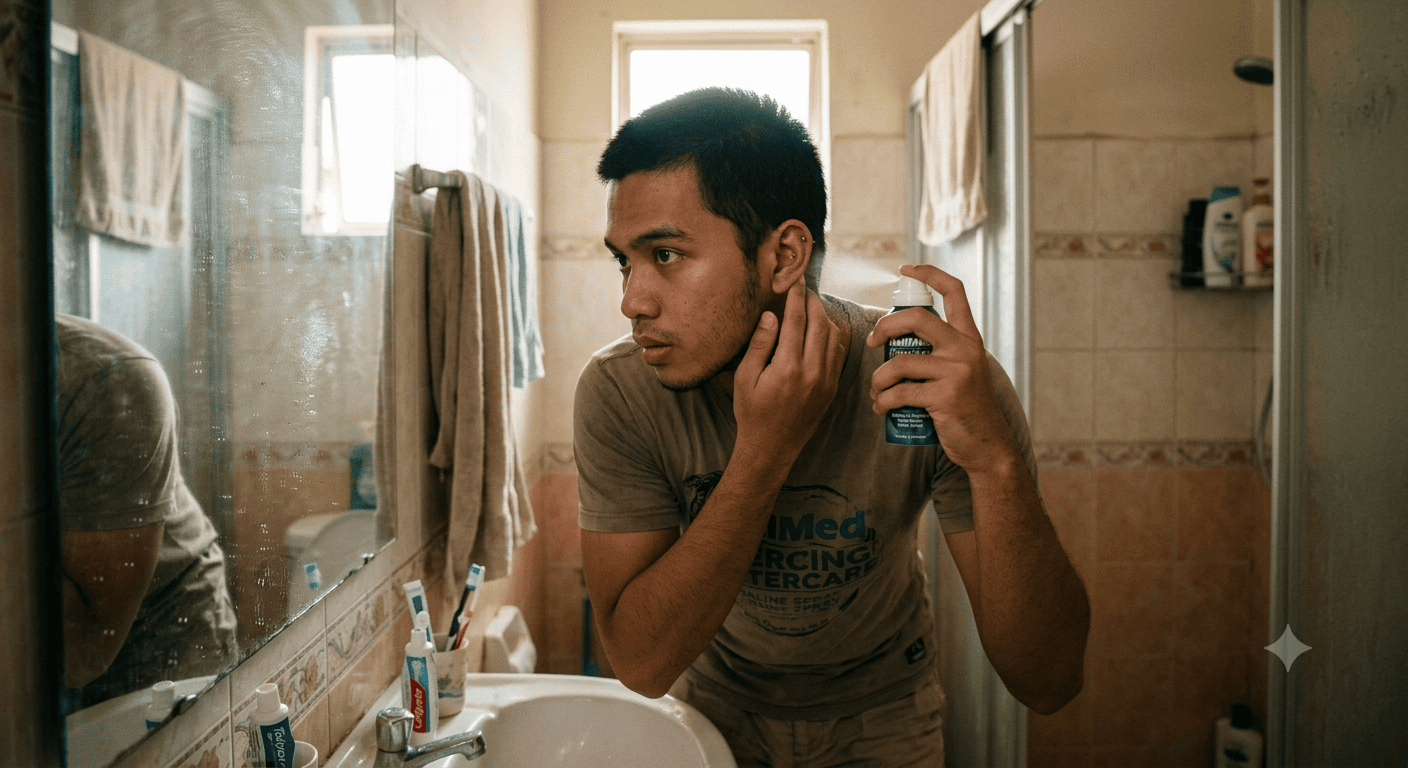
- Clean a new cartilage piercing with a sterile, pre-packaged saline solution only. Avoid alcohol, hydrogen peroxide, and homemade salt water mixed with tap water, all of which either damage healing tissue or introduce more bacteria than they remove.
- Keep fresh piercings away from swimming pools, the sea, and direct tap water for the full healing period, and avoid sleeping directly on a new cartilage piercing.
- Resist the urge to build the entire curated set in one sitting. Spacing out new piercings makes it far easier to tell which point is causing trouble if something does go wrong, rather than nursing five inflamed sites at once.
- Expect cartilage to heal on a genuinely different timeline to a lobe: six months to a year is normal, not a sign that something has gone wrong.
The Bottom Line
I don’t discourage patients from ear curation, and I don’t think the trend itself is reckless. What concerns me is how easily a cartilage piercing gets treated like a lobe piercing — same kiosk, same gun, same “you’ll be fine” — when the tissue underneath behaves completely differently. A little redness and tenderness in the first couple of days is normal. Pain that’s getting worse, spreading, or accompanied by pus or fever is not, and it isn’t something to wait out or treat with whatever remedy is trending this week. See an ENT specialist early, and perichondritis is usually a straightforward course of antibiotics. Leave it, and you’re gambling with the permanent shape of your ear.
Worried About an Infected Piercing or Painful Ear? Let’s Take a Proper Look
If a cartilage piercing is red, swollen, or increasingly painful, don’t wait to see if it settles on its own. We assess and treat ear infections, including perichondritis, at our Petaling Jaya and Kuala Lumpur clinic. Message us directly on WhatsApp with your question or to book a consultation: Chat with us on WhatsApp
Frequently Asked Questions
Is some redness and tenderness after a cartilage piercing normal?
Yes. Mild redness, tenderness, and pinpoint soreness for the first few days is a normal part of healing for any piercing. What isn’t normal is pain that worsens after day two or three, swelling that spreads across the whole ear, or any pus or foul-smelling discharge — those are signs to see an ENT specialist rather than wait.
How can I tell the difference between normal healing and perichondritis?
Normal healing tends to peak in the first day or two and then gradually improve. Perichondritis typically does the opposite: the pain, heat, and swelling get worse after the first couple of days and spread beyond the immediate piercing site to involve more of the ear. If you’re genuinely unsure, it’s always safer to have it examined than to assume it will settle.
Can I treat an infected cartilage piercing at home?
Mild irritation can sometimes be managed with sterile saline soaks, but true perichondritis needs prescription antibiotics that specifically target Pseudomonas aeruginosa, and sometimes surgical drainage. Home remedies like tea tree oil, toothpaste, or hot compresses don’t reach the infection and can delay proper treatment while the cartilage is at risk.
Is ear curation itself dangerous, or is it about how each piercing is done?
It’s almost entirely about how each piercing is done and cared for. A cartilage piercing placed with a sterile needle by a trained piercer, cleaned with proper saline, and given time to heal carries a manageable risk. The danger comes from piercing guns, rushed aftercare, and treating multiple cartilage points the way you’d treat a lobe.
How long does a cartilage piercing really take to heal?
Plan for six months to a year, compared with six to eight weeks for a lobe piercing. Cartilage has a much poorer blood supply, so it heals far more slowly — and needs consistent, gentle aftercare for the entire stretch, not just the first few weeks.
References
1. Journal of Nature and Science of Medicine — “Cartilage Ear Piercing Probable Infections Among Females” — https://journals.lww.com/jnsm/fulltext/2022/05020/cartilage_ear_piercing_probable_infections_among.14.aspx
2. The Laryngoscope (Wiley) — “Ear Piercing Complications: Comparing Cartilage and Soft Tissue Piercings in a Large Survey Cohort” — https://onlinelibrary.wiley.com/doi/10.1002/lary.70572
3. UK Health Security Agency (GOV.UK) — “Pseudomonas aeruginosa Perichondritis Associated with Ear Piercings” — https://www.gov.uk/government/publications/pseudomonas-aeruginosa-perichondritis-associated-with-ear-piercings/pseudomonas-aeruginosa-perichondritis-associated-with-ear-piercings-information-for-ear-and-cosmetic-piercing-businesses
4. PMC / National Library of Medicine — “Auricular Perichondritis by Piercing Complicated with Pseudomonas Infection” — https://www.ncbi.nlm.nih.gov/pmc/articles/PMC9443570/
5. Association of Professional Piercers — “Piercing Guns” — https://safepiercing.org/piercing-guns/
Comments are closed