
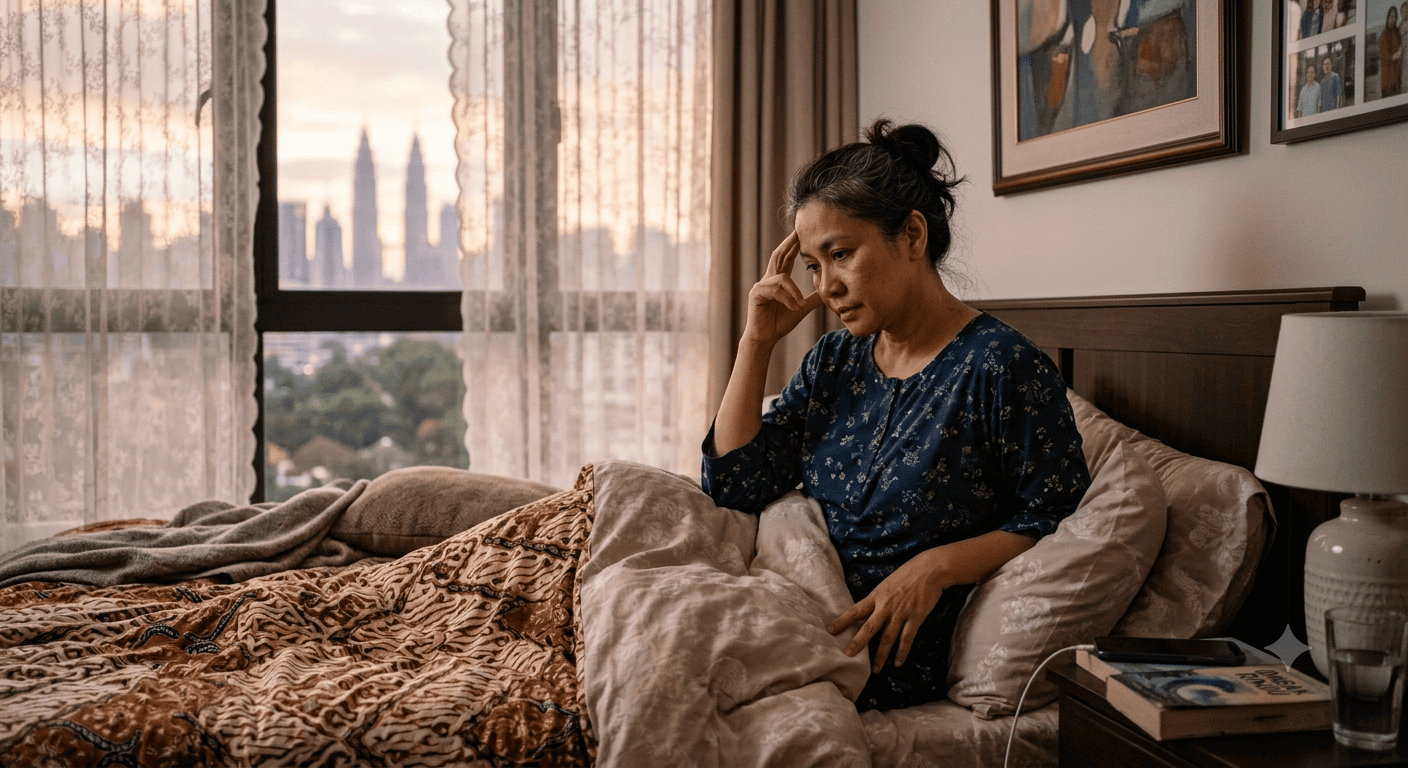
Why Perimenopausal Malaysian Women Can’t Sleep
Why Perimenopausal Malaysian Women Can’t Sleep
A 47-year-old primary school teacher sat in my clinic last month, apologising for “wasting my time.” Her gynaecologist had already told her that the exhaustion, the night sweats and the broken sleep were just perimenopause, and she had almost cancelled the appointment. But her husband had quietly started sleeping in the spare room — not after an argument, but because, in his words, “she stops breathing, then gasps, and I can’t sleep next to that anymore.” She had never snored in her life before the last two years.
What she had was not just perimenopause. It was perimenopause that had unmasked a significant, previously invisible case of obstructive sleep apnea (OSA) — something her own hormones had, until recently, been quietly protecting her from. Her story is far more common than most Malaysian women, or the people treating them, currently realise. She is not an isolated case in my clinic either, and the pattern is consistent enough that I now ask every perimenopausal patient referred to me for “fatigue” or “poor sleep” a handful of screening questions before assuming hormones are the whole story.
The Scale of the Problem we aren’t Talking About Enough

A 2025 study published in the journal Climacteric, led by researchers from Pantai Hospital Kuala Lumpur and Universiti Kebangsaan Malaysia, surveyed 1,825 working Malaysian women aged 40 to 60 across the country’s major ethnic groups — Malay, Chinese, Indian and mixed. Sleep disturbance was the second most commonly reported symptom of all, affecting 31.1% of the women surveyed, behind only joint pain (34.6%) and ahead of brain fog (26.2%), mood swings (25.8%) and digestive issues (25.5%). The findings were significant enough to be picked up by The Star as a snapshot of how Malaysian women actually experience this transition, as opposed to how it is usually discussed.
Malaysia’s numbers are not an outlier, either. A 2025 systematic review and meta-analysis found that while premenopausal women report sleep disorders in roughly 16% to 42% of cases, that figure climbs as high as 75% to 81% during the perimenopausal transition itself, according to research published in Frontiers in Neurology. Whatever the exact figure in any given population, the direction is unmistakable and global: perimenopause is one of the most sleep-disruptive periods in a woman’s life, and it is happening to Malaysian women at work and at home largely without a name for what they are experiencing beyond “menopause.”
The average Malaysian woman reaches menopause at around 50.7 years old, according to data compiled by the Malaysian Menopause Society, meaning the perimenopausal years leading up to it land squarely in the middle of most women’s working lives. That timing may not be a coincidence: female labour force participation in Malaysia drops from 69% among women aged 40 to 44 to just 34% among women aged 55 to 59 — almost exactly the span of the menopausal transition. Sleep is rarely the headline reason cited for that drop, but it is very often part of the picture.
Why Sleep Falls Apart During Perimenopause
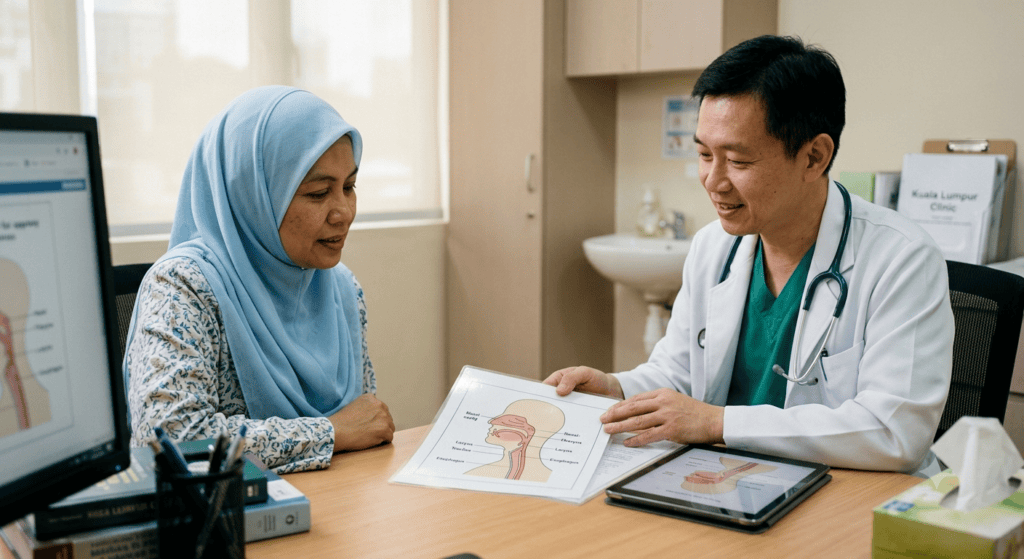
Two hormones are doing more for your sleep than most women are ever told, and both decline through perimenopause. Progesterone acts as a natural respiratory stimulant and has a mild calming effect on the brain; falling levels can make breathing less stable overnight and make it harder to fall and stay asleep in the first place. Estrogen, meanwhile, helps maintain muscle tone in the upper airway and offers some protection against the fat redistribution and airway inflammation that make the throat more prone to collapsing during sleep. As both hormones decline, that quiet protection fades.
The pattern in the research is consistent even where the exact biology is still being worked out. Postmenopausal women are two to three times more likely to have obstructive sleep apnea than premenopausal women of a similar age, and one widely cited study measured the gap at more than four times, according to research summarised by the American Journal of Epidemiology and reviewed in the journal Menopause. Surgical menopause carries an even higher risk than natural menopause. Interestingly, hormone replacement therapy appears to lower that risk somewhat — in the Sleep Heart Health Study of more than 2,800 women, moderate-to-severe sleep apnea was roughly half as common among postmenopausal women taking HRT as among those who were not. That is a decision that belongs with your gynaecologist and needs to weigh many other factors, not something to start purely to protect your sleep, but it is a useful data point when you are having that conversation.
Hot flashes deserve their own mention here, because they are not just uncomfortable — they are independently disruptive to sleep architecture. A vasomotor episode, the formal term for a hot flash or night sweat, triggers a spike in heart rate and skin temperature that the brain treats as an arousal signal, pulling a woman out of deep sleep even when she does not fully wake up to notice it. Women who experience frequent hot flashes show measurably more fragmented sleep on overnight monitoring than women who do not, independent of whether sleep apnea is also present. Some perimenopausal women, in other words, are dealing with two separate sleep thieves at once, not one.
The stakes go beyond feeling tired the next day. Untreated sleep apnea is independently linked to high blood pressure, heart disease and type 2 diabetes, and perimenopause already raises a woman’s risk of several of these same conditions as estrogen’s protective cardiovascular effects fade. Poor sleep and hormonal change are not simply happening at the same time in a woman’s forties and fifties — left unaddressed, they can actively compound each other.
Two Different Problems That Get Lumped Together as “Menopause Insomnia”
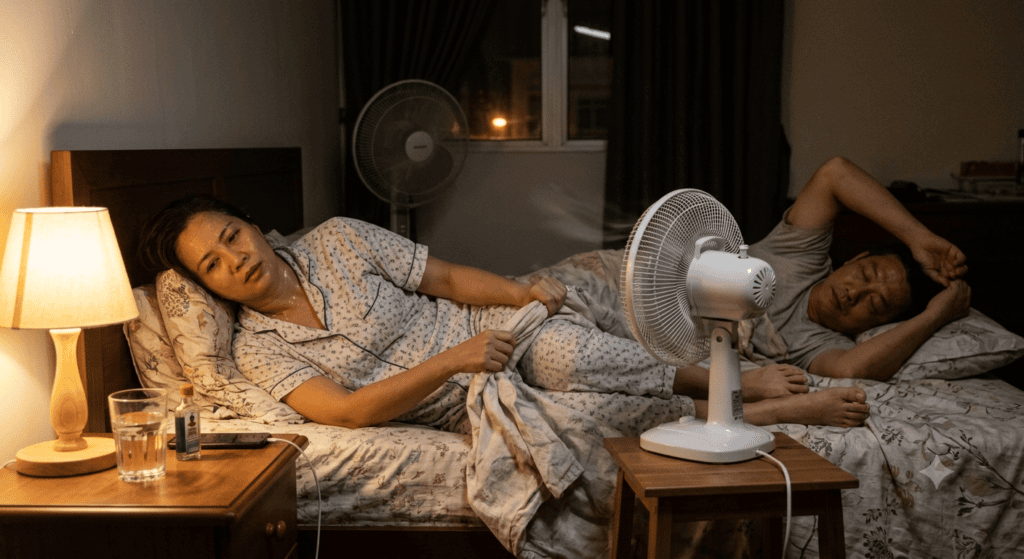
Waking up drenched and overheated is a very different event, physiologically, from waking up gasping because your airway briefly collapsed — but from inside a broken night’s sleep, both can feel the same: sudden, disorientating, and hard to fall back asleep from. A hot flash tends to wake you with heat and a racing heart, often followed by chills as you cool down. Sleep apnea tends to wake you, or your partner, with snoring that stops abruptly, a snort or gasp, or a choking sensation, and it often comes with morning headaches and a sense of having slept for eight hours while feeling like you barely slept at all. Our earlier piece on sleep apnea without loud snoring is worth a read here too, because the absence of dramatic snoring does not rule OSA out, particularly in women, whose sleep apnea tends to present more subtly than the textbook description built on male patients.
That last point matters enormously. Sleep apnea is still widely stereotyped as a condition affecting overweight, older men who snore loudly, and a lot of clinical training and public awareness has been built around that picture. A perimenopausal woman reporting fatigue, poor concentration and disrupted sleep is far more likely to be told it is “just menopause,” or referred straight to a conversation about mood and hormones, than to be asked whether she has ever been witnessed gasping or holding her breath in her sleep. Both things can be true at once — real hormonal symptoms and a real, separate, treatable breathing problem — and one does not rule out the other.
What Women Can Actually Do About It
If your sleep has changed significantly during perimenopause — new snoring, witnessed pauses in breathing, morning headaches, or exhaustion that persists despite what should be enough hours in bed — it is worth asking specifically for a sleep assessment rather than letting the conversation stop at hormones. Malaysia has clinical practice guidelines on menopause management, developed jointly by the Obstetrical & Gynaecological Society of Malaysia and the Malaysian Menopause Society, and your gynaecologist remains the right first point of contact for the broader hormonal picture. But when breathing-related symptoms are present, that conversation should also lead to a proper sleep evaluation, ideally supervised by a doctor rather than a self-administered gadget test, for reasons we cover in why you need a doctor before getting a sleep study.
Treatment sits on a spectrum depending on severity and what is actually driving it. For milder cases, positional changes, weight management and treating nasal congestion can help. CPAP remains the first-line treatment for confirmed moderate-to-severe OSA, exactly as it is for men. For patients who cannot tolerate CPAP and whose anatomy is a good fit, surgical options exist too, including some of the same robotic and minimally invasive techniques we’ve written about separately, and a fuller rundown of surgical options when CPAP doesn’t work. None of this replaces the hormonal side of care; it sits alongside it. The goal is simply to make sure that when a Malaysian woman in her forties or fifties says she cannot sleep, “it’s just menopause” is treated as a starting point for investigation, not the final answer.
A few practical steps help in the meantime, regardless of the underlying cause: keeping the bedroom cool, avoiding alcohol in the hours before bed, since it relaxes the airway muscles and can worsen both hot flashes and breathing-related events, and sleeping on your side rather than your back, which reduces airway collapse for many people. None of this replaces a proper diagnosis if your symptoms are significant, but it is a reasonable place to start while you arrange to see someone.
Not Sure Which Part of This Is You?
If your sleep has changed during perimenopause and you are not sure whether you are dealing with hot flashes, undiagnosed sleep apnea, or both, I am happy to talk it through and, where appropriate, arrange a proper sleep assessment. Message my clinic on WhatsApp to arrange a consultation at UM Specialist Centre in Kuala Lumpur.
Frequently Asked Questions
Q: I’ve never snored before, and now I do — is that just part of getting older?
A: New-onset snoring in your forties or fifties, especially during perimenopause, is common enough that it is easy to dismiss, but it is also one of the most useful early warning signs of change in the upper airway. It is worth mentioning to a doctor rather than assuming it is purely cosmetic or purely age-related, particularly if it comes with witnessed pauses in breathing, gasping, or morning headaches.
Q: Should I bring this up with my gynaecologist or see an ENT / sleep specialist?
A: Both, ideally, and they do not need to be in competition. Your gynaecologist is the right person for the broader hormonal picture and options like HRT. If breathing-related symptoms are present, such as snoring, witnessed pauses, or unrefreshing sleep, that is the cue to also get a sleep assessment from an ENT or sleep medicine specialist.
Q: Does hormone replacement therapy (HRT) fix sleep apnea?
A: Not reliably enough to be used as a treatment for it on its own. Research does show lower rates of moderate-to-severe sleep apnea among postmenopausal women on HRT, but HRT is prescribed based on a much wider set of considerations than sleep alone, and confirmed OSA still generally needs its own diagnosis and treatment, typically starting with CPAP.
Q: How is sleep apnea actually diagnosed?
A: With a sleep study, which measures breathing, oxygen levels, and sleep patterns overnight, either in a sleep lab or, for suitable patients, at home under proper medical supervision. It should be ordered and interpreted by a doctor rather than relying solely on a consumer wearable, which can flag a possible issue but cannot diagnose one.
Q: Could this just be anxiety or stress instead?
A: It could be, and anxiety genuinely does disrupt sleep during perimenopause for many women. That is exactly why it is worth being specific with whichever doctor you see about what is actually happening at night — racing thoughts and difficulty switching off point one way, while snoring, witnessed breathing pauses and morning headaches point another. The two are not mutually exclusive, and both are worth naming precisely rather than folding everything into general “stress.”
Comments are closed