

You clear your throat before you speak. You clear it again in the middle of a meeting. You wake up with something sticky at the back of your throat, and by the afternoon it is back. You do not have a fever, you do not feel properly sick, and yet the feeling of phlegm stuck in your throat never quite leaves.
This is one of the most common complaints I hear in my ENT clinic in Kuala Lumpur, and it has a name: post-nasal drip. It is rarely dangerous, but it can be exhausting, and it is often explained badly. This guide covers what post-nasal drip is, why so many Malaysians seem to have it, what actually helps, and the warning signs that mean the problem is something else.
What post-nasal drip actually is
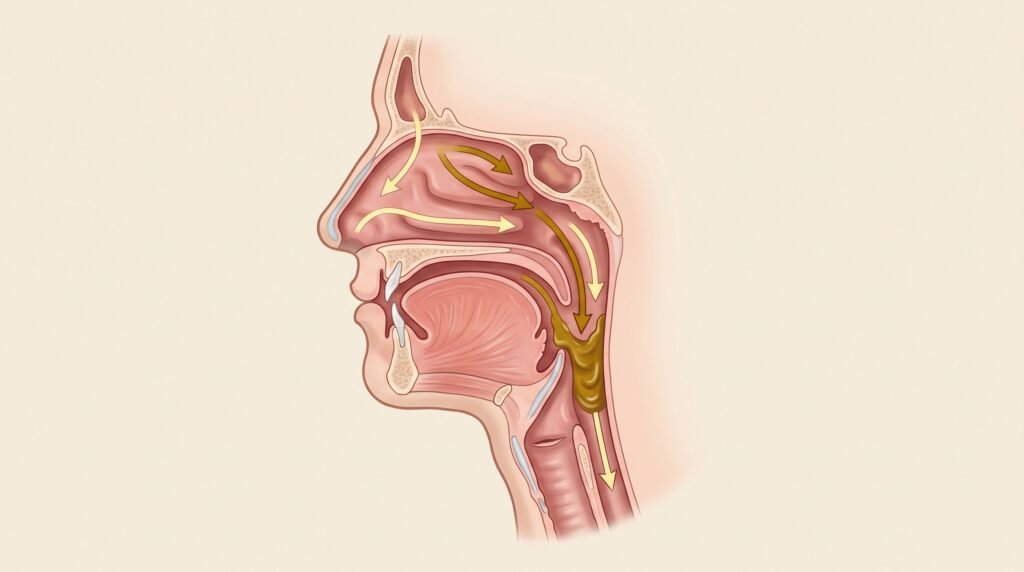
Your nose and sinuses make mucus all day, every day. This is normal and useful. Mucus traps dust, germs and pollen, keeps the lining moist, and is swept backwards by tiny hair-like structures called cilia towards the throat, where you swallow it without noticing. Most healthy people produce a litre or more of mucus a day and never think about it.
Post-nasal drip happens when you start to notice that mucus. Either you are producing more of it, it has become thicker and stickier, or it is not being cleared as efficiently as before. Whatever the reason, it now sits at the back of the throat and triggers the urge to clear, swallow or cough.
The word phlegm is used loosely. Strictly, phlegm refers to mucus from the lungs and airways, while mucus that drips from the nose is something different. For the patient the distinction rarely matters, because it feels the same: a thick, sticky sensation at the back of the throat. It does matter to your doctor, because the cause and the treatment are different, which is why a proper assessment is worth having if the problem lasts.
Symptoms: how to recognise it
Post-nasal drip is usually diagnosed from your story. Typical features include:
- A feeling of mucus at the back of the throat, or of something dripping down from the nose.
- Frequent throat clearing, often without bringing anything up.
- A cough that is worse when you lie down, and worse in the morning or at night.
- A hoarse or scratchy voice, particularly first thing in the morning.
- A sore or irritated throat without the other signs of a throat infection.
- Bad breath, and sometimes a mild feeling of nausea from swallowing extra mucus.
- A blocked or runny nose, sneezing or itching, if allergy is part of the picture.
Because these symptoms overlap with other conditions, I do not like to call it post-nasal drip until other causes have been considered. A published review of chronic cough caused by post-nasal drip and acid reflux makes a similar point: there are no findings specific to post-nasal drip, so the diagnosis depends on the history, the examination and, importantly, how you respond to treatment aimed at the likely cause.
Why you have it: the most common causes
Allergic rhinitis. Dust mites, pet hair, pollen and mould trigger the nose lining to produce extra, watery mucus. This is the leading cause I see. If you also sneeze in runs or have an itchy nose, allergy is likely. My guide to the sensitive nose and rhinitis explains the pattern.
Non-allergic rhinitis. Here the nose reacts to triggers that have nothing to do with allergy: temperature change, strong smells, smoke, spicy food, or dry cold air. This is why many people notice symptoms the moment they walk into a cold office.
Colds and sinus infections. A viral cold usually clears within seven to ten days. If blocked-nose symptoms last more than two to three weeks despite over-the-counter remedies, Malaysian ENT specialists writing in Free Malaysia Today in April 2026 advised seeing a specialist. Thick, discoloured mucus and facial pressure point towards sinusitis.
Acid reflux reaching the throat. Silent reflux can mimic post-nasal drip very closely, with throat clearing, a sticky throat and a chronic cough, but with no heartburn at all. If your symptoms are worse after late meals, or you have been treated for a drippy nose with no improvement, reflux deserves a look. I wrote about this in my article on silent reflux and the late-night supper habit.
Structure of the nose. A deviated septum or enlarged turbinates can interfere with normal drainage and keep the lining irritated, which makes post-nasal drip persistent.
Overusing decongestant nasal sprays. Using these for more than a few days, generally three to five days, can cause rebound swelling and worsen the very problem you are trying to treat. See my article on whether you can become addicted to nasal spray.
Other contributors. Smoking and vaping, dry air, dehydration, and some medications can all thicken mucus or irritate the lining.
Why Malaysians seem to get it so often

I do not have Malaysian figures on post-nasal drip itself, and I will not make one up. What we do know is that sinus and nasal problems are common here: Malaysian ENT specialists writing in Focus Malaysia and Free Malaysia Today in 2026 cited an estimated 12.8 per cent of Malaysians, around three million people, as having sinusitis. Post-nasal drip is one of the symptoms they list as a reason to get checked.
Several features of daily life in Malaysia are a plausible match for the triggers above, and the specialists in those same articles named some of them: air conditioning, dust, haze and cigarette smoke can inflame the nasal passages.
- Air conditioning. Long hours in a cold, dry office, car or shopping mall, followed by a walk into the humid heat outside, is a constant temperature swing for the nose. Non-allergic rhinitis is a common result. I made a similar point in my article on sleeping with the fan on all night.
- Haze. Smoke particles irritate the lining of the nose and throat, and the response is more mucus. If you have noticed symptoms getting worse during haze periods, my articles on recovering from haze and on blood in phlegm during the haze explain what is happening and when to worry.
- Dust mites and humidity. A warm, humid climate suits dust mites and mould, which are among the most common indoor allergens.
- Late-night eating. Late suppers feed the reflux pattern described above.
Myths about phlegm worth clearing up
Drinking milk makes more phlegm. This is a popular belief. Milk does not appear to increase mucus production in the airways, although it can leave a coating feeling in the mouth and throat that some people mistake for extra phlegm. If cutting dairy helps you, fine, but it will not cure post-nasal drip.
Cold drinks cause phlegm. Some Malaysian health websites advise avoiding cold drinks. I am not aware of good evidence that cold water causes post-nasal drip, but very hot or very cold drinks can irritate an already sensitive throat. Warm water is fine; ice is a personal call.
Antibiotics will clear it. Most post-nasal drip is due to allergy, irritation or a virus, none of which antibiotics treat. They help only when a bacterial infection is confirmed.
Constant throat clearing is harmless. Forceful throat clearing irritates the vocal cords and can make hoarseness worse, which in turn makes you clear your throat more. Swallowing, sipping water or a gentle cough is kinder.
What actually helps

Treatment depends on the cause, but these steps work for most people.
- Rinse the nose with saline. A saline rinse thins and washes out mucus, allergens and pollution particles. Use boiled and cooled water, or distilled water, never untreated tap water. I explain why in my article on whether tap water is safe for nasal rinsing in Malaysia.
- Use a steroid nasal spray if the cause is allergy or chronic irritation. These sprays reduce swelling and mucus over days to weeks and are safe for long-term use under medical advice. They work gradually, so use them regularly for a couple of weeks before judging the result.
- Consider an antihistamine if allergy is likely. Not all antihistamines are the same, and some cause drowsiness. A doctor can match the choice to your symptoms.
- Avoid decongestant sprays beyond a few days. They give quick relief and then make things worse.
- Stay hydrated and warm. Plenty of fluids keeps mucus thinner. Warm drinks and steam from a hot shower can feel soothing.
- Change your environment where you can. In an air-conditioned office, avoid sitting directly under a vent, keep the temperature moderate, and carry water. At home, wash bedding weekly in hot water and use mattress and pillow covers to cut down dust mites.
- Treat reflux if it is part of the picture. Finishing the evening meal earlier, avoiding lying down soon after eating, and reducing trigger foods help many patients, and your doctor can prescribe medication if needed.
- Stop smoking and vaping. Both irritate the airway and thicken mucus.
If you have tried these for several weeks and nothing has changed, the next step is not another trip to the pharmacy. It is a proper assessment, which usually includes looking inside the nose and throat with a thin camera (nasal endoscopy). If you are unsure whether to see a GP or an ENT first, my guide on GP or ENT: which one should you visit explains how to decide.
Red flags: when it is not just post-nasal drip
Most people with a drippy throat have a benign problem. A few have something that needs prompt attention. See a doctor sooner rather than later if you have any of the following:
- Blood in your phlegm or saliva, particularly if it keeps recurring.
- Symptoms on one side only: a blocked nose, bleeding or discharge from one side, or a blocked ear on one side.
- A hoarse voice lasting more than three weeks.
- Difficulty swallowing, pain on swallowing, or a feeling that food sticks.
- A lump in the neck that does not go away.
- Unexplained weight loss, or fever with facial pain and thick discoloured discharge.
- A foul smell from the nose or mouth that does not settle.
- A cough that lasts more than three to four weeks, or breathlessness.
The one-sided symptoms matter particularly for Malaysians. Nasopharyngeal carcinoma, a cancer at the back of the nose, is more common in this part of the world, and early warning signs include a blocked nose or blood-stained mucus, often on one side, with a blocked ear or a neck lump. I wrote about why in my article on why Malaysians are more prone to NPC. If something about your symptoms feels different, do not wait.
The bottom line
Phlegm in the throat that comes and goes, with no red flags, is usually post-nasal drip, and it usually responds to patient, consistent treatment of its cause. The mistake I see most often is treating it with whatever is on the pharmacy shelf for months, rather than working out why the nose is producing so much mucus in the first place. Find the cause, and the drip tends to settle.
Talk to Us
If you have had a drippy throat, constant throat clearing or phlegm that will not go away for more than a few weeks, you do not need to put up with it. Contact us directly for a consultation on WhatsApp: Message us on WhatsApp. If you have blood in your phlegm, symptoms on one side only, or difficulty swallowing, please book promptly.
Frequently Asked Questions
Is post-nasal drip serious?
Usually not. It is a symptom, not a disease, and most often comes from allergy, irritation or a cold. It becomes a concern when it comes with red flags such as blood, one-sided symptoms, a lasting hoarse voice or difficulty swallowing.
Why is my phlegm worse in the morning?
Mucus pools in the back of the throat while you lie flat overnight, so you notice it when you wake. Reflux and allergy to dust mites in the bedroom can also add to it.
Can air conditioning cause post-nasal drip?
It can contribute. Cold, dry air can irritate the nose lining and trigger extra mucus in people with sensitive noses. Moving away from the vent, keeping the temperature moderate and drinking water can help.
Can the haze cause phlegm in the throat?
Haze particles irritate the nose and throat lining, and the body responds with more mucus. For symptoms that persist after the haze has cleared, see an ENT.
Do I need antibiotics for post-nasal drip?
Usually not. Antibiotics treat bacterial infections only. Most post-nasal drip is caused by allergy, irritation or a virus.
How long does post-nasal drip last?
With a cold, around one to two weeks. If it lasts longer than three to four weeks, or keeps coming back, it is worth having the cause looked for.
What is the difference between phlegm and post-nasal drip?
Strictly, phlegm comes from the lungs and airways, and post-nasal drip is mucus from the nose and sinuses running down the back of the throat. They feel similar, so a doctor needs to examine you to tell them apart.
Links and Sources
Internal links to use in the post (theentdr.com):
- Sensitive Nose (Rhinitis): A Complete Guide to Symptoms and Solutions
- Is Your Late-Night Mamak Habit Causing That Chronic Cough? The Truth About Silent Reflux
- Can You Really Get Addicted to Nasal Spray? An ENT Explains Rebound Congestion
- Is Tap Water Safe for Nasal Rinsing? What Malaysians Need to Know
- Sleeping with the Fan On Every Night? An ENT Surgeon’s Honest Verdict
- The Haze Is Still Here: Why Your Nose Stays Blocked and Crusty for Weeks
- Blood in Your Phlegm During the Haze?
- The Constant Lump in Your Throat: Causes & Treatments
- Why Malaysians Are More Prone to Nasopharyngeal Carcinoma (NPC)
- GP or ENT: Which One Should You Visit for Ear, Nose & Throat Issues?
External sources (Malaysian first):
No responses yet