

The short answer
Yes, flood water can give you ear, nose and throat infections. Most are mild and settle with simple care, but a few need a doctor quickly. In Malaysia, that includes melioidosis, a soil bacterium that floods stir up and that can show up as a neck or face swelling.
The Northeast Monsoon usually arrives in early to mid November and runs until March. Last season it began on 13 November 2025, and MetMalaysia expected five to seven episodes of continuous heavy rain. Even if you live in the Klang Valley, flash floods, wet clean-ups and trips back to the kampung on the East Coast put many families in contact with flood water every year.
Here is what I see in clinic after floods, what is normal, and when you should not wait.
Your ears: the most common flood problem
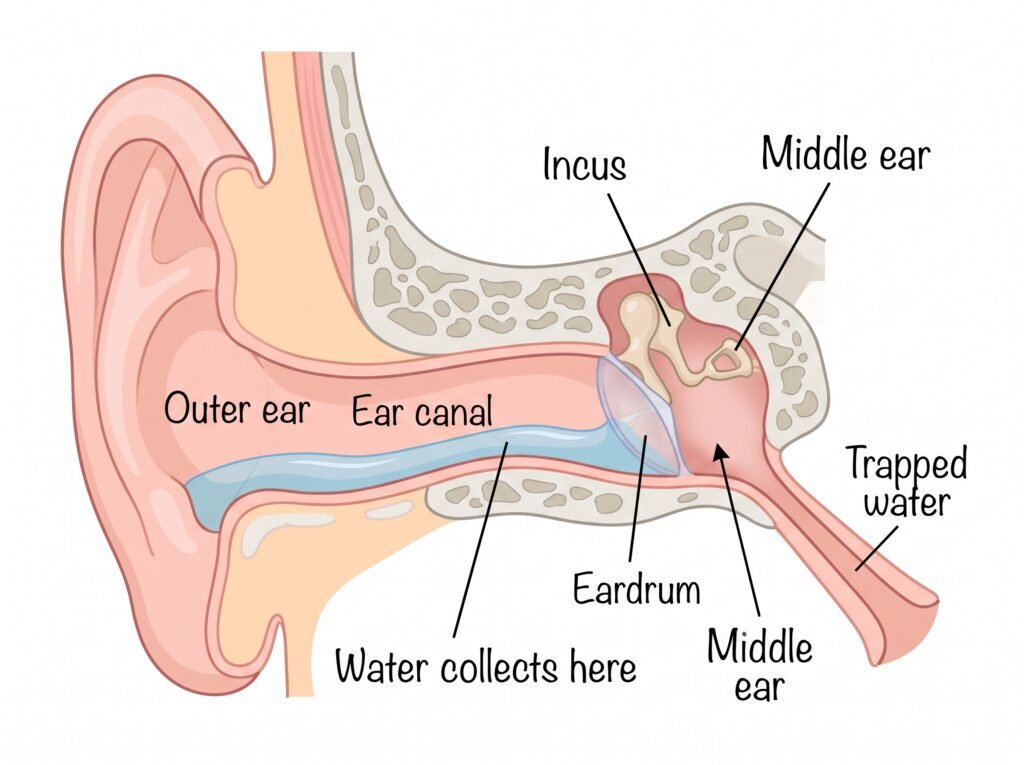
The ear canal is a warm, narrow tube. When dirty flood water sits in it, the skin softens and bacteria or fungus can take hold. This is otitis externa, an infection of the outer ear canal.
Typical signs, usually 1 to 3 days after exposure:
- Itch deep in the ear, then pain
- Pain that is worse when you tug the ear or press the flap in front of it
- A blocked or muffled feeling
- Watery, white or yellow discharge
Mild cases often settle once the ear is kept dry. Persistent pain or discharge needs proper ear drops from a doctor, and sometimes the ear canal needs to be cleaned under a microscope first so the drops can reach the skin.
Who needs extra care:
- People with a hole in the eardrum, or children with grommets. Flood water can pass straight into the middle ear and cause a discharging ear infection. Keep these ears covered. If you are unsure whether your eardrum is intact, read my guide on perforated eardrums.
- People with diabetes. An outer ear infection in a diabetic can, rarely, spread into the bone of the skull base. Severe, deep ear pain that keeps you awake is never something to manage at home.
One thing I ask every patient: put the cotton buds away. Digging scratches the softened skin and pushes debris deeper.
Your nose and sinuses: the problem that comes after
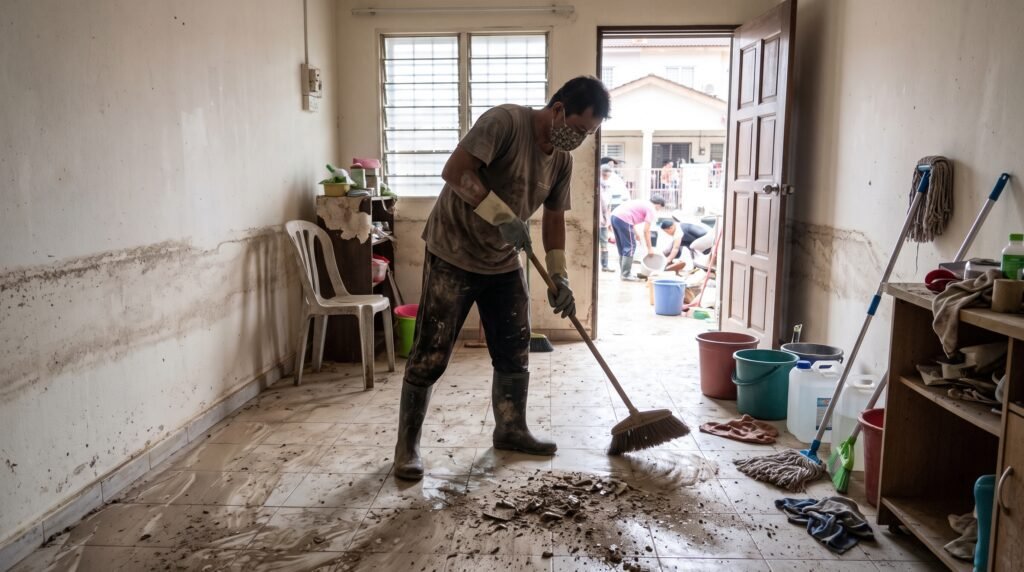
Nose and sinus trouble often starts once the water has gone. Damp walls, wet carpets and soaked mattresses grow mould within days, and the dust from dried mud carries bacteria and irritants.
What I commonly see in the weeks after a flood:
- Allergic rhinitis flare-ups. Sneezing, a runny nose and itchy eyes, worse indoors. People with a sensitive nose feel it first.
- Sinusitis. A blocked nose, thick discoloured mucus, facial pressure and a reduced sense of smell that lasts more than 10 days, or improves and then gets worse.
- Flare-ups in people who have had sinus surgery. Mould and dust are well-known triggers, so keep up your usual sprays and rinses.
Saline nasal rinsing helps, but never use flood water or untreated tap water. Use boiled water that has cooled, or sealed bottled water. I explain why in my guide on nasal rinsing and tap water safety in Malaysia.
Throat and neck: the Malaysian warning most people miss
Sore throats and colds spread easily in crowded relief centres. During the 2014–2015 East Coast floods, the Ministry of Health reported a rise in upper respiratory tract infections alongside leptospirosis and melioidosis. Most sore throats are viral and settle within a week with rest, fluids and paracetamol.
The one I want every Malaysian to know about is melioidosis.
What is melioidosis?
Melioidosis is an infection caused by Burkholderia pseudomallei, a bacterium that lives in soil and muddy water across Malaysia and Southeast Asia. Floods bring it to the surface. A study in Penampang, Sabah, found melioidosis cases were about 2.2 times higher with every flood event.
It enters through cuts in the skin, by breathing in contaminated dust or spray, or occasionally by swallowing contaminated water. People with diabetes are at the highest risk, along with those with kidney disease, heavy alcohol use or a weakened immune system.
Why an ENT surgeon cares
Melioidosis usually causes pneumonia or abscesses, and it can appear in the head and neck. It can present as a neck abscess or a swollen parotid gland (the salivary gland in front of the ear). It looks like an ordinary infection, but it needs specific antibiotics given for weeks, not days. Missing it can be serious: in published Malaysian case reports, about 4 in 10 patients died.
So if you develop a painful neck or face swelling with fever after flood exposure, tell your doctor about the flood.That one sentence can change which tests are sent and which antibiotics you get. My guide on neck abscesses explains the wider picture.
Red flags: see a doctor the same day
Go to a clinic or emergency department promptly if you have any of these after flood exposure:
- A neck or face swelling with fever, especially if you have diabetes
- Difficulty swallowing, drooling, a muffled voice, or trouble opening your mouth
- Noisy or difficult breathing. Go straight to the emergency department.
- Severe, deep ear pain that stops you sleeping, especially if you have diabetes
- Weakness on one side of the face
- Sudden hearing loss in one ear
- Swelling around the eye, or a sinus infection with headache and high fever
- High fever with muscle aches, red eyes or reduced urine. This can be leptospirosis, which also enters through the eyes, nose and mouth.
When you see the doctor, say clearly: “I was in flood water” or “I cleaned up after a flood.”
How to protect your ears, nose and throat
During the flood
- Avoid wading where you can, and never put your head under flood water. Do not let children play or swim in it.
- If you have a perforated eardrum or grommets, plug the ear with cotton wool coated in petroleum jelly, or a well-fitting earplug.
- Cover cuts and wounds with waterproof plasters, and wear boots.
After getting wet
- Shower with clean water as soon as you can.
- Dry your outer ears gently with a towel, then tilt your head to let water drain. A hair dryer on the coolest, lowest setting at arm’s length helps.
- Do not use cotton buds or put anything into the ear canal.
During the clean-up
- Wear a mask (an N95 if you have one), gloves and boots, especially when sweeping dried mud or using a high-pressure hose. The spray can carry bacteria into the air.
- Dry out or throw away soaked mattresses, carpets and soft furnishings. Keep windows open to reduce mould.
- If you have diabetes, keep your sugar well controlled and treat any new infection early.
- Keep using your usual nasal sprays if you have rhinitis or have had sinus surgery.
Seeing an ENT in Kuala Lumpur or Petaling Jaya
If an ear, nose or throat problem has not settled a week after a flood, or keeps coming back, it is worth having it examined properly. An ENT clinic can look into the ear canal under a microscope, clean it, check the eardrum, and use a small camera to examine the nose and sinuses.
I see patients at Universiti Malaya Specialist Centre (UMSC) in Petaling Jaya. For ear infections and discharging ears, see my ear clinic page. For sinus and nose problems, see my nose and sinus clinic page.
This article is general information and does not replace a consultation. In an emergency, call 999 or go to the nearest emergency department.
Frequently asked questions
Mark these up with FAQ schema in WordPress.
Can flood water in my ear cause an infection? Yes. Dirty water softens the skin of the ear canal and lets bacteria or fungus in, causing otitis externa. Keep the ear dry and see a doctor if pain or discharge lasts more than two or three days.
Should I put ear drops in after flood water gets in? Not unless a doctor has checked your ear. Some drops are unsafe if the eardrum has a hole, and drying the ear is usually enough to begin with.
Is it safe to rinse my nose after a flood? Yes, saline rinsing is helpful, but only with boiled and cooled water or sealed bottled water. Never use flood water or untreated tap water.
What is melioidosis, and can I catch it from flood water? Melioidosis is a bacterial infection from soil and muddy water that is common in Malaysia. Floods increase the risk, especially for people with diabetes. It can cause pneumonia or abscesses, including in the neck.
Is melioidosis contagious? Person-to-person spread is very rare. People catch it from the environment, not from each other.
When should my child see a doctor after playing in flood water? If they have ear pain, ear discharge, a fever that does not settle, or any swelling of the neck or face, see a doctor promptly.
Links, images and sources
Internal links (already placed in the text)
- Perforated eardrum
- Sensitive nose / rhinitis
- Nasal rinse and tap water safety
- Neck abscess
- Ear specialist PJ and Nose specialist PJ
- Optional: add a link from the haze post and the ear wax vs ear infection post back to this one.
No responses yet